
Ensuring a safe environment in an automotive repair shop is crucial to protect employees, customers, and the business. Creating a safe environment requires attention to detail and adherence to strict safety protocols. By following these safety rules, you can minimize accidents, ensure compliance with safety regulations, and create a productive work environment in your automotive repair shop.
Below is a detailed guide to ensure a comprehensive safety approach:
-
Proper Use of Personal Protective Equipment (PPE)
Eye Protection:
- Wear safety goggles or glasses when handling tools, chemicals, or equipment that may create debris or splashes.
- Safety goggles or glasses should have side shields and be impact-resistant.
- Use a face shield for tasks like grinding or welding to protect against flying debris and sparks.
Hand Protection:
- Use gloves when handling chemicals, hot components, or sharp tools.
- Use nitrile gloves for handling chemicals and heat-resistant gloves when dealing with hot parts.
- Ensure gloves fit snugly and are suitable for the task (e.g., no loose gloves around rotating machinery).
Hearing Protection:
- Wear earplugs or earmuffs in noisy environments.
- Prolonged exposure to noise above 85 decibels can cause hearing damage.
Respiratory Protection:
- Use masks or respirators when working with paint, dust, or fumes. Ensure proper filtration levels for the type of exposure.
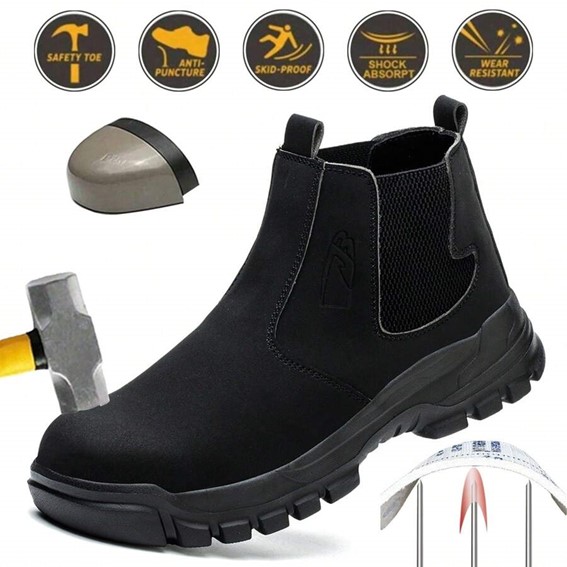
Footwear: Use non-slip, steel-toe boots to protect against falling objects and slippery floors.
- Non-slip soles and steel-toe boots prevent injuries from falling objects and slippery surfaces.
2. Maintain a Clean and Organized Workspace
Tool Storage:
- Keep tools and equipment stored properly to prevent tripping or falling hazards.
- Use pegboards, tool chests, and labeled storage to keep tools organized.
Waste Management:
- Regularly empty trash bins, especially those containing flammable materials like rags soaked in oil or solvents.
- Dispose of waste materials (e.g., rags, filters, fluids) in designated receptacles.
- Provide separate containers for recyclable materials such as metal and plastics.
Spill Control:
- Regularly clean up spills, oils, or grease to prevent slips.
- Use absorbent materials like spill mats or kitty litter to clean up oil or chemical spills immediately.
- Equip the shop with spill kits and ensure all employees know how to use them.
-
Safe Equipment Use
Inspections:
- Regularly check for frayed cords, worn-out tool parts, or malfunctioning machines.
- Inspect tools and machinery regularly for wear or damage before use.
Training:
- Train employees on proper usage and safety features of all tools and machinery.
Lockout/Tagout (LOTO):
- Implement LOTO procedures to ensure equipment is not accidentally powered on during maintenance.
- Replace or repair damaged items immediately.
- Use equipment according to the manufacturer’s instructions.
Lifting Equipment:
- Only certified employees should operate vehicle lifts. Inspect lifts for hydraulic leaks and ensure safety locks are functional.
- Ensure power tools have functional safety guards.
- Always disconnect equipment from power sources when performing maintenance or adjustments.
-
Proper Handling and Storage of Chemicals
Storage:
- Store chemicals in fireproof, ventilated cabinets.
- Label all containers clearly.
- Separate incompatible materials (e.g., acids from bases or flammables from oxidizers).
- Store chemicals like oil, antifreeze, and solvents in approved, clearly labeled containers.
Material Safety Data Sheets (MSDS):
- Maintain MSDS for all hazardous substances and ensure they are easily accessible.
Ventilation:
- Use exhaust fans or ventilation hoods to reduce the buildup of fumes in enclosed areas.
- Ensure proper ventilation when working with fumes or vapors.
Handling:
- Always pour chemicals slowly to avoid splashes. Wear chemical-resistant gloves and aprons.
- Follow proper disposal procedures for hazardous waste.
-
Fire Safety Measures
Fire Extinguishers:
- Place extinguishers throughout the shop, ensuring they are rated for Class B (flammable liquids) and Class C (electrical fires).
- Keep fire extinguishers accessible, well-maintained, and appropriate for potential fire types (e.g., grease, electrical).
- Conduct monthly checks to ensure extinguishers are charged and accessible.
No Smoking Policy:
- Enforce a strict no-smoking rule near flammable substances and in work areas.
Fire Exits:
- Keep exits unobstructed and clearly marked.
- Train employees on emergency evacuation procedures.
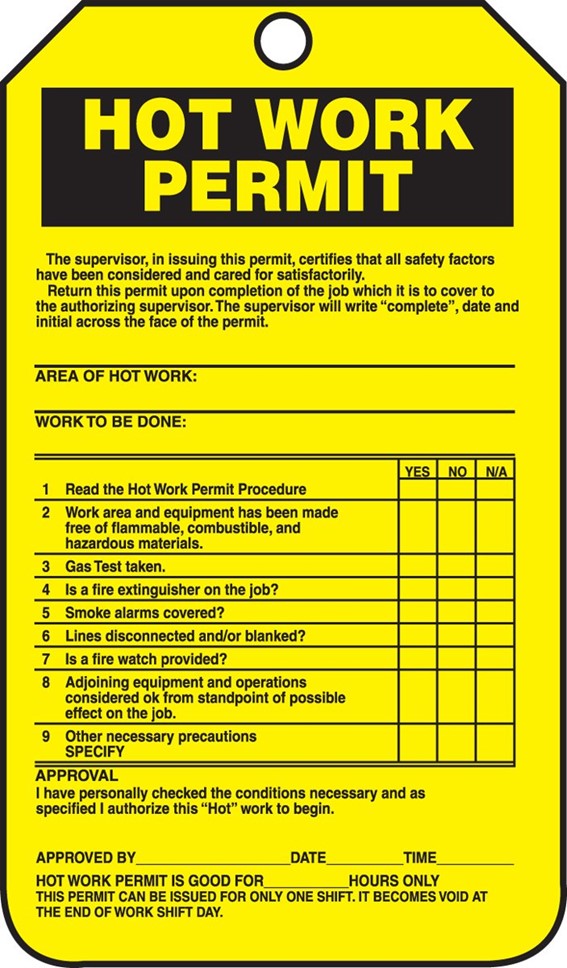
Hot Work Permits:
- For welding, cutting, or soldering, implement a permit system to ensure fire watch protocols are in place.
- Avoid open flames near flammable substances.
-
Lifting and Moving Heavy Objects
Safe Lifting Techniques:
- Use proper techniques. Keep the back straight and lift with the legs.
- Avoid twisting the body while carrying heavy objects.
Hoists and Jacks:
- Utilize hoists, jacks, or lifting equipment to handle heavy vehicle parts.
- Inspect for wear and tear.
- Ensure the jack stands are rated for the vehicle’s weight and positioned correctly.
- Never exceed the weight limits of lifting equipment.
- Never work under a vehicle without ensuring it is properly supported by jack stands.
-
Electrical Safety
Battery Handling:
- Disconnect the negative terminal first to prevent short circuits.
- Use insulated tools when working near batteries.
Hybrid and Electric Vehicles:
- Be cautious of high-voltage systems in electric or hybrid vehicles.
- Disconnect batteries before working on a vehicle’s electrical system.
- Deactivate high-voltage systems before repairs.
- Wear rubber gloves rated for electrical work.
Cables and Wires:
- Avoid running extension cords through walkways. Replace frayed or damaged cords immediately.
- Avoid using damaged extension cords or electrical tools.
8. Training and Communication
Regular Safety Meetings:
- Hold toolbox talks to address common hazards and discuss improvements.
- Communicate safety protocols clearly and update them as needed.
Incident Reporting:
- Encourage employees to report accidents or near misses to identify areas for improvement.
Clear Signage:
- Post warning signs around high-risk areas, such as flammable storage or equipment zones.
-
Emergency Preparedness
First Aid Training:
- Train staff on basic first aid, CPR, and how to use emergency eyewash stations.
Evacuation Drills:
- Conduct periodic fire and emergency evacuation drills. Assign roles like fire marshals or first responders.
- Ensure all employees know emergency contacts and procedures.
Emergency Kits:
- Keep first-aid kits well-stocked and accessible.
- Stock kits with bandages, splints, burn creams, and emergency contact information.
-
Follow Legal and Industry Standards / Compliance
OSHA Compliance:
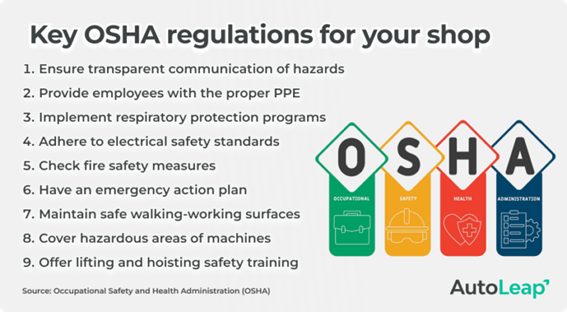
- Adhere to Occupational Safety and Health Administration (OSHA) regulations or equivalent safety standards in your region.
- Follow standards for hazard communication, lockout/tagout, and personal protective equipment.
- Display necessary safety signs and warnings throughout the shop.
Environmental Regulations:
- Comply with local laws on waste disposal, emissions, and chemical handling.
Safety Inspections:
- Perform regular audits to ensure all safety measures are up to date and effective.
Advanced Practices
By integrating these advanced practices, automotive repair shops can build a robust safety culture.
- Fit Testing for Respirators: Conduct annual fit tests for respirators to ensure they provide an effective seal against the face.
- Customized PPE for Specific Roles: Mechanics working with electrical systems may need dielectric gloves to protect against electrical shocks.
- 5S Methodology (Sort, Set in order, Shine, Standardize, Sustain): A lean management tool that systematically organizes the workspace to improve efficiency and safety.
- Anti-Fatigue Mats: Use mats in areas where employees stand for long periods to reduce fatigue and lower the risk of slips.
- Zone Marking: Clearly mark walkways, hazardous areas, and tool zones using reflective tape or paint.
- Digital Inventory Systems: Implement barcoding or RFID tags for tool and equipment management to reduce misplaced tools and improve efficiency.
- Drainage Systems: Ensure floors have adequate drainage to manage spills effectively.
- Air Compressors: Ensure proper PSI settings for different tools. Inspect hoses for leaks and secure them with quick-release couplings.
- Vehicle Lifts: Use locking mechanisms during inspections. Follow manufacturer-recommended maintenance schedules for lift components.
- Shock Isolation Platforms: For heavy machinery, these reduce vibrations that may cause instability.
- Telemetry Systems: Equip advanced tools with telemetry to monitor performance and detect malfunctions before they occur.
- Flammable Liquids: Store in explosion-proof cabinets. Limit the amount stored outside of cabinets to a single day’s supply.
- Battery Acid Handling: Use neutralizing agents like baking soda for spills. Equip stations with acid-resistant containment trays.
- Chemical Segregation Charts: Post visual charts to clearly indicate which substances should not be stored together (e.g., oxidizers with flammables).
- Automated Ventilation Systems: Install sensors that activate fans when airborne chemical concentrations rise above safe levels.
- Static Grounding Systems: Use grounding straps or clamps for flammable liquid containers to prevent static electricity buildup.
- Thermal Imaging Cameras: Use these to inspect equipment for overheating parts that could ignite.
- Fire Suppression Systems: Install overhead sprinkler systems or specialized suppression systems for areas with heavy machinery.
- Adjustable Workbenches: Reduce strain by allowing mechanics to work at comfortable heights.
- Lift Assist Devices: Use powered devices like hydraulic lifts or hoists for engine blocks or other heavy components.
- Exoskeleton Technology: Equip employees with wearable robotic systems for enhanced lifting support.
- Dynamic Balancing Equipment: Use tools that automatically adjust weight distribution when moving irregularly shaped parts.
- Static Discharge Prevention: Use anti-static mats and grounding straps when working on electrical systems.
- Thermal Imaging Inspections: Regularly scan electrical systems for hotspots indicating potential faults.
By implementing these detailed measures, automotive repair shops can significantly reduce risks, enhance productivity, and maintain a safe and compliant work environment.
Join Ken Institute and unlock a world of online courses in Occupational Health and Safety, Fire Safety, Environment and Sustainability, and Mechanical Engineering.
Get in touch with us at: info@keninstitute.com
Visit our website: www.keninstitute.com
Call us on +917569034271
Let’s connect together on: Facebook, YouTube, LinkedIn, and Instagram.