Home » Accreditations & Partnerships
At Ken Institute of Executive Learning, credibility, quality, and global acceptance form the foundation of what we deliver.
Our accreditations and memberships with internationally respected bodies ensure that every learner, professional, corporate partner, and hiring organisation trusts the education they receive from us.
These recognitions validate that Ken Institute meets rigorous global standards in curriculum quality, governance, academic excellence, safety compliance, and training delivery across Occupational Health & Safety, Environment & Sustainability, and Mechanical Engineering.

Accreditations and institutional memberships are more than badges, they bring real value to students and employers:
Below is the complete list of accreditation bodies and professional memberships associated with Ken Institute with brief descriptions and their importance.
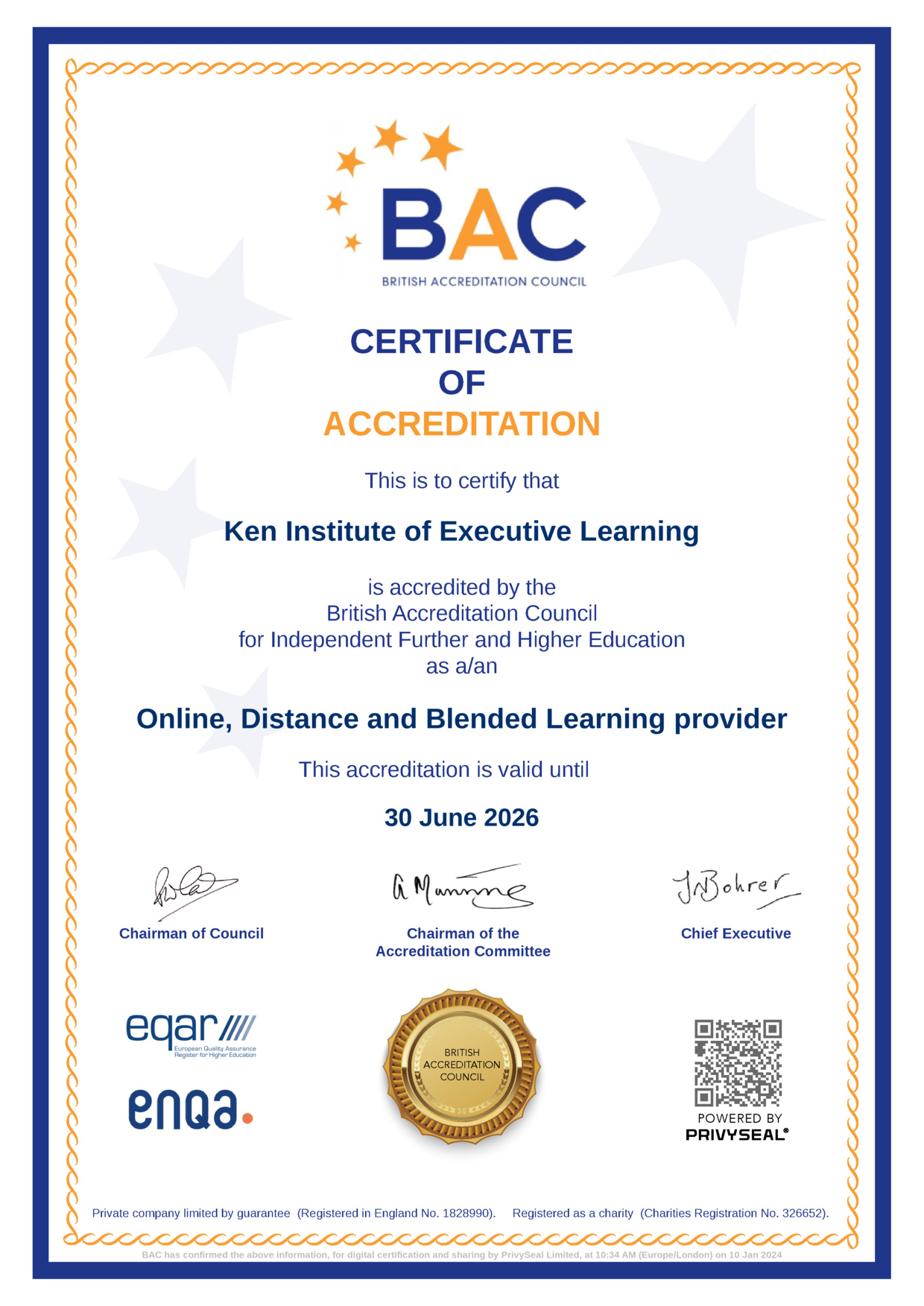
The British Accreditation Council (BAC) is one of the United Kingdom’s most respected and long-standing regulatory bodies for independent higher and further education. Established in 1984, BAC sets rigorous quality assurance standards for educational institutions delivering training, professional programmes, vocational qualifications, and international education. Their evaluation framework spans institutional governance, academic delivery, student support, assessment integrity, infrastructural quality, and operational transparency. BAC accreditation is globally recognised as a benchmark of educational excellence, trusted by students, governments, and employers across Europe, the Middle East, Asia, and Africa. It ensures institutions consistently meet internationally aligned quality standards, making BAC one of the world’s most credible and respected accreditation bodies.
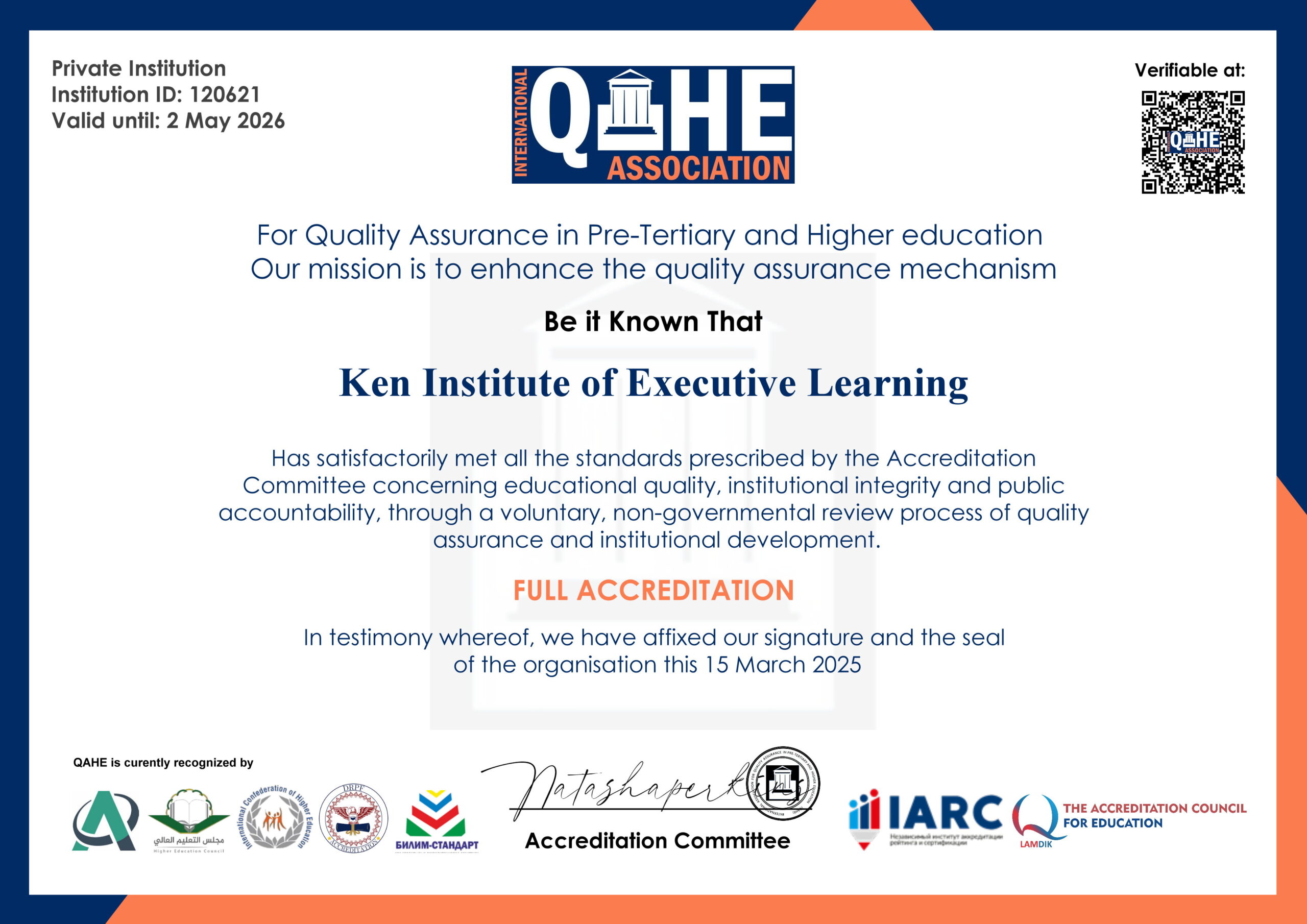
The International Association for Quality Assurance in Pre-Tertiary and Higher Education (QAHE) is a global quality assurance organisation headquartered in the United States, widely known for setting robust international standards for academic quality, institutional governance, and educational excellence. QAHA works with universities, colleges, training institutes, and professional academies around the world, evaluating them on strict parameters including learning outcomes, faculty expertise, curriculum relevance, academic integrity, and student experience. Their accreditation is recognised by education authorities, employers, and professional bodies internationally. QAHE is committed to enhancing global quality standards in both physical and online education ecosystems, making it a respected authority in the worldwide accreditation and certification landscape.
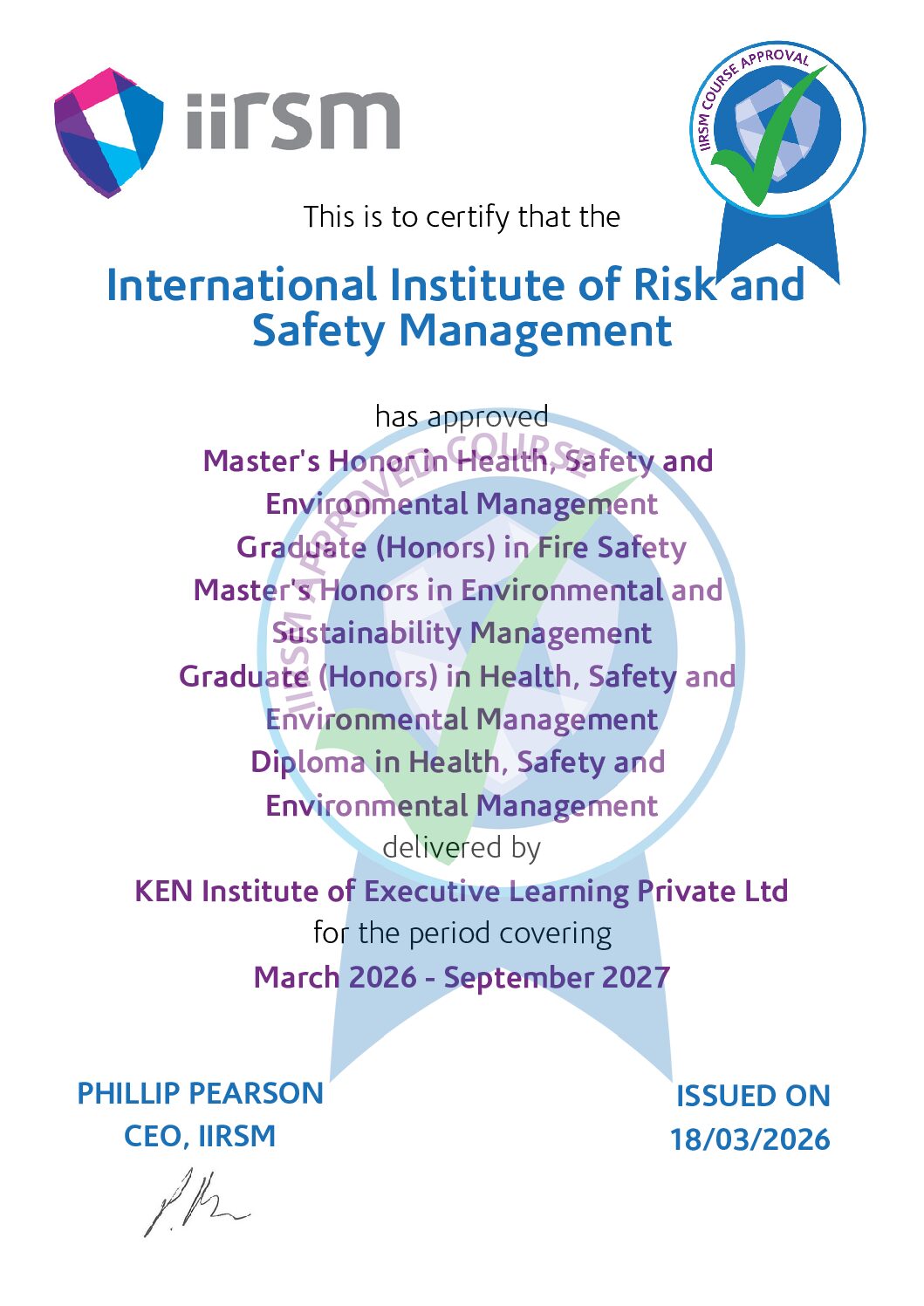
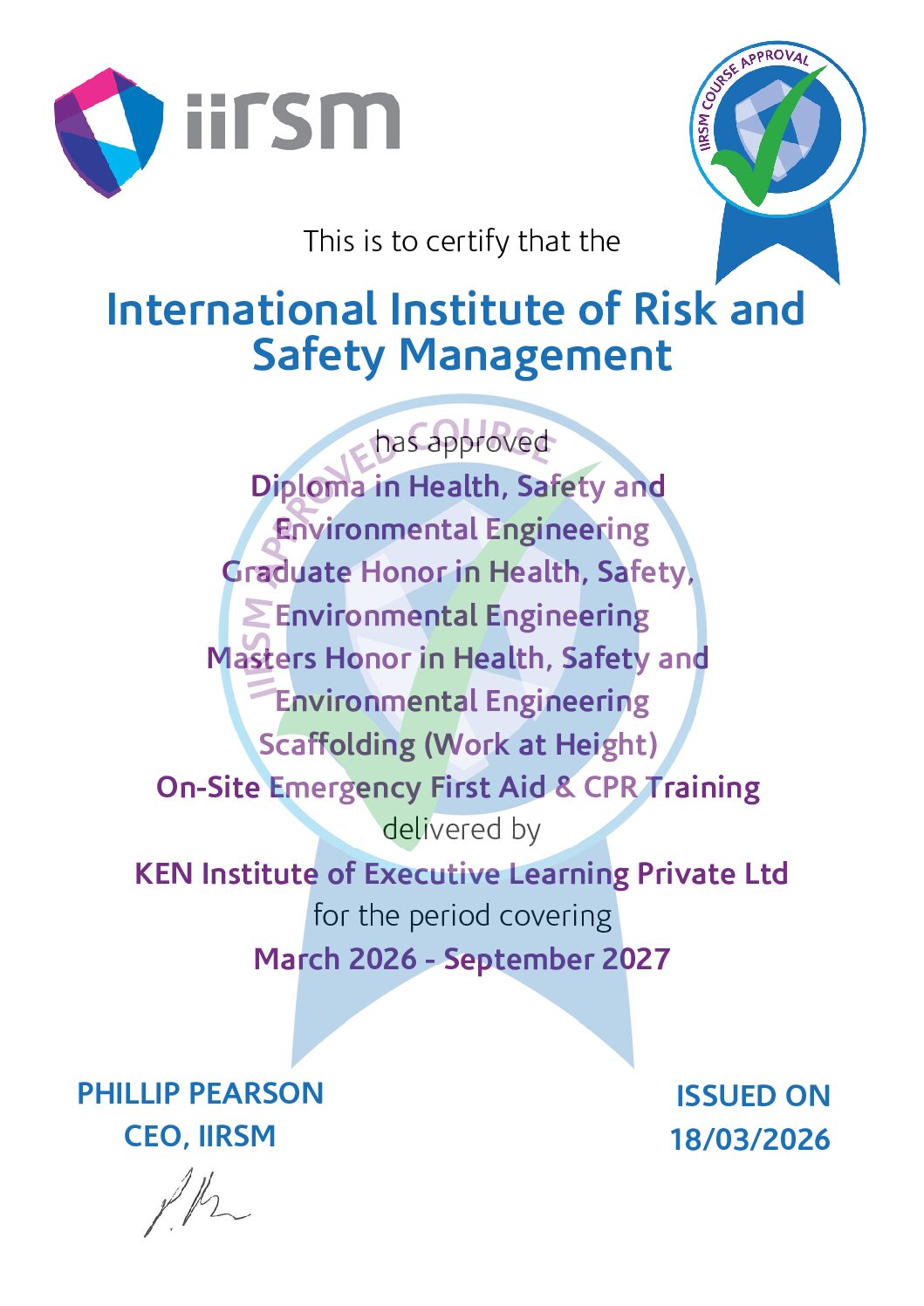
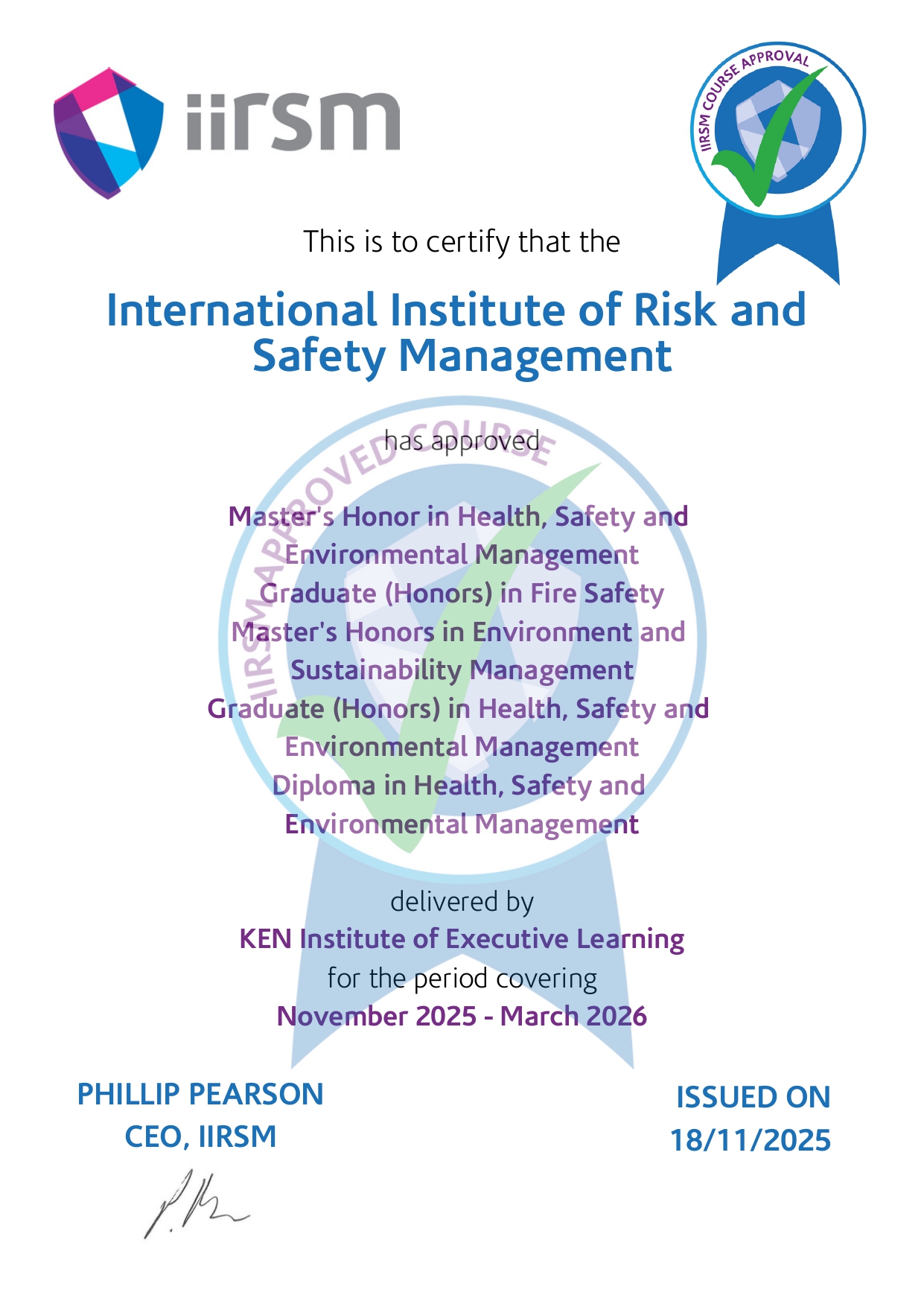
The International Institute of Risk & Safety Management (IIRSM) is a globally renowned professional body dedicated to advancing best practices in risk management, health and safety, and organisational resilience. Established in 1975 and headquartered in London, IIRSM supports safety professionals, risk leaders, consultants, and organisations across more than 90 countries. It provides internationally recognised memberships, industry guidelines, competency frameworks, and professional development pathways aimed at improving workplace safety and risk-management leadership. Its members come from diverse sectors including oil & gas, engineering, manufacturing, construction, transport, and government. IIRSM’s long history, global membership base, and strong reputation make it one of the world’s most respected bodies in the field of health, safety, and risk management.
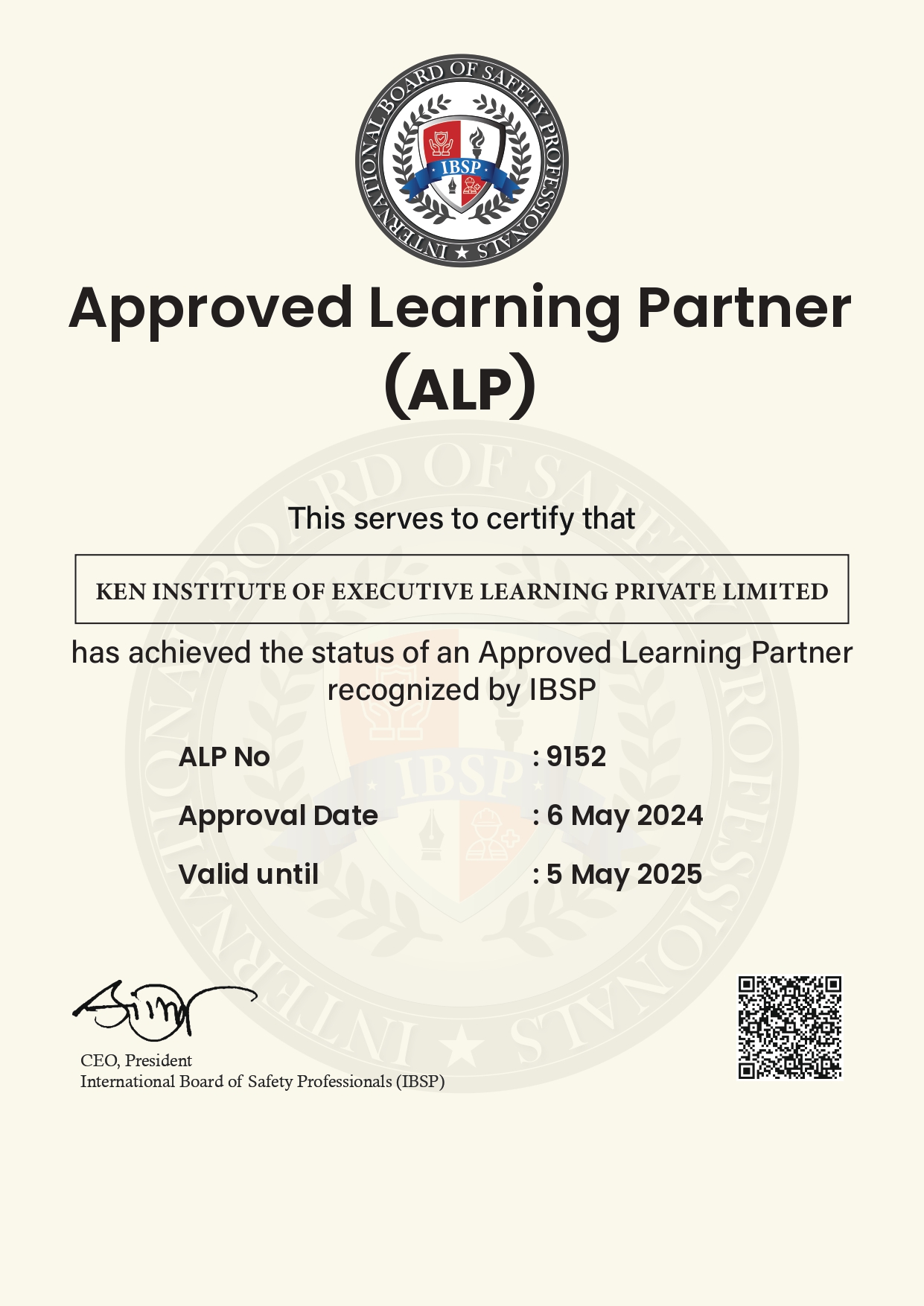
The International Board of Safety Professionals (IBSP) is a respected global organisation committed to elevating professional standards in occupational health and safety, risk management, environmental protection, and industrial safety practices. IBSP provides internationally recognised certifications that validate the competence and expertise of safety professionals across various industries. The organisation establishes structured qualification frameworks and assessment methodologies to ensure safety practitioners meet globally accepted benchmarks. Operating across multiple continents, IBSP collaborates with industry regulators, professional forums, corporate safety leaders, and training institutions. Its reputation for strict standards and ethical professionalism makes it a trusted name in the global safety certification ecosystem.
The Royal Society for the Prevention of Accidents (RoSPA) is a UK-based charity founded in 1916, widely regarded as one of the most influential authorities in accident prevention and workplace safety. With a legacy spanning more than a century, RoSPA promotes safety through research, policy advocacy, training standards, educational resources, and national safety campaigns. Its work covers occupational health & safety, road safety, home safety, water safety, and public health. RoSPA collaborates with governments, global corporations, educational bodies, and safety professionals to reduce accidents and improve safety culture. Its awards programme is considered one of the most prestigious recognitions in the world of health and safety excellence.
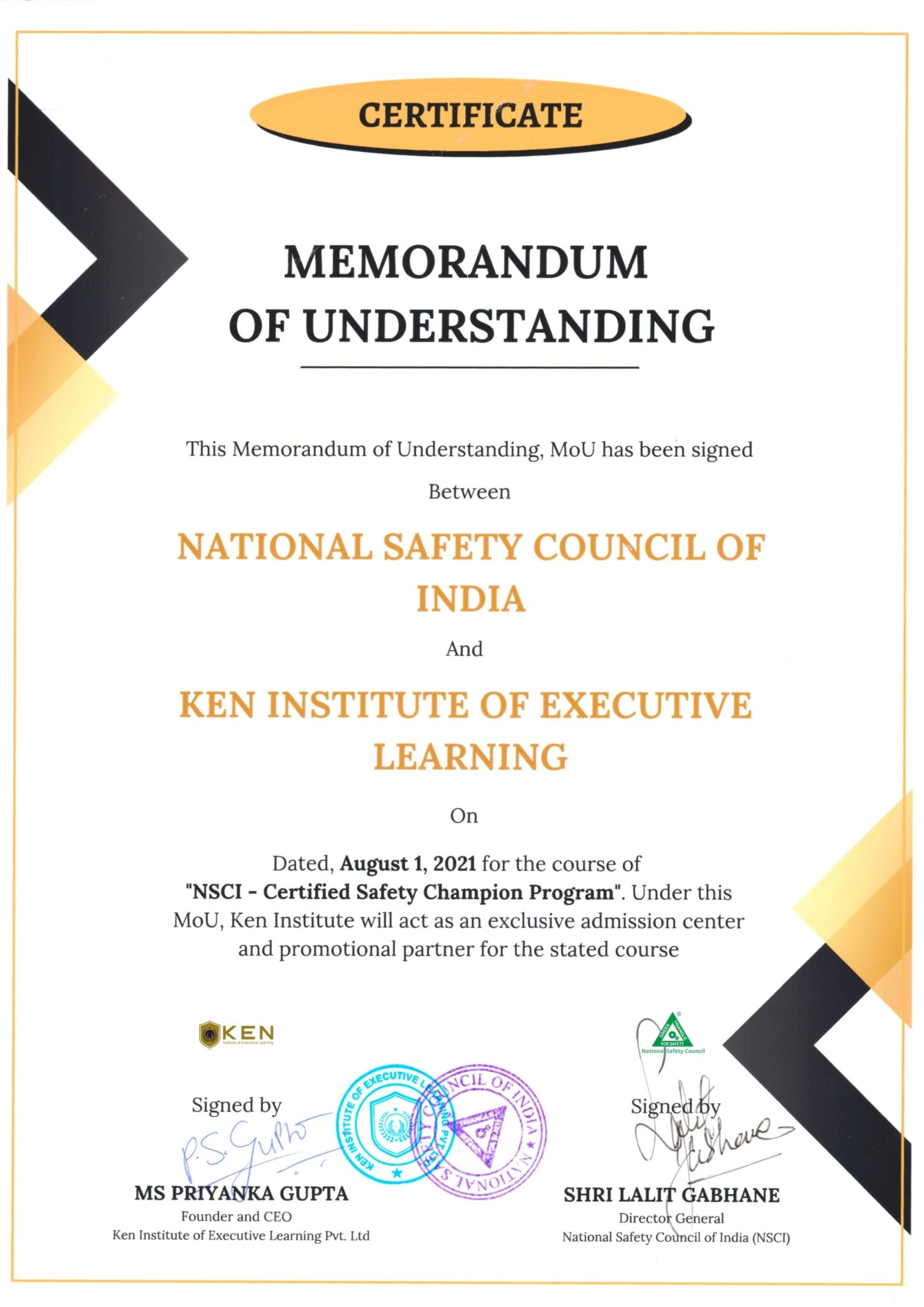
The National Safety Council (NSC) of India is a premier autonomous national body established by the Ministry of Labour & Employment, Government of India. Since its formation in 1966, NSC has been dedicated to promoting safety, health, and environmental protection across Indian industries. It provides guidance on safety regulations, organises national safety campaigns, conducts audits, facilitates training programmes, and works closely with industries to enhance workplace safety awareness. NSC collaborates with various government departments and industrial associations to strengthen compliance and improve national safety standards. Its decades-long contribution has positioned NSC as a credible and authoritative institution in India’s industrial safety ecosystem.
The Institution of Engineers (India) commonly known as IEI, is India’s largest multidisciplinary professional engineering body and one of the oldest in Asia, established in 1920. With more than one million members across 15 engineering disciplines, IEI plays a central role in promoting engineering excellence, professional development, competency validation, and national engineering policy contribution. It conducts examinations, publishes journals, accredits educational programmes, organises conferences, and offers chartered engineering status. Recognised by global engineering forums and government bodies, IEI is respected for its focus on standardisation, ethical practice, and engineering innovation. Its sheer scale, legacy, and influence make it a cornerstone institution for the engineering profession in India.
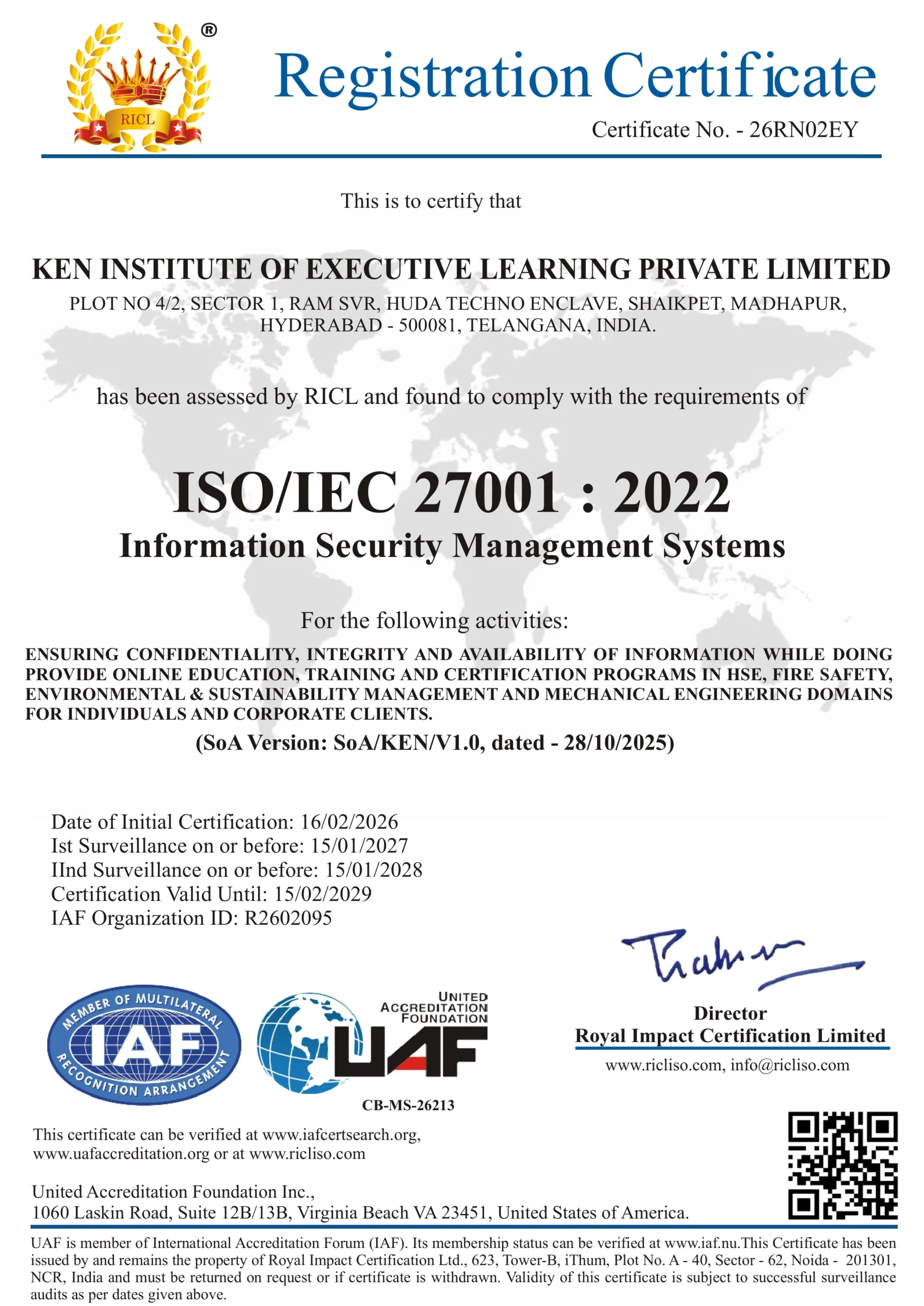
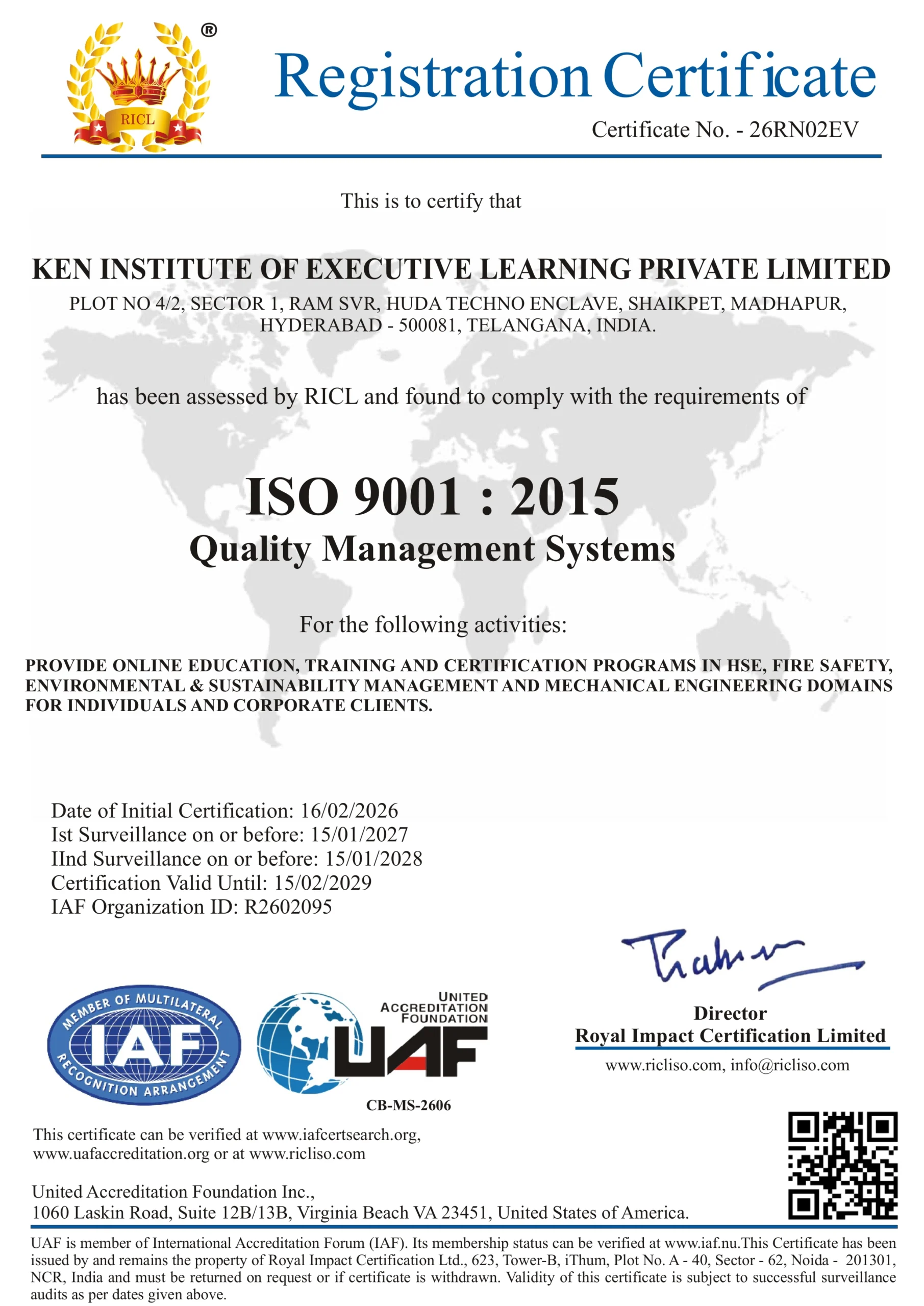
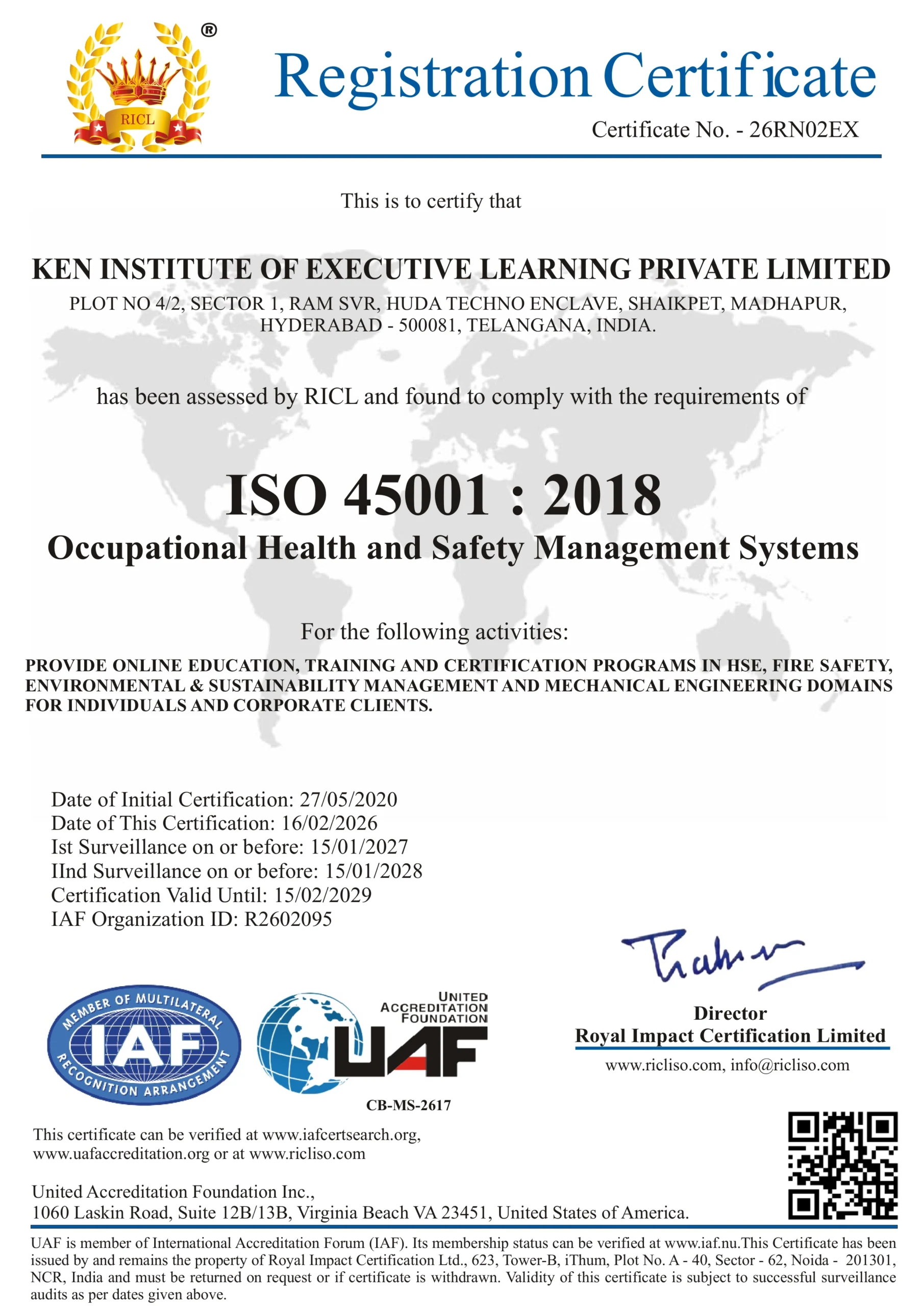
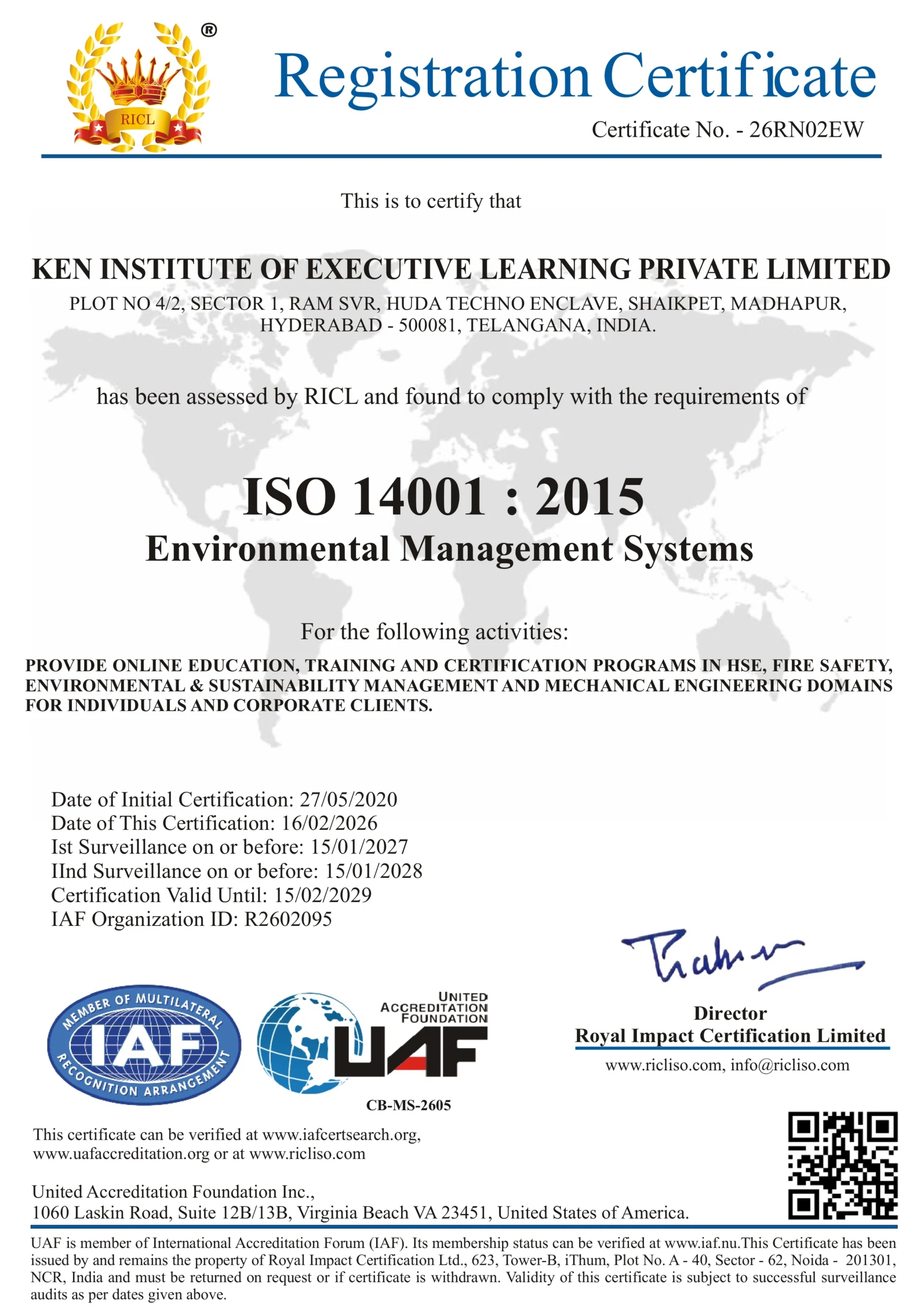
ISO certification is a globally recognised validation awarded by the International Organization for Standardization (ISO), confirming that an organisation’s management systems comply with internationally accepted standards of quality, safety, sustainability, and information security. ISO certifications assess organisational processes and governance frameworks rather than individual products or services.
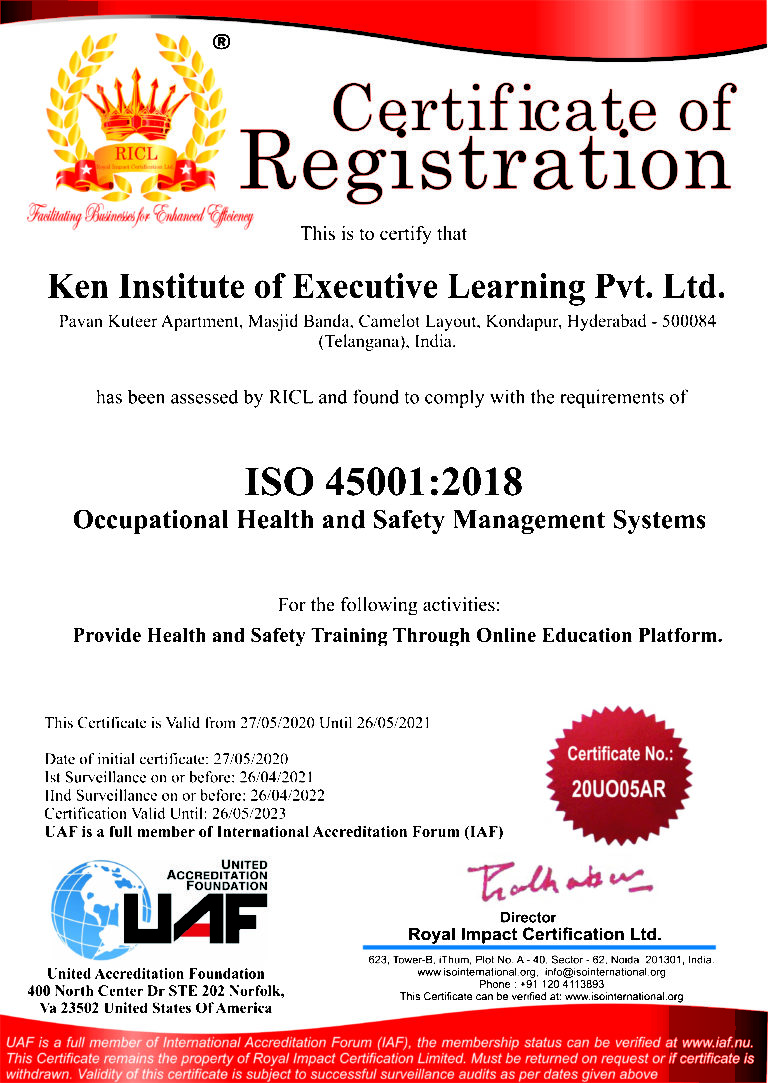
Ken Institute holds the following ISO certifications, issued by the United Accreditation Foundation (UAF), demonstrating compliance with the latest international standards:
These certifications collectively reflect Ken Institute’s alignment with globally accepted best practices across academic quality, environmental stewardship, workplace safety, and information security.
ISO certifications matter to us because they provide international credibility, operational transparency, and stakeholder confidence. By achieving ISO 9001:2015, ISO 14001:2025, ISO 45001:2018, and ISO/IEC 27001:2022 certifications issued by UAF – Ken Institute demonstrates a comprehensive commitment to excellence across all areas of institutional governance.
Collectively, these ISO certifications reinforce Ken Institute’s commitment to being a globally aligned, quality-driven, and responsible institution, providing confidence to learners, partners, regulators, and international stakeholders.


Ken Institute follows a continuous improvement model:
Our accreditations represent not just validation, but a promise—a promise of excellence, trust, and global recognition.
At Ken Institute, transparency matters. For accreditation verification or documentation requests, please contact us at info@keninstitute.com.