
Botswana’s copper and nickel mining sector saw significant expansion in 2026, driven by projects like NexMetals’ Selkirk deposit and broader critical minerals strategies, amid new regulatory frameworks emphasizing safety. These developments coincided with updated national standards, though direct causal links from copper-nickel specifically remain tied to overarching mining reforms rather than isolated incidents.
THE KEY INFLUENCES ON THE NEW 2026 NATIONAL SAFETY STANDARDS
The official policy documents detail Botswana’s new National OSH Policy and guidelines for mineral resource governance amidst industry expansion.
Mandatory Rehabilitation Funds: The Mines and Minerals (Amendment) Act No. 14 of 2024, came into full force on October 1, 2026, now legally mandates that mining companies establish dedicated environmental rehabilitation funds.
This shift ensures long-term safety and site stability after the closure of large-scale copper and nickel projects.
These ensure funds for closure, backfilling excavations, and surface repair post-mining.
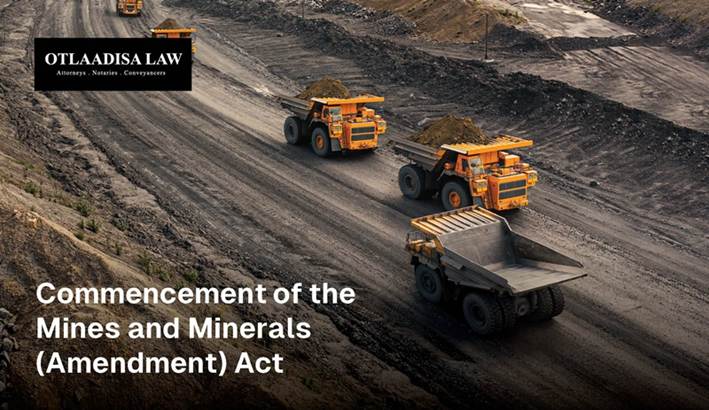
Image Source: otlaadisa
National OSH Policy Realignment: In May 2026, Botswana launched a new National Occupational Safety and Health (OSH) Policy. This policy addresses emerging risks from new chemicals and automated processes used in modern copper extraction, aiming to bridge a long-standing data gap in occupational injury reporting.
OHS BILL PROVISIONS
The OHS Bill No. 17 of 2026, now law, requires employers to supply proper personal protective equipment (PPE) and conduct risk assessments across sectors. It builds on the 2002 Occupational Health and Safety Act by outlining incident reporting, hazard procedures, and stakeholder duties. This applies broadly, including mining, with enforcement via the Department of Occupational Health and Safety.
Technological Safety Integration: Expansions like the $900 million Khoemacau project utilize sophisticated processing and underground mining methods that are being used as benchmarks for the “optimal and scientific mining” standards referenced in 2026 legislative updates.
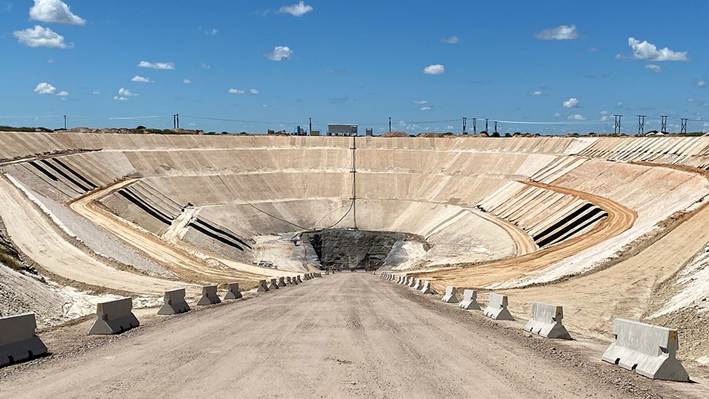
Image Source: bus-ex
Sustainable Governance: New regulations emphasize ESG (Environmental, Social, and Governance) criteria, requiring companies to adhere to international best practices for tailings storage facility (TSF) design and governance, particularly in sensitive arid regions.
Community Safety and Participation: The 2026 reforms increased the required local ownership stake in new mining licenses to 24% (up from 15%). This expansion of local participation is tied to new requirements for proactive community engagement on environmental and health issues.
Image Source: https://www.youtube.com/
MINING EXPANSION OVERVIEW
Copper and nickel exploration advanced notably at sites like Selkirk, with 2026 drilling extending mineralization zones and raising C$46 million for redevelopment. Botswana’s Critical Minerals Strategy promoted diversification beyond diamonds, enhancing geological surveys and infrastructure for these metals. This growth positioned the country as an emerging copper-nickel hub, supported by stable policies attracting investment.
INFLUENCE AND CONNECTIONS
Expansion pressured regulatory evolution, as the strategy integrates “rigorous safety and environmental standards” with streamlined licensing to balance growth and risks. While no major 2026 copper-nickel accidents were reported prompting changes, ongoing concerns like those at copper sites (e.g., Kopano) and general mining fatalities underscore the push for zero-harm cultures. These reforms align with international practices, likely accelerated by sector growth to maintain investor confidence and workforce protection.
MINES AND MINERALS ACT CHANGES
In Botswana, licence holders must now operate to “ensure safety, health and environmental protection,” alongside economic and citizen benefits. Key additions include mandatory environmental rehabilitation trust funds or financial guarantees from approved banks for mine closure and restoration. Penalties for non-compliance rose, and directors/shareholders in default are barred from new concessions, promoting accountability.
BROADER IMPACTS
These updates align with mining growth, mandating safe excavations, nuisance prevention, and compliance inspections. No entirely new standalone mining safety act emerged in 2026, but amendments integrate safety into operations. Factories Act provisions on registers and sanitary conditions persist as supporting standards.
Mines and Minerals Act Impacts
No mining-specific safety act passed solely in 2026, but these reforms elevate standards via penalties and oversight.
Licence holders must now conduct operations ensuring “safety, health and environmental protection,” alongside economic contributions.
Inspectors gain powers to enforce compliance, abate nuisances, and examine records, with obligations like safe excavations and borehole preservation.
Directors/shareholders of non-compliant firms face bans on new concessions, raising accountability for workplace risks.
OHS Bill Effects
Enacted late 2026, this broad law mandates risk assessments, PPE provision, implement hazard controls and incident reporting in workplaces, including mines.
It strengthens duties for employers and safety officers, building on prior acts to cover hazards like those in copper-nickel sites.
Mandatory incident reporting and appointment of trained safety officers.
Expanded duties for stakeholders to prevent occupational hazards.
These integrate workplace safety into mining amid copper-nickel growth, without a standalone mining safety act.
Combined Influence
Amendments tie rehabilitation funds to safe practices, prohibiting wasteful operations and mandating surface repairs.
Licence holders must ensure operations prioritize “safety, health and environmental protection” alongside economic benefits.
Mandatory environmental rehabilitation trust funds or bank guarantees for mine closure, backfilling, and surface restoration.
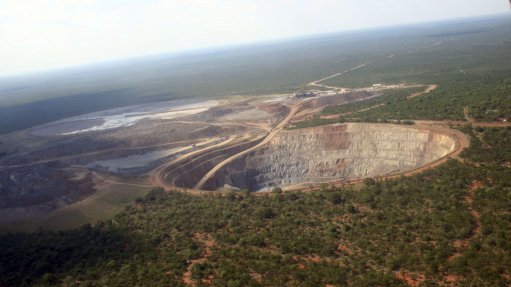
Image Source: https://www.miningweekly.com/
Safe borehole preservation and removal of camps/excavations within 60 days of licence expiry.
Inspectors empowered to abate nuisances, enforce safe practices, and access records.
Non-compliant directors/shareholders barred from new concessions; penalties increased.
KEY OBSERVATIONS
These amendments focus on local mandates like safety prioritization, risk assessments, PPE requirements, rehabilitation funds, and inspector powers without citing international benchmarks. Botswana’s laws draw from general occupational health principles and prior acts (e.g., Factories Act), not ISO 45001, ISO 14001, or similar.
COMPLIANCE CONTEXT
Operators may voluntarily align with global standards like ISO for best practices amid copper-nickel expansion, but amendments impose direct national rules without formal references. No evidence of ISO/IS integration appears in legislative texts or summaries.
OPERATIONAL OBLIGATIONS
Licence holders must exploit minerals while ensuring “safety, health and environmental protection,” including safe borehole preservation and camp removal within 60 days of licence expiry.
Non-compliance bars directors/shareholders from new concessions and incurs higher penalties.
This ties rehabilitation to broader zero-harm goals in mining.
CONCLUSION
In 2026, Botswana’s transition from a diamond-dependent economy to a diversified mineral hub. Massive Copper and Nickel Mining Expansions, has catalyzed a major overhaul of national safety and environmental regulations. The expansion of the Khoemacau Copper Mine which entered full-scale commercial production in 2026, has specifically influenced by integrating advanced mining technologies that the government is now codifying into national law.
Join us and unlock a world of online courses in Mechanical Engineering, Occupational Health and Safety, Fire Safety, and Environment and Sustainability. Propel your career to new heights.
Propel your career to new heights.
Connect now and take the next step toward professional excellence!
+91 7569034271
Let’s connect together on: Facebook, YouTube, LinkedIn, and Instagram.