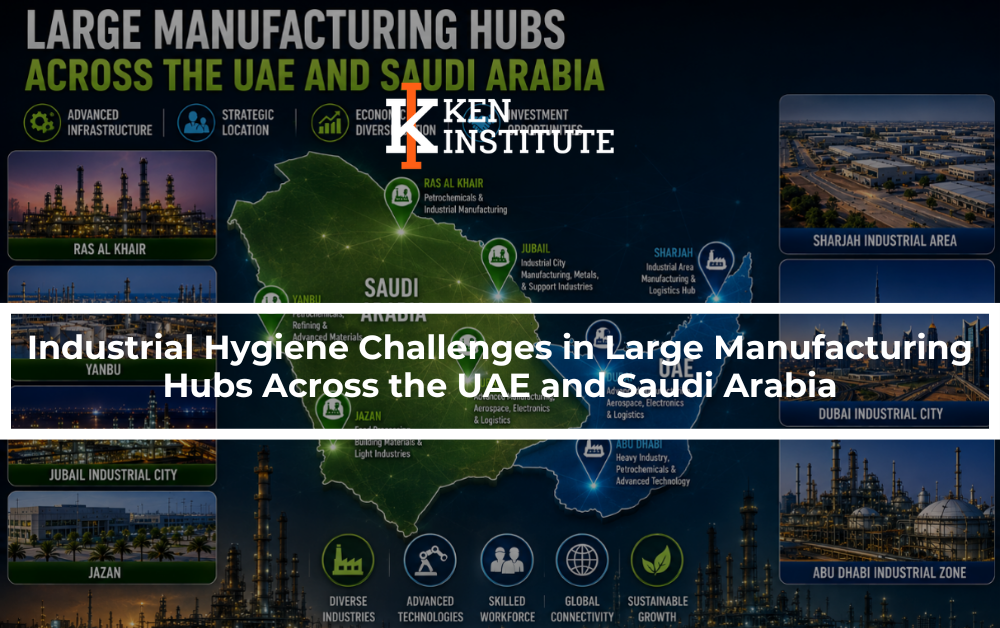
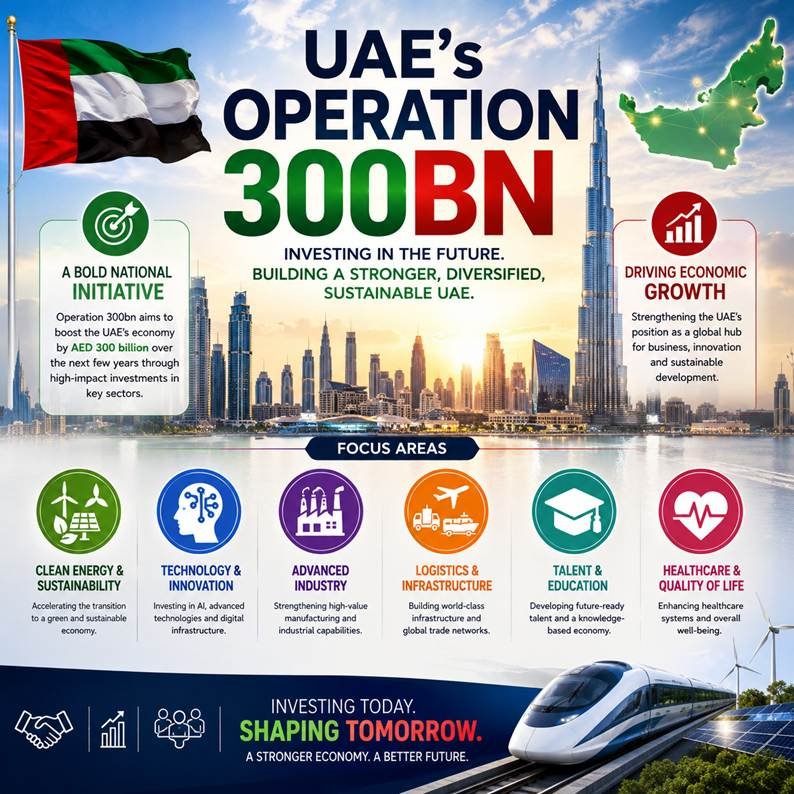
Industrial hygiene is a Pivotal Economic Priority in the United Arab Emirates (UAE) and Saudi Arabia. Fueled by the UAE’s Operation 300bn and Saudi Arabia’s Vision 2030, both nations are proliferating boundless advanced manufacturing, chemical production, and massive industrial hubs. This rapid advancement has introduced a complexity of workplace health hazards, regulatory changes, and environmental stressors.
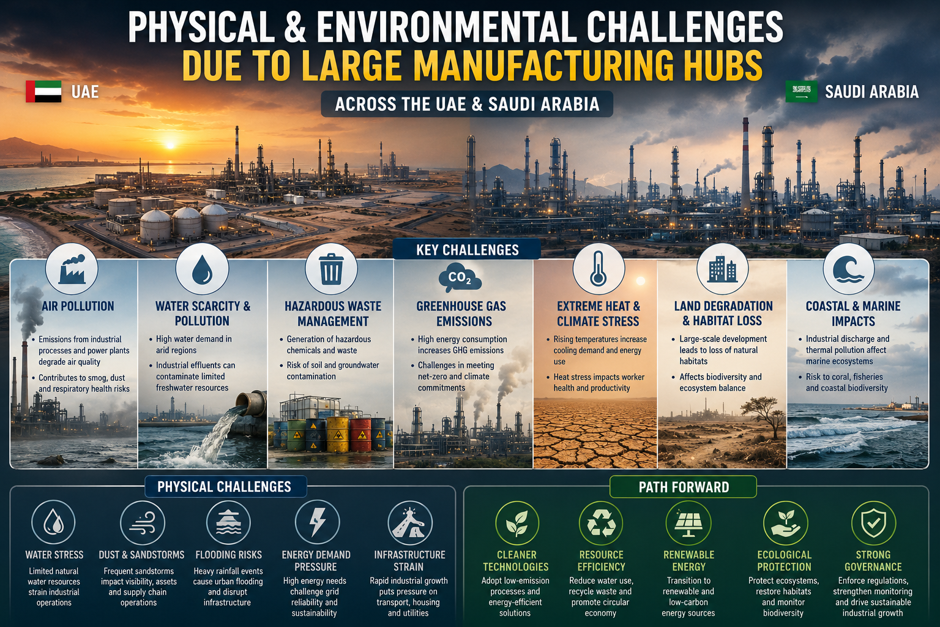
Industrial environments in the Gulf Cooperation Council (GCC) face extreme physical and environmental challenges.
Physical Hazards:
Extreme Environmental & Heat Stress
Thermal Stress: Heavy manufacturing plants (steel, aluminum, and petrochemicals) generate massive internal radiant heat. Combined with outdoor summer ambient temperatures exceeding 45°C, this creates extreme risks of heat exhaustion and heat stroke for the workforce.
Ventilation Burdens: Saudi Building Code mandates strict ventilation and climate-control standards. Factories struggle to balance high forced-air cooling loads with containment requirements for airborne dust and fumes.
Industrial Noise: The widespread deployment of heavy automation, high-speed stamping, and large-scale HVAC units requires extensive, continuous noise-mapping and hearing-conservation frameworks.
Chemical Hazards:
Shifting Toxicological Profiles
Advanced Material Exposure: Workers face exposure to specialized volatile organic compounds (VOCs), complex polymers, raw petrochemicals, and heavy metal dust from electronics and battery manufacturing hubs.
Bilingual Hazard GHS Alignment: Industrial hygiene teams must strictly implement the Global Harmonized System (GHS) for chemical labeling. To ensure that complex safety data sheets (SDS) and chemical safety guidelines are accurately communicated to a multilingual workforce.
Strict Chemical Enforcement: Regulators are clamping down on chemical non-compliance. For example, recent draft are updated to introduce strict penalties, including fines.
Multilingual & High-Turnover Workforce Management
The industrial workforce in UAE and Saudi manufacturing hubs consists largely of diverse expatriate personnel, introducing distinct training and safety culture challenges.
Language Barriers: Common environment, health, and safety (EHS) audit failures frequently stem from a lack of critical safety signage and operational procedures translated into workers’ native languages .
Localized Workforce Transitions: As localization mandates accelerate, such as the expansion of industrial plants must rapidly embedded and require to train citizens who may be entering heavy manufacturing environments for the first time.
Ergonomic Hazards:
Advanced Automation & Robotics
Static Load & Repetitive Motion: Advanced automation reduces heavy lifting but it shifts the ergonomic risk to repetitive machinery feeding, prolonged monitoring postures, and static loading during precision tech assembly.
Human-Robot Co-habitation: The introduction of collaborative robots (cobots) requires layout designs to eliminate unexpected impact injuries and reduce cognitive fatigue from simultaneous human-machine tasks.
Regulatory Fragmentation & Compliance Evolution
Centralized Oversight: Authorities like Saudi Arabia’s National Council for Occupational Safety and Health and the General Organization for Social Insurance (GOSI) have expanded inspections and increased penalties for workplace safety failures.
The Saudi Ministry of Municipalities has introduced stringent spatial and licensing mandates for urban and support factories.
New Medical Mandates: The implementation of Saudi Arabia’s Occupational Health policy requires systematic pre-employment screenings, routine periodic medical monitoring, and deep & detailed return-to-work fitness tests for industrial laborers.
The SME Compliance Gap: While large entities like Saudi Aramco, SABIC, or ADNOC execute world-class IH programs, smaller industrial SMEs often struggle with the financial and technological resources needed to manage complex industrial hygiene data.
Industrial Hygiene Mitigation Approaches
Large manufacture ring hubs are adopting advanced mitigation strategies:
- Real-time Monitoring- Implementing cloud-connected IoT air-quality sensors and wearable health trackers to log exposure data instantly.
- Ergonomic Engineering – Designing customized workstation layouts using 3D modeling software to minimize physical strain before lines are built.
- Unified Digital EHS – Transitioning from manual spreadsheets to automated compliance platforms to manage ISO, OSHA, and regional ministerial requirements smoothly.
- Visual/Universal Training – Utilizing highly visual, language-agnostic training manuals and interactive digital platforms to overcome communication hurdles.
Key Differences in Industrial Hygiene Challenges: UAE Vs. Saudi Arabia
Though Saudi Arabia and the United Arab Emirates are close neighbours, also sharing common boundaries, there are many variations in industrial hygiene challenges in their large manufacturing hubs.
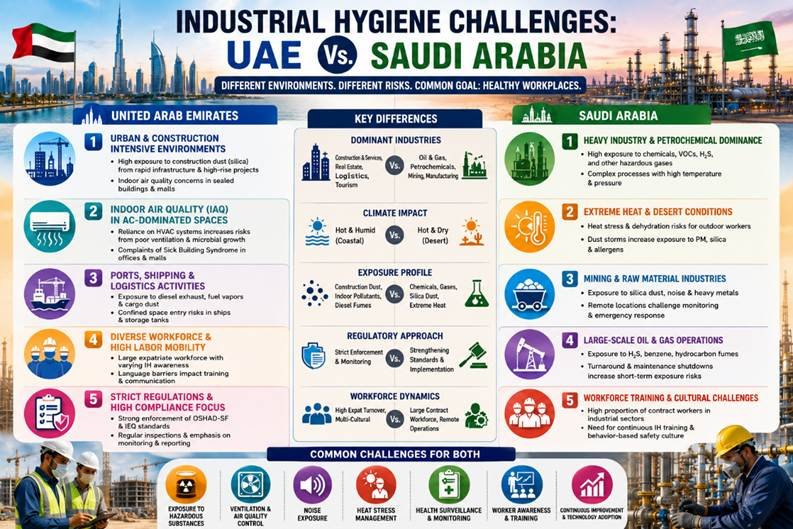
Differences in Heat Stress Monitoring Requirements
Both UAE and Saudi Arabia enforce midday outdoor work bans during summer (June 15–September 15), but they differ significantly in monitoring requirements, timing, and enforcement:
Core Regulatory Differences
- Restricted hours:
UAE & SA both apply simultaneous restricted hours from12:30 PM – 3:00 PM .
- Fine per worker per violation
UAE – AED 5,000 up to AED 50,000 total
SA – SAR 10,000
- Exemptions
UAE – Urgent public service repairs (utilities, traffic)
SA – Limited exemptions; indoor AC facilities allowed
- Primary heat metric
UAE – Heat Index (air temperature + humidity )
SA – WBGT (Wet Bulb Globe Temperature) with real-time sensors
- Monitoring frequency
UAE – Temperature records + shift logs
SA – Daily WBGT monitoring triggering automatic work stoppages
Critical Monitoring Requirements
UAE requirements:
Document compliance with shift logs, temperature records, and safety briefings
Provide shaded rest areas, cooling solutions, drinking water, and electrolyte supplements
Mandatory HSE training on heat hazard recognition and buddy system monitoring
Saudi Arabia requirements:
Real-time WBGT monitoring with automatic work stoppage triggers when exceeding safe limits
Cool water within 50 meters — 250ml every 20 minutes per worker
Designated cooling stations with air-conditioning or high-power misting fans
Daily toolbox talks on heat-related hazards
Heat stroke response protocol with trained first aiders, ice packs, cooling stations ready
Key Takeaway for Large Manufacturing Hubs across UAE & SA
1. Licensing & inspections [PDF]
Mandatory licensing for any facility handling hazardous chemicals before operations begin
Periodic + sudden inspections by MHRSD inspectors evaluating:
Ventilation systems
Chemical handling procedures
PPE usage
Workplace cleanliness
License suspension/cancellation for non-compliance
2. Workplace air monitoring
Regular air quality monitoring using specialized equipment Documentation of exposure levels to chemicals, dust, fumes, gases
Calibration records + detailed monitoring activity logs per regulatory requirements
Third-party services available for compliance assessments
3. Documentation & recordkeeping [PDF]
SDS (Safety Data Sheets) required for all imported/manufactured chemicals in Arabic + English
Movement records with regulator’s seal maintained for 5 years
Exposure assessment reports submitted during license applications
Medical records for employee health monitoring
4. Penalty structure
Penalties prescribed by Labor Law and ministerial decisions for violations
GAMEP can issue pollution abatement notices for persistent/severe air quality breaches
Facility shutdowns for non-compliance with emission standards
5.Limited national OEL (Occupational Exposure Limits) standards
Saudi Arabia lacks a comprehensive, updated national list of occupational exposure limits
Employers must reference international standards (ACGIH, OSHA), creating ambiguity
Some OSHA PELs are decades old and may not reflect current science
6. Inspection capacity gaps
Regular inspections mandated but resource constraints limit frequency
Multinational workforce with varying safety awareness complicates compliance
Language barriers in hazard communication (require Arabic + English labeling)
7. Monitoring technology adoption
Advanced monitoring tools (wearable sensors, real-time air monitors) emerging but not universally adopted
Many facilities still use manual sampling without continuous monitoring
Calibration and data quality inconsistencies
8. Worker engagement barriers
Low-skilled migrant workers with limited safety training
Weak worker participation in hazard reporting (fear of retaliation)
Training programs exist but inconsistent implementation across industries
Bottom Lines
Saudi Arabia’s chemical exposure enforcement relies on international standards adoption + licensing inspections rather than comprehensive national OELs. Companies must proactively adopt best practices beyond minimum regulatory requirements to protect workers from chronic chemical exposures.
To ensure hygiene in UAE & Saudi manufacturing facilities, they should adopt conservative benchmarks: Use ACGIH TLVs rather than outdated OSHA PELs. Implement continuous monitoring. Prioritize ventilation, scrubbers, containment over PPE. Maintain 5-year movement records, calibration logs, exposure assessments. Conduct daily toolbox talks on chemical hazards in workers’ languages
Join Ken Institute now to advance your career with Higher Certification in Health & Safety Courses !
Internationally recognized courses and training programs designed to empower individuals and organizations. Our commitment is “academic excellence, quality standards, and robust training processes”.
Connect now and take the next step toward professional excellence!
+91 7569034271
Let’s connect together on: Facebook, YouTube, LinkedIn, and Instagram.