Kenya’s manufacturing sector is undergoing a major regulatory transformation in 2026, driven by the Directorate of Occupational Safety and Health Services (DOSHS) and the Kenya Bureau of Standards (KEBS). The overhaul focuses on shifting from passive equipment usage to data-driven, proactive safety systems.
Kenya’s Key 2026 Regulatory Changes & Requirements
Proactive Noise Control: The 2025 Draft Noise Rules shift from mere earplug usage to requiring engineering controls to manage noise exposure, with a peak cap of 140 dB.
Mandatory Registration: All manufacturing workplaces must register with the Directorate of Occupational Safety and Health Services (DOSHS), with failure to register resulting in potential fines of up to 200,000 shillings or imprisonment.
Strict Risk Assessments: Employers must conduct formal risk assessments for chemicals, machinery, and equipment, and submit reports to area safety officers.
Stricter Penalties: Non-compliance, including failure to report accidents or notify of workplace changes, can lead to fines up to 200,000 shillings or up to 6 months imprisonment.
Workplace Registration: Operating a manufacturing unit without valid DOSHS registration or a KEBS Certificate of Compliance can lead to the immediate closure of the facility.
Image Source: kebs
New PPE Hazards Compliance Rules
Starting January 15, 2025,
Personal Protective Equipment must be high-quality and also properly fitted to each individual employee to be considered compliant.
Mandatory KEBS Certification: All PPE, including impact-resistant safety helmets, steel-toe boots, and high-visibility clothing, must now bear KEBS-certified marks or meet equivalent international benchmarks.
Sector-Specific Gear: Manufacturing units must now provide task-specific hand protection (e.g., nitrile gloves for chemicals vs. cut-resistant for metal handling) and anti-fog safety goggles for high-debris environments.
Respiratory Protection: Employers are required to provide a range of protection from basic N95 masks for dust to advanced filtered respirators for toxic chemical vapors.
Eye/Face Protection: Mandatory safety goggles or face shields for welding, grinding, and chemical handling.
Hand/Body Protection: Specialized gloves (nitrile, leather, cut-resistant) and flame/chemical-resistant coveralls.
High-Visibility: Mandatory reflective jackets in areas with moving machinery or forklifts.
New PPE Rules & Standards marks a “liability reset” for manufacturers.
Kenya’s 2026 Hazard Compliance Procedures
Safety Committees: Mandatory for workplaces with 40 or more employees.
Medical Exams: Implementation of new national guidelines for occupational medical examinations to monitor worker health.
Public Participation: The deadline for input on the proposed 2025
Exposure Limits: New rules cap peak noise exposure at 140 dB and prioritize rigorous engineering controls (e.g., soundproofing machinery) over simple earplug distribution.
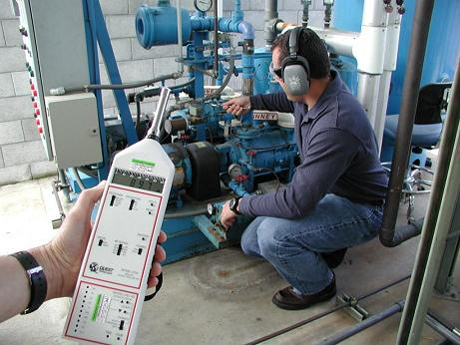
Image Source: acousticsworld
Data Collection: Companies are now legally required to maintain data on noise levels and employee hearing health, transitioning hearing preservation into a proactive legal duty.
Kenya’s Enhanced Hazard Compliance & Reporting
Standards Levy: Effective August 2025, a 0.2% levy on the monthly turnover of locally manufactured goods was introduced to fund KEBS’s increased enforcement of quality and safety standards.
Accident Reporting: Fatal accidents must be reported to DOSHS within 24 hours, while non-fatal injuries and occupational diseases require written notice within 7 days.
Mandatory Audits: Every occupier is required to carry out a thorough annual safety and health audit conducted by a certified advisor and submit the report to DOSHS.
Hazard Identification: Manufacturers must now issue Material Safety Data Sheets (MSDS) for any controlled substances handled, ensuring they accompany the substance during transport or storage.
Hazard Compliance: Hierarchy of controls mandates hazard elimination first, then reduction below occupational exposure limits (OELs) via engineering, admin measures, and PPE last. Manufacturing units face stricter reporting of accidents/dangerous occurrences to DOSHS officers, risk assessments, and worker health surveillance, with penalties for non-compliance.
Emerging rules promote data-driven prevention, including aggregated medical data for better controls and alignment with global standards.
Manufacturing Implications: Units must register equipment, conduct regular inspections, integrate OSH management systems, risk assessments and reporting, suggesting cross-regional training synergies.
Risk Assessments for Manufacturing Units
Kenya’s Occupational Safety and Health Act (OSHA) 2007 mandates occupiers of manufacturing units to conduct appropriate risk assessments to identify hazards and adopt preventive measures for chemicals, machinery, and processes. This ensures safe workplaces, with reports submitted to DOSHS officers; failure risks fines up to Ksh500,000 or six months imprisonment.
Legal Basis: Section 6(3) -Assessments cover hazards like machinery, chemicals, noise, ergonomics, and fire, extending to non-employees affected by operations.
Step-by-Step Process
Plan the Assessment: Appoint a 3-5 person team (including management, supervisors, workers) led by a safety officer.
Identify Hazards: Observe work, interview employees, analyze processes, and use checklists for normal/abnormal situations; consider physical, chemical, biological, ergonomic risks.
Assess Risks: Evaluate likelihood (frequency, predictability) and severity (nature, extent, duration of harm); use matrix to rate as low/medium/high.
Control Measures: Prioritize hierarchy—eliminate hazards, substitute safer options, engineer controls, administrative (training/rotation), PPE last; select based on effectiveness, impact, cost.
Record and Report: Document findings, actions, timelines in a report; send copy to DOSHS; post abstract of Act/notices; review annually or on changes.
Implement and Monitor: Train workers, assign responsibilities, audit via safety committees, track incidents; update for changes like expansion.
Penalties for Non-Compliance With 2025 OSH Rules
In Kenya penalties for non-compliance with OSH rules, including 2025 drafts and updates under the OSHA 2007 framework, escalate based on severity, ranging from fines of Ksh100,000–500,000 to imprisonment up to 2 years, with higher stakes for fatalities.
General Offences: Most violations, such as failing risk assessments, PPE provision, noise controls, or hazard reporting carry fines up to Ksh300,000–500,000 or 3–6 months’ imprisonment, or both; continued breaches add daily fines like Ksh10,000.
Serious Breaches: Occupiers neglecting safety statements, committees, or equipment registration face Ksh100,000–200,000 fines or 3 months’ jail; interference with safety measures incurs similar penalties.
Death or Injury Cases:
If non-compliance causes death or serious injury, occupiers/owners risk Ksh1,000,000 fines or 12 months imprisonment, with fines potentially benefiting victims.
Timeline and steps for factories to implement new safety controls
Kenya’s manufacturing factories must implement 2026 OSH controls immediately upon gazettement, with phased compliance, typically allowing 3–12 months for full rollout.
Immediate Actions (0–3 Months): Notify DOSHS of changes, form/implement safety committees, conduct baseline risk assessments, and post safety notices; train supervisors on new hazard controls like noise monitoring above 85 dB(A).
Short-Term (3–6 Months): Install engineering fixes, procure/maintain PPE (hearing protection, respirators), develop written programs for noise/exposure, and register equipment for inspections; submit assessment reports to DOSHS.
Medium-Term (6–12 Months): Roll out worker training programs, audiometric testing for noise-exposed staff, annual audits, and incident reporting systems; integrate into OSH management systems with committee reviews.
Training for Workers On New Hazard Compliance Rules
Kenya’s 2026 OSH rules, require to train factories workers on new hazard compliance with mandatory programs delivered by competent persons.
Training Content: Cover hazard recognition, safe work practices, PPE proper use/maintenance, emergency procedures, and risk control hierarchy; include hands-on demos for manufacturing tasks.
Frequency and Delivery: Initial training for new hires within 1 week; refresher annually or on rule changes (e.g., 2026 noise drafts); safety officers or NITA (National Industrial Training Authority) approved trainers conduct sessions via committees, with records kept for DOSHS audits.
Worker Coverage: All employees, contractors, and visitors exposed to hazards; high-risk roles get specialized sessions like audiometric awareness; factories with 20+ workers form committees for ongoing training oversight.
Summary
Kenya’s 2026 occupational safety overhaul for manufacturing focuses on a major “liability reset,” updating regulations from 2005 to prioritize engineering controls over simple PPE usage, particularly for noise control, flammable materials, poor housekeeping, and confined spaces. Studies urge audits, training, and PPE to cut prevalence from 41.3% in Kenyan factories.
Compliance studies show 76.5% adherence in food manufacturing, boosted by PPE provision.
Join us and unlock a world of online courses in Mechanical Engineering, Occupational Health and Safety, Fire Safety, and Environment and Sustainability. Propel your career to new heights.
Propel your career to new heights.
Connect now and take the next step toward professional excellence!
+91 7569034271
Let’s connect together on: Facebook, YouTube, LinkedIn, and Instagram.