Morocco has launched the process for a National Circular Economy Roadmap toward circular models, intended to reorient industrial policy. These policies links green manufacturing with export competitiveness and the Morocco‑EU Green Partnership, through the development of a new generation of Eco-Industrial Parks (EIPs).
These initiatives aim to position the country as a low-carbon industrial base and a regional leader in sustainable innovation. These parks will integrate clean energy, water efficiency upgrades, and circular economy practices with a total investment exceeding MAD 989 million.
Launch Details
The initiative, led by the Ministry of Energy Transition and Sustainable Development with UNIDO and EU support under the SWITCH2CE project, began with a kick-off meeting on April 23, 2025. It aims to create a strategic plan for sectors like plastics, textiles, construction, and agriculture, focusing on resource efficiency, waste reduction, and sustainable practices.
Planned Milestones
Key steps include a diagnostic analysis of current circular practices, stakeholder consultations, priority sector identification, funding strategies, and a monitoring framework.
Crucial Eco-Industrial Park Initiatives
Morocco has approved and is developing specialized zones to integrate circular practices:
FONZID II Program: In May 2025, four new industrial zones were approved in Oued Zem, Ameur, Taroudant and Mohammedia.
Smart Factory 4.0: A project in Fez focuses on digital transition and smart manufacturing to improve resource efficiency.
Specialized Manufacturing Zones: New hubs like World Green Energy (WGE) and World Pharma Manufacturing (WPM) are being established to attract innovators looking to engage with Morocco’s clean industrial strategy.
Strategic Impact of Eco-Industrial Parks on Sustainability
The shift to EIPs is driving systemic changes across manufacturing sectors:
Industrial Symbiosis: A €648 million national strategy is transforming municipal waste into 680,000 tonnes of biofuel (Refuse Derived Fuel) annually to replace fossil fuels in the cement industry.
Decarbonization: By leveraging its status as a leader in renewable energy (e.g., the 580 MW Noor Ouarzazate Solar Complex), Morocco aims to power industrial zones with clean electricity, which is critical for meeting modern global supply chain requirements.
Eco-Industrial Parks – Sector Specific Initiatives
Automotive: New projects are mapping value chains to identify priority areas for recycling and reuse, aiming to reduce production costs and material shortages.
Textiles: Efforts are focused on eliminating fabric waste (currently 83,200 tons annually) and aligning with strict European Union circularity criteria expected by 2026.
Plastics: The SWITCH2CE project aims for a 70% recycling rate by 2030, including bottle-to-bottle recycling pilots.
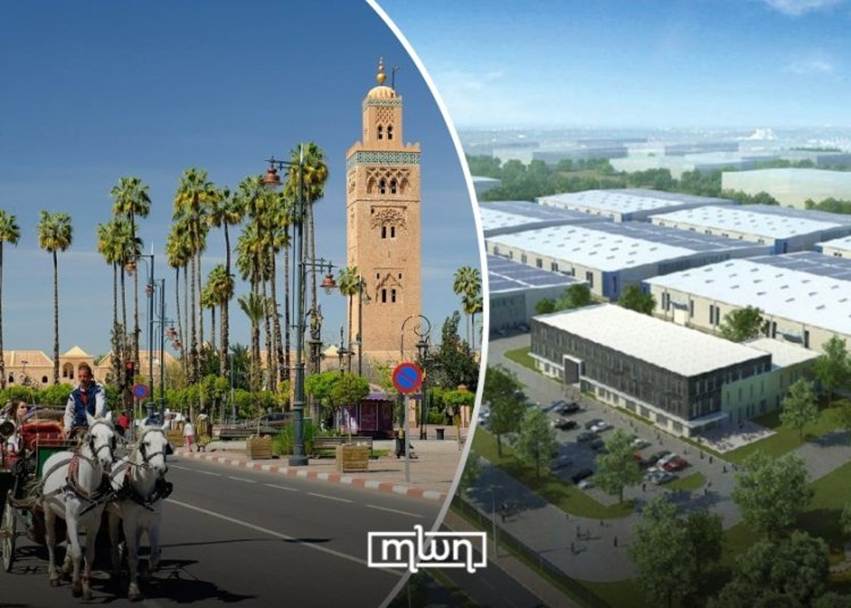
Eco Industrial Park at Marrakech
Fig. Courtesy of: moroccoworldnews
Policy and Economic Drivers of Eco-Industrial Parks
Circular Economy Roadmap: Slated for full completion by the end of 2025, this roadmap provides an actionable plan for resource efficiency and waste minimization across all industries.
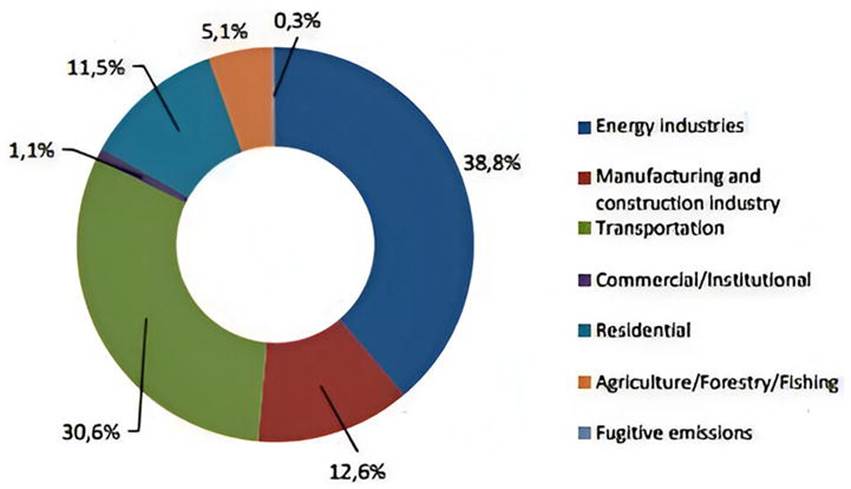
Fig. Courtesy of: researchgate
Extended Producer Responsibility (EPR): Planned legislation will mandate that producers take financial and physical responsibility for the end-of-life management of their products.
International Partnerships: Collaborations with UNIDO (United Nations Industrial Development Organization), the EU (European Union), and Finland provide technical expertise and funding (such as the $127 million industrial land investment from “The Millennium Challenge Account [MCA]-Morocco Agency” to build and maintain these advanced zones.
Industrial Policy Shift Toward Circular Economy
UNIDO and partners run circular‑economy programmes in Morocco (SwitchMed, SWITCH2CE, Eco‑Industrial Parks, PAGE, Green Forward Industry) that help firms adopt circular business models, improve resource efficiency, and access green finance. In Casablanca‑Settat and other key regions, these initiatives are tied to concrete targets such as a 70% national recycling rate by 2030 and the development of a recycled PET value chain for export.
Fig. Courtesy of: intechopen
Impacts of Eco‑Industrial Parks in Practice
Recent investment has created or upgraded at least eleven industrial parks, using blended finance and PPP (Public-private partnerships) models that require high‑quality infrastructure (wastewater treatment, internal roads, lighting) and environmental safeguards as part of the concession. This PPP approach makes park operators responsible for long‑term performance, including environmental management, instead of treating parks as simple land‑sale operations.
Under the Eco‑Industrial Park framework developed by UNIDO, GIZ, and the World Bank, Moroccan zones are being assessed and upgraded on decarbonization, resource efficiency, industrial symbiosis, and social standards. The initiative is implimenting with twelve zones in the Tanger‑Tétouan‑Al Hoceima region. Implementing this framework requires robust monitoring‑reporting‑verification systems in the parks, which pushes factories to track energy, water, and emissions more rigorously than in conventional zones.
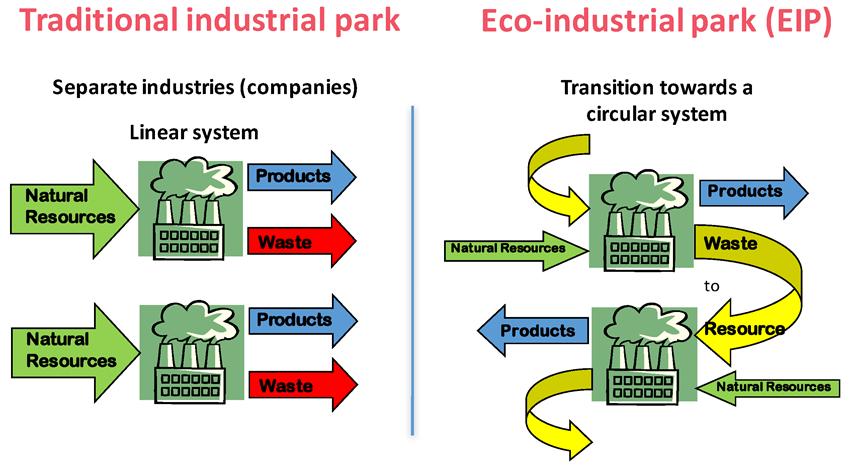
Fig. Courtesy of: mdpi
Notable Pilot Zones and Models
Projects like ParcX (linked to Mohammed VI Polytechnic University and INNOVX) in Jorf Lasfar, Benguerir, Khouribga, and other sites are designed from the outset around green energy, smart water management, and shared recycling and waste‑recovery infrastructure. These parks aim to foster industrial symbiosis, where one firm’s by‑products become inputs for others, reducing both environmental impact and costs.
Tanger Med Zones, a major export hub, has been green‑certified and has shifted to being powered fully by renewable energy since January 2025. This hub is signalling ‘how large logistics‑industrial complexes can decarbonize while remaining globally competitive.’
Oujda technopolis and Berkane agropolis regional zones are incorporating renewable energy, optimized water use, and recycling into their master plans rather than treating these as add‑ons.
Impacts of Epis On Manufacturing Sustainability
At the factory level, firms in these eco‑industrial parks are being supported to use less energy and water per unit of output, increase recycling of production waste, and redesign products and packaging for circularity, including higher recycled content in plastics. Sector‑specific efforts, like formalizing hundreds of waste pickers and building a national recycled PET (polyethylene terephthalate) sector, help close loops between municipal waste streams and export‑oriented manufacturing.
Because eco‑industrial parks concentrate services such as effluent treatment, renewable power, and environmental management, they lower the cost and complexity for small and medium-sized enterprises to comply with EU and international sustainability standards.
Challenges in Implementing Eco-Industrial Parks in Morocco
Morocco faces several hurdles in implementing eco-industrial parks. These challenges slow the shift toward sustainable, resource-efficient industrial zones aligned with circular economy goals.
Limited availability of suitable land for new eco-zones, complicating expansion.
Difficult access to water resources and competitively priced renewable energy sources.
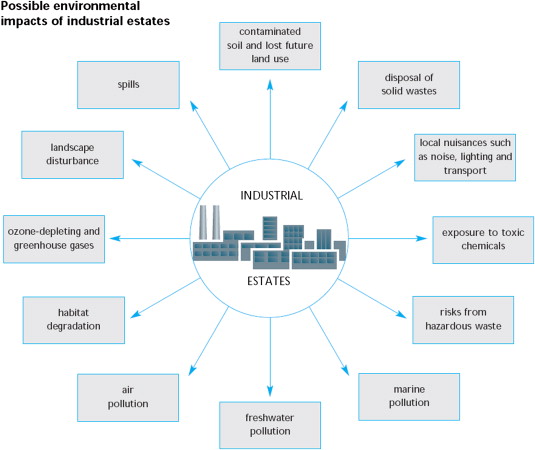
Fig. Courtesy of: sciencedirect
High upfront costs for green infrastructure, resource efficiency measures, and smart technologies, deterring developers without incentives.
Long payment delays in public-private partnerships, affecting project timelines.
Governance and Upgrading Issues – Existing industrial parks often lack effective ecological governance and international standards like ISO 14001 or EIP certification. Upgrading legacy zones for sustainability requires significant investment in social amenities and environmental features.
Financial and Incentive Gaps – Prior to funds, bridging the quality-sustainability gap in industrial land was challenging due to insufficient co-financing for green features.
Lack of modern infrastructure and social amenities – A major challenge is upgrading legacy industrial zones that lack modern infrastructure and social amenities; policymakers stress the need for environmental management and better services (health, childcare, shared facilities) so parks become liveable work environments.
Progress update on Morocco’s National Circular Economy Roadmap
Morocco launched its National Circular Economy Roadmap development process in April 2025, with completion targeted for late 2025. As of early 2026, no public confirmation of full completion or updates is available from recent sources.
2025-2026 Efforts
Sector-specific advances include a January 2026 policy review on circular plastics economy with recommendations. Pilot projects for circular business models in automotive are planned for 2026 via the Green Forward Industry project. A National Household Waste Recovery Plan (2024-2025) supports waste management infrastructure.
Current Status
No explicit progress reports on roadmap implementation since 2025 are detailed in available updates as of February 2026; efforts appear focused on diagnostics and sector pilots. Official ministry announcements or the final roadmap document may provide further clarity when released.
Key Takeaways
Morocco is aggressively transitioning its manufacturing sector from a linear “take-make-dispose” model to a circular one, primarily through the development of Eco-Industrial Parks and a comprehensive National Circular Economy Roadmap.
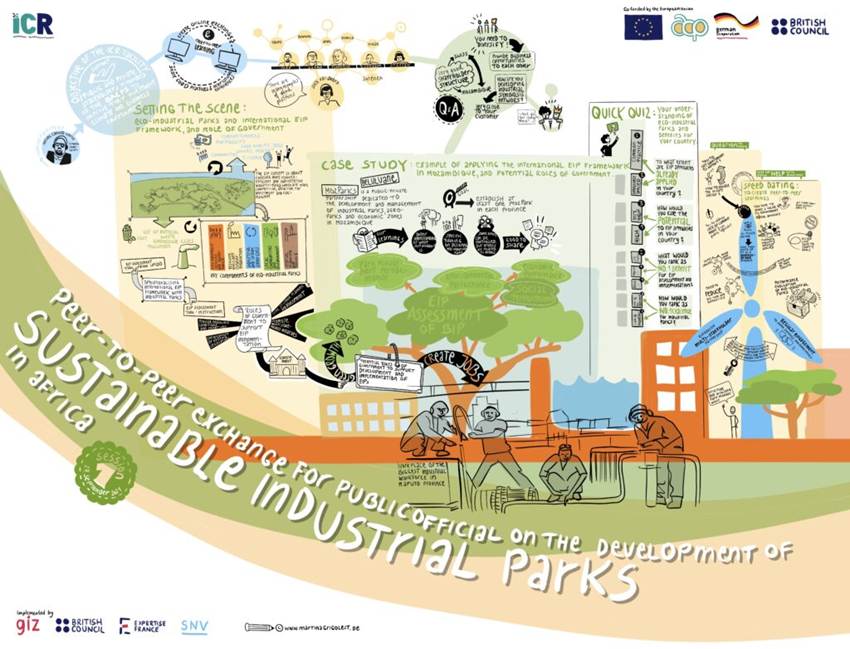
Fig. Courtesy of: icr-facility
Morocco is using a new generation of eco‑industrial parks and industrial zones to make manufacturing more resource‑efficient, low‑carbon, and competitive, anchored in a broader national circular economy roadmap and green industrial strategy. This linkage between park‑level infrastructure and firm‑level performance is central to Morocco’s strategy to “leapfrog” to more net‑zero‑compatible manufacturing rather than retrofitting only at the individual plant level.
Continue Learning With KEN
We believe in the importance of keeping abreast of the latest advancements in health & safety protocols, Environment & Sustainability and Mechanical Engineering. Regularly updating our knowledge helps us stay informed about new best practices, and regulations, enabling us to deliver the most relevant updates to our students.
Join us and unlock a world of online courses in Mechanical Engineering, Occupational Health and Safety, Fire Safety, and Environment and Sustainability. Propel your career to new heights.
Propel your career to new heights.
Connect now and take the next step toward professional excellence!
+91 7569034271
Let’s connect together on: Facebook, YouTube, LinkedIn, and Instagram.