
The DRC mine collapse in November 2025 at the Kalando copper and cobalt site in Lualaba Province killed at least 32 artisanal miners, with reports suggesting up to 49 deaths, when a makeshift bridge collapsed amid overcrowding and panic.
Unauthorized miners ignored a rain-related entry ban, and gunfire from soldiers reportedly triggered a rush onto the overloaded bridge over a flooded pit.
The collapse occurred on November 15-16, 2025, at a semi-industrial mine where informal miners breached security during heavy rains. Rescue efforts continued amid fears of more trapped victims, highlighting inadequate infrastructure like temporary bridges unable to support crowds. Panic from alleged military gunfire exacerbated the tragedy, piling victims together in the flooded area.
Triggering Events
Reports from the DRC’s Artisanal and Small-Scale Mining Support and Guidance Service (SAEMAPE) indicate soldiers fired shots, sparking mass panic among up to 10,000 miners who rushed onto the bridge simultaneously. Gunfire from military personnel guarding the site against unauthorized miners sparked panic, causing over 10,000 workers to surge onto the narrow bridge simultaneously. This overcrowding turned a routine crossing into a catastrophic overload. This stampede caused the unstable structure, designed for limited use to fail under the crush of bodies, leading victims to pile atop each other in the water below.
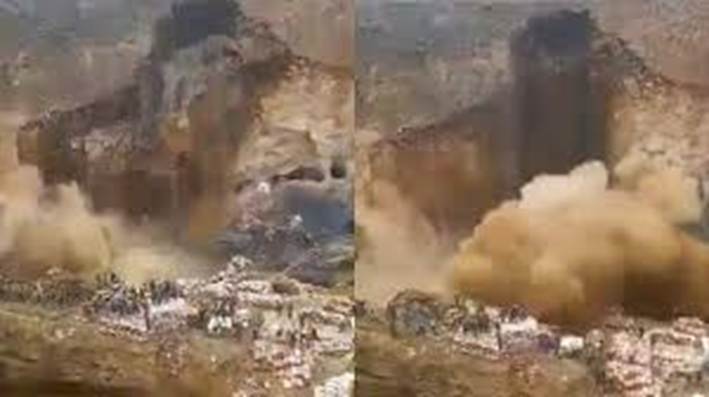
Image Source: indiatoday
Engineering Factors Behind the Makeshift Bridge Failure
The structure, built by artisanal miners to cross a flooded mining trench after heavy rains, failed under sudden dynamic loads from thousands rushing across it. The bridge’s improvised design lacked engineering oversight, making it vulnerable to excessive live loads far beyond routine capacities in artisanal mining setups. Heavy rainfall weakened the foundation through flooding and potential soil instability, while substandard materials and poor workmanship common in unregulated sites compromised structural integrity under dynamic crowd forces, initiating a chain reaction of failures. Initial overload deforms key elements like beams or supports, redistributing forces to adjacent components already near their limits.
The bridge was a rudimentary, temporary crossing ill-suited for heavy loads or crowds that heightened site instability. Ongoing tensions between artisanal miners, cooperatives, licensed operators, and security forces created a volatile environment prone to such invasions and confrontations.
Image Source: facebook
Investigation & Findings
Overcrowding: Load Exceedance
A surge of people creates impact forces far beyond static live load assumptions, causing localized yielding or buckling in floor slabs, trusses, or cables. This failure transfers amplified loads to neighboring members, which buckle under the sudden redistribution.
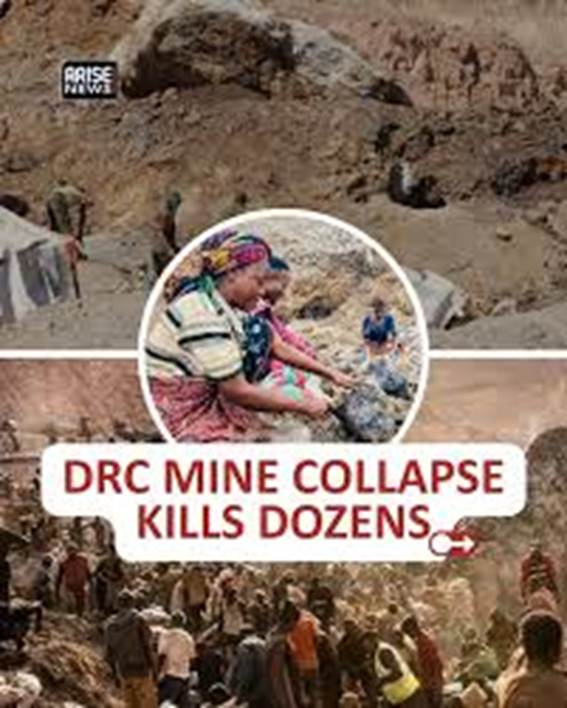
Image Source: instagram
Dynamic Amplification
Human crowds generate resonant vibrations and inertial effects, accelerating fatigue in connections and accelerating crack propagation in materials like makeshift timber or rope bridges. Once deformation starts, positive feedback from falling debris adds momentum, preventing load path stabilization.
Failure Propagation
Without redundancy, the cascade continues: sagging spans pull on supports, inducing tensile overloads elsewhere, leading to disproportionate global collapse disproportionate to the initial trigger, as seen in DRC’s Kalando mine bridge under panicked overcrowding.
Landslide Risk Reports
Torrential rains struck parts of DRC in early November 2025, including flash floods in Kinshasa on November 11-12 that affected thousands, signaling broader wet weather across the country. In Lualaba’s Mwangezi area near the mine, November typically features high rainfall, daily showers and thunderstorms that saturated the ground. These conditions flooded the mine’s trench, necessitating the makeshift bridge. Heavy rains led authorities to close the Kalando mine due to flooding and heightened landslide risks, directly contributing to the bridge collapse condition
Officials cited landslide risks from rain-soaked soil as the reason for the site closure, yet artisanal miners invaded anyway. A separate major landslide hit a nearby Mulondo quarry in Kawama (Kolwezi area) on November 15, 2025, around 1400 EST, underscoring acute regional instability from precipitation. Poor drainage and unstable mining excavations amplified these hazards in the area.
Key Revelations About the Safety Gaps
In 2025 and early 2026, a series of fatal mine collapses and structural failures in the Democratic Republic of Congo (DRC) have exposed critical safety gaps within Africa’s mining sector.
Systemic Failure to Govern ASM: The 2025 disasters underscore the state’s persistent inability to regulate artisanal mining, which accounts for roughly 80% of gold miners in the DRC. Most operations lack basic safety protocols, such as risk assessments or reinforced shafts.
Inadequate Infrastructure: Many sites rely on “makeshift” or “anarchic” infrastructure, such as the fatal Kalando bridge, which was never designed for industrial loads or emergency evacuations.
Oversight versus Industrial Expansion: While the DRC implemented new regulations in February 2025 to separate artisanal and industrial ores, enforcement remains undermined by corruption and the sheer volume of “clandestine” diggers—averaging 2,000 per day at some major sites.
ESG and Global Supply Chain Risks: These incidents have intensified pressure on global tech and battery manufacturers. In late 2025, labor unions and human rights groups increased calls for the DRC to ratify the ILO Safety and Health in Mines Convention (C176) to establish binding safety standards.
Environmental Toll: The Lubumbashi dam collapse highlighted that even industrial-scale operations often lack emergency plans or watertight barriers, leading to widespread groundwater and surface water contamination.
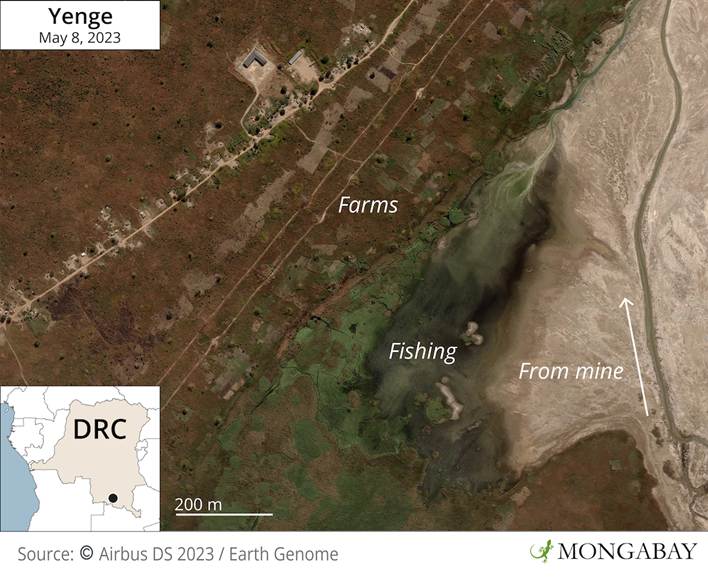
Image Source: news.mongabay
Regional Response and Trends
In response to these 2025 tragedies, African mining trends are shifting toward formalization and digitalized safety controls. For instance, South Africa’s Mine Health and Safety Amendment Bill of 2024 has influenced regional discussions on strengthening managerial accountability for site deaths. However, as of January 2026, the gap remains wide as economic desperation continues to drive millions into high-risk, unregulated mining zones.
Safety Gaps Exposed
Artisanal and small-scale mining (ASM) in DRC lacks regulation, with informal operations prone to invasions, poor oversight, and conflicts between miners, security, and communities. Unlike South Africa, where 2025 saw mining fatalities drop to 39 through extensive training (over 860,000 sessions), DRC’s ASM employs millions without similar safety investments or standards. Issues include no independent monitoring, exposure to hazards like flooding, and health risks from toxic minerals.
Broader African Context
Africa’s mining relies heavily on ASM for 45 million workers, but faces gaps in formalization, enforcement, and community engagement. Conflicts over minerals in DRC worsen worker plight, while tailings and structural failures persist due to weak regulations. Transition mineral booms amplify abuses on workers and locals amid poverty.
Contributing Conditions
Artisanal mining infrastructure often prioritizes quick construction over safety standards, with no load testing, reinforcement, or maintenance for hazards like landslides or surges. Site access bans due to weather were ignored, amplifying risks in remote areas with limited oversight.
Major Informal Mining Accidents in The DRC in 2025–2026
Kalando Bridge Collapse (November 15, 2025): At least 32 to 50 miners were killed at a copper and cobalt mine in Lualaba province. Following heavy rains and a security-driven panic involving gunfire from soldiers, a mass of over 10,000 miners rushed onto a makeshift bridge, causing it to fail.
Lubumbashi Dam Failure (November 4, 2025): A containment dam at a Chinese-operated cobalt site (Congo Dongfang International Mining) collapsed, releasing millions of cubic meters of toxic waste into residential neighborhoods in Lubumbashi.
Rubaya Landslide (June 19, 2025): A massive slope failure at an unregulated coltan mining site in North Kivu province trapped and killed numerous workers, with some reports estimating the death toll could exceed 300.
Monapo Gold Mine Collapse (December 31, 2025): On the final day of 2025, four miners died and 16 were injured when an artisanal gold shaft collapsed in an illegal mining zone.
Fatality Patterns
Wikipedia lists over 20 major ASM disasters since 2004, including collapses killing 10-60 miners each. Annual deaths exceed 100 from landslides, cave-ins, and flooding. This figure arises from the sector’s scale, employing 500,000 to 2 million workers in unregulated sites prone to structural failures and overcrowding.
Underreporting Factors
Precarious sites lack oversight, training, or safety gear, amplifying risks in unstable shafts or flood-prone areas; many injuries go undocumented as miners self-treat and return to work quickly. Child labor (up to 40,000 minors) and conflict zones further elevate frequencies in provinces like North Kivu and Lualaba.
Statistical Basis
Older studies, such as a 2011 Oeko-Institut report on Katanga cobalt mines, cite more than 100 fatalities yearly from common hazards, a pattern echoed in recent events with dozens killed per major accident. Wikipedia’s disaster list documents over 20 incidents since 2004 claiming 10-60 lives each, suggesting the total remains in the low hundreds amid chronic underreporting.
Contextual Risks
Lack of safety gear, oversight, and formal training in informal operations amplifies lethality, with child laborers facing heightened exposure; injuries often lead to indirect deaths from untreated complications. Provinces like Lualaba and North Kivu see the highest tolls due to unstable terrain and conflict.
Summary
Informal mining accidents are extremely common in the Democratic Republic of Congo, where artisanal and small-scale mining employs 500,000 to 2 million people in unregulated, hazardous conditions, often from tool mishandling or heavy loads.
The DRC mine collapse incident underscores persistent vulnerabilities in Africa’s artisanal mining sector, highlighting:
- inadequate infrastructure
- ignorance & breach of security
- Engineering failure
- poor workmanship
- Poor drainage arrangement
- unstable mining excavations
- many other factors
Multiple similar incidents emphasize the ongoing struggle to regulate artisanal and small-scale mining (ASM) and the failure of some industrial operators to maintain international safety standards.
Every worker should return home safely at the end of each day. To achieve this , we aim to educate, inform, and inspire both employees and employers about the best practices in occupational health and safety. Connect now and take the next step toward professional excellence!
Join us and unlock a world of online courses in Mechanical Engineering, Occupational Health and Safety, Fire Safety, and Environment and Sustainability. Propel your career to new heights.
Propel your career to new heights.
Connect now and take the next step toward professional excellence!
+91 7569034271
Let’s connect together on: Facebook, YouTube, LinkedIn, and Instagram.