
UAE has recently updated its Fire and Life Safety Code of Practice, including specific mandates for lithium battery and EV fires. These Safety Codes are emerging through training and guidelines rather than fully codified “next-generation” rules, these updates emphasize prevention in high-risk industrial settings.
Key Code Updates
The Next – Gen Fire Safety Code mandates non-combustible cladding for high-rises, enhanced fire truck access, and strict rules for fire doors and facades to curb fire spread. It also covers safe storage of flammable liquids, relevant to lithium-based materials prone to thermal runaway. Responsibilities are clearly defined for designers, builders, and owners to ensure compliance across industries.
Lithium Battery Hazards
Lithium batteries pose risks like thermal runaway, toxic gas release, and re-ignition, prompting UAE storage rules under Dubai’s Law No. 4 of 2025, with fines up to AED 1,000,000 for non-compliance in handling dangerous goods. Industries must classify and store them per international standards (e.g., UN 3480), as undeclared shipments heighten fire risks. No dedicated battery chapter exists yet, but updates integrate these into flammable liquids provisions.
EV-Specific Guidelines
Civil Defence provides EV charging safety measures, such as technician checks, dedicated circuits, and avoiding water exposure during charging to prevent electrical fires. Abu Dhabi Civil Defence 2026 updates stress EV charging safety in prevention campaigns, alongside mandatory Hassantuk alarms linking to response centers. Training workshops qualify personnel for EV fire control, focusing on lithium-ion challenges like prolonged burns.
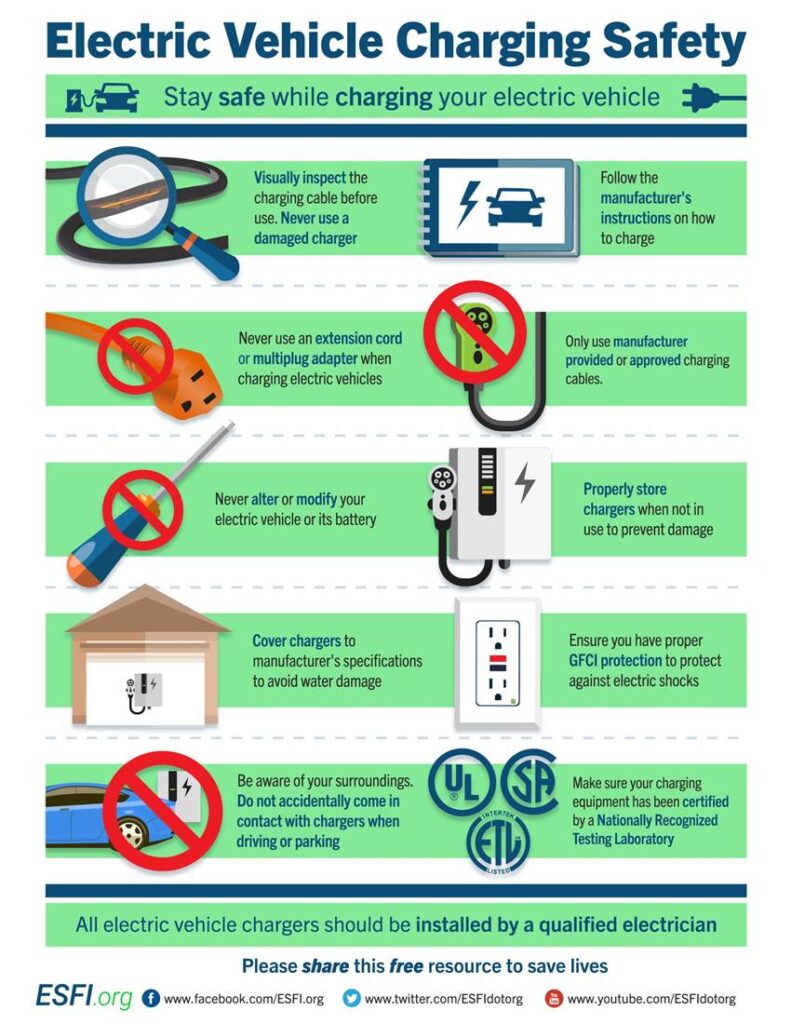
Image Source: esfi
Key Aspects of Next-Generation Fire Safety Codes
- Advanced Suppression Technology: Conventional water sprinklers are often insufficient for EV fires; new regulations push for advanced, high-capacity systems and specialized extinguishing agents like AVD (Aqueous Vermiculite Dispersion) to cool and contain lithium-ion battery incidents.
- Early Detection Systems: Regulations are pushing for robust, AI-driven gas detection and thermal monitoring tools capable of identifying “off-gassing” or thermal runaway before a fire breaks out.
- Building Code Integration: Updated codes require specific fire-rated separation for EV charging areas in car parks, particularly in older structures not designed for high-density electrical infrastructure.
- Preventative Measures: Industries are shifting toward intelligent management, such as maintaining battery state-of-charge (SoC) between 40% and 80%, reducing the likelihood of overheating.
- Stringent Risk Management: Increased focus on managing thermal, mechanical, and electrical abuse of batteries through improved design and monitoring to prevent internal shorts.
“These proactive measures, including specialized training for fire crews and updated, automated fire safety systems, are critical for navigating the unique, volatile nature of lithium-ion fires in the UAE’s rapidly advancing technological landscape.”
Regulatory Updates for 2026
Introduction of Fire Class L: Lithium-ion battery fires, formally recognizes as a distinct hazard requiring specialized cooling and suppression agents that prevent re-ignition.
ISO 3941:2026 introduces a dedicated “Class L” for, moving away from traditional Class A or B methods, effective from January 2026.
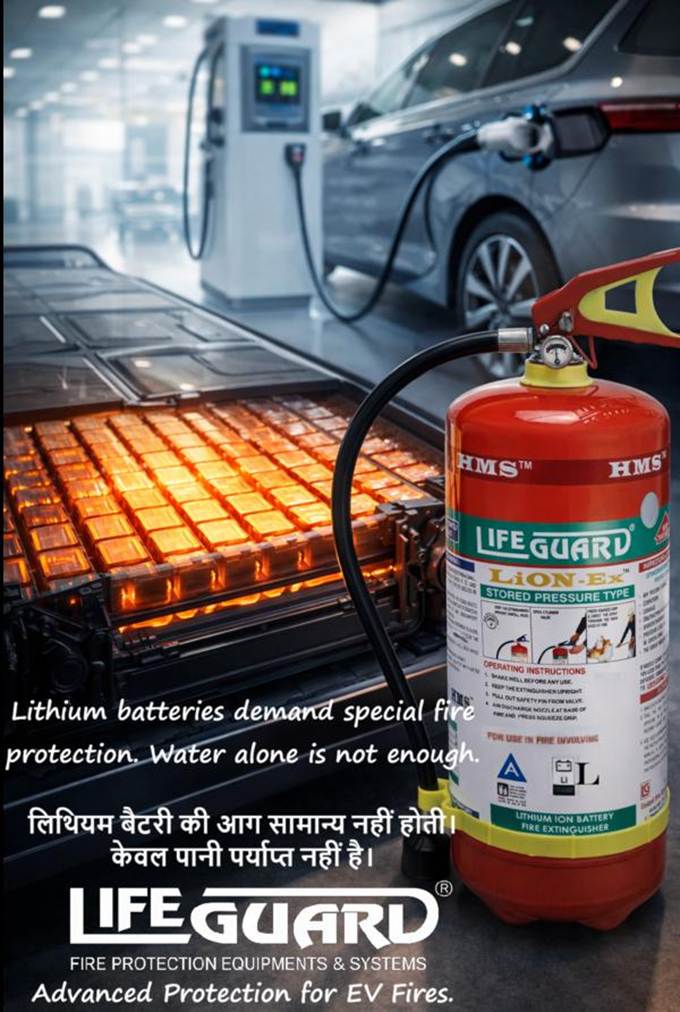
Image Source: lifeguardindia
- Mandatory Battery Transport Standards: Starting January 1, 2026, vehicles with lithium batteries must b declared under UN 3556 (replacing UN 3171), ensuring stricter compliance with international dangerous goods standards.
- State of Charge (SoC) Limits: New regulations mandate that lithium batteries shipped with or inside equipment must not exceed a 30% State of Charge by January 1, 2026, to minimize energy density during transit.
- Updated Building Codes: The UAE Fire and Life Safety Code of Practice is being continuously revised to mandate AI-driven fire detection and stricter inspection for energy storage systems (ESS).
Preparing Industries for EV & Battery Hazards
- EV Charging Infrastructure: New regulatory frameworks in emirates like Sharjah (announced Jan 2026) are establishing safety and quality standards for charging stations. By 2026, smart charging with real-time monitoring will become the default standard to prevent grid overloads and electrical faults.
- Specialized Suppression Systems: Install certified suppression systems and ensure annual audits, especially for manufacturing or logistics with >22-passenger vehicles from April 2025.
The UAE Civil Defence has begun approving specialized agents, such as Thermal Runaway Fluid (TRF), designed specifically to encapsulate and cool lithium cells to stop thermal propagation. Train staff on thermal runaway response and integrate AI early-detection like Abu Dhabi’s upgraded systems.
- Industrial Storage Requirements: Facilities storing more than 0.42 m³ of batteries must now provide dedicated fire safety plans, 2-hour fire-rated separations, and advanced air-aspirating smoke detection.
- Bans for Public Safety: To mitigate immediate risks, authorities have implemented bans on certain high-risk items in public transport, such as e-scooters on the Dubai Metro and Tram.
“These steps align with UAE’s push for unified federal standards under the new Civil Defence authority.”
Strategic Compliance for Businesses
- Re-evaluate Equipment: Transition to Class L fire extinguishers and specialized agents like AVD for battery-heavy areas.
- Update Risk Assessments: Conduct hazard assessments for battery storage and EV charging stations, elevating risks to higher categories per aligned standards like NFPA. Review emergency response plans to specifically address toxic smoke and the 90-minute fire-resistance requirements for exit staircases and corridors are mandated in 2026.
- Ensure Certification: Obtain a valid Civil Defence Certificate, which is now a strict prerequisite for both legal operation and insurance coverage in Dubai.
Preparations for EV Charging Stations for New Fire Codes
Industries in the UAE must align EV charging stations with the updated UAE Fire and Life Safety Code of Practice and emirate-specific rules from Civil Defence, DEWA, and ADDC/AADC ( DEWA: Dubai Electricity and Water Authority, ADDC: Abu Dhabi Distribution Company, AADC: Al Ain Distribution Company )
Licensing and Registration
Obtain DEWA approval for public/private stations in Dubai, including safety and operational standards review by Dubai Municipality and Roads & Transport Authority.
In Abu Dhabi, register with ADDC/AADC, install sub-meters for usage-based billing (30 fils/kWh post-install), and face AED 92 monthly fees otherwise. New builds under Dubai’s Green Building Regulations allocate 5-10% parking for EVs based on sustainability rating.
Site and Installation Requirements
Use weatherproof outlets, dedicated circuits, and surge protection; avoid shared sockets or damaged cords. Equip with Class C extinguishers, ventilation (especially indoors), and emergency shut-off switches. Elevate parking garages to Hazard Category 3, conducting lithium-ion hazard assessments for tailored suppression like sprinklers.
Maintenance and Inspections
Perform monthly checks on cables, connectors, and software; train staff on EV fire procedures, high-voltage zones, and extinguishing techniques. Civil Defence mandates regular technician verification and prohibits charging during washing or with children nearby.
Training and Emergency Protocols
Participate in Civil Defence workshops on EV fire control, covering thermal runaway response and protective gear. Develop shutdown procedures for malfunctions and ensure high-voltage cut protocols for rescues. Integrate early-warning systems like Hassantuk alarms for rapid response.
Image Source: https://www.linkedin.com/
Penalties for Non-Compliance with UAE Lithium Battery Regulations
UAE penalties for non-compliance with lithium battery regulations, classified as Class 9 dangerous goods, range from AED 1,000 to AED 1,000,000, doubling for repeat offenses. Violations like unlicensed storage, improper labeling, or exceeding state-of-charge limits (e.g., >30%) can also trigger operational suspension, business closure, or criminal charges if fires, injuries, or contamination occur.
Storage and Warehouse Violations
Failure to license facilities for bulk lithium storage or lack fire suppression results in fines up to AED 1,000,000, plus doubled penalties on recurrence. Improper disposal of damaged batteries mandates re-export or authorized treatment; non-compliance adds suspension risks.
Import and Shipping Penalties
UAE Customs requires Dangerous Goods Declarations, MSDS, and proper packaging; undeclared shipments face rejection, delays, fines, or criminal liability. Emirates and aviation rules ban loose batteries, with confiscation or up to fines AED 18,000 for checked luggage violations.
Aviation and Transport Infractions
Non-compliant power banks or batteries (e.g., >160Wh without approval) lead to confiscation and potential travel bans; incidents heighten fire risks in cargo. Industries must ensure SoC ≤30% and labeling to avoid these.
Mitigation Steps
Secure DG licenses from Civil Defence/Dubai Municipality.
Train on UN/IATA standards and conduct audits.
Document everything for inspections to minimize escalation to criminal cases.
Summary
UAE has recently updated its Fire and Life Safety Code of Practice expanding to over 1,300 pages with 20 chapters addressing modern hazards. UAE is significantly updating its fire safety landscape in 2026 to address the unique hazards of lithium-ion batteries and Electric Vehicles (EVs). These changes move beyond general fire prevention, introducing specialized classifications and infrastructure requirements to manage risks like thermal runaway and toxic emissions.
These fire safety codes tackle heightened risks from lithium-ion batteries and EVs focusing on enhanced, early-detection, and specialized suppression technologies and systems to mitigate intense, high-temperature fires and re-ignition risks.
Join KEN,
Occupational health and safety are not just compliance requirements but integral parts of a company’s culture. We aim to inspire businesses to prioritize their employees’ well-being and safety and view it as a strategic investment rather than a regulatory obligation.
Join us and unlock a world of online courses in Mechanical Engineering, Occupational Health and Safety, Fire Safety, and Environment and Sustainability. Propel your career to new heights.
Propel your career to new heights.
Connect now and take the next step toward professional excellence!
+91 7569034271
Let’s connect together on: Facebook, YouTube, LinkedIn, and Instagram.