For decades, safety in Indian manufacturing was often viewed as the responsibility of the safety department. The safety leaders prepared procedures, conducted inspections, delivered training and investigated incidents, while production and maintenance teams focused primarily on output, quality and delivery. The paradigm is changing now.
This evolution is not simply about adding more rules; it is about changing the way manufacturing organizations think and act. Today, safety leadership is increasingly understood as a core management responsibility. It involves how leaders allocate resources, design processes, respond to worker concerns, manage contractors, evaluate operational risks and make decisions under production pressure.
Safety leaders now emphasized enforcement, national standards, compliance, awareness, research, skill development and data collection, while recognizing the importance of employee participation and systematic risk management.
From Compliance to Prevention
The early approach to industrial safety in India was largely prescriptive. Manufacturing organizations concentrated on meeting the requirements of the Factories Act, obtaining statutory approvals, maintaining registers and preparing for inspections.
These activities remain important, but to control every operational risk, a factory may possess a complete set of procedures and still experience incidents because:
- Supervisors tolerate deviations to meet production targets.
- Workers hesitate to report unsafe conditions.
- Contractors receive inadequate induction or supervision.
- Safety observations are recorded but not closed effectively.
- Maintenance backlogs weaken critical safeguards.
- Leaders receive information only after an incident has occurred.
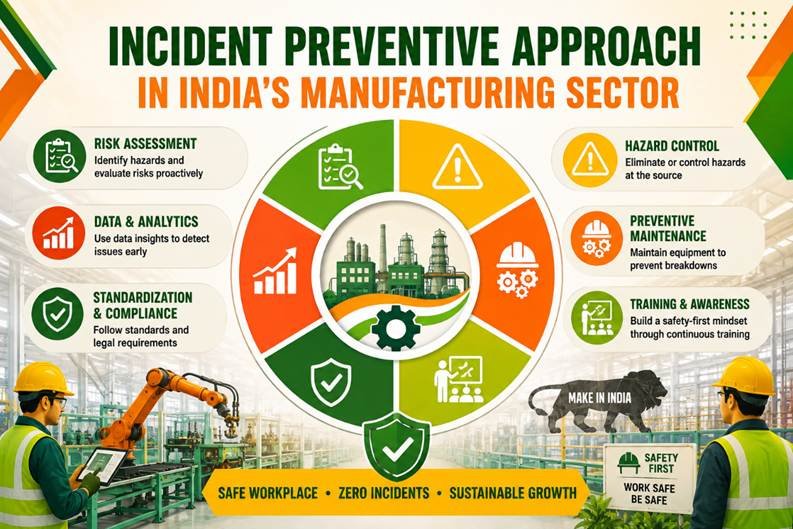
The preventive approach asks a different question: not merely “Are we compliant?” but “What could fail, and what are we doing before failure occurs?”
One of the most vital changes has been the movement from safety as a departmental function to safety as a line-management responsibility. This shift places greater emphasis on hazard identification, risk assessment, management of change, permit-to-work systems, emergency preparedness, process safety and learning from near misses.
Instead of acting only as an inspector or compliance coordinator, the HSE leadership increasingly serves as:
- A risk adviser to senior management.
- A facilitator of operational learning.
- A designer of safety management systems.
- A coach for supervisors and frontline leaders.
- An analyst of incident and performance data.
- A coordinator between engineering, maintenance, operations and contractors.
This evolution requires safety leaders to accept direct accountability for workplace safety.
The International Labour Organization’s guidance on preventive safety culture similarly emphasizes visible leadership, worker participation, shared responsibility and the integration of occupational safety and health into normal business management.
The Leverage of Regulation
Regulation has played an important role in shaping safety leadership in India. The Occupational Safety, Health and Working Conditions Code, 2020, was enacted to consolidate and amend laws relating to occupational safety, health and working conditions.
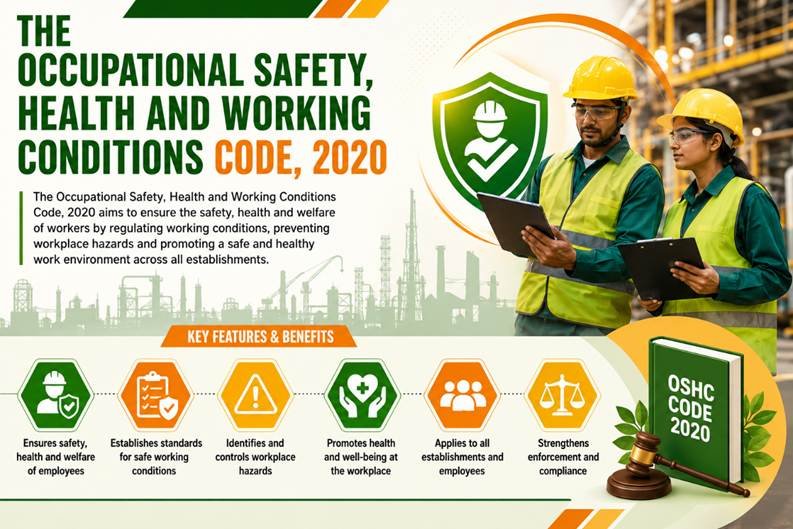
The Code represents an attempt to simplify and modernize the legal framework while covering issues relating to:
- establishments, factories
- contract labour
- inter-State migrant workers
- hazardous processes and working conditions.
The Central Government appointed 21 November 2025 as the date for bringing the Code into force.
For manufacturing leaders, this development reinforces an important principle: legal compliance must be integrated into business governance. It cannot remain limited to the HSE department or be treated as an annual documentation exercise
However, the effectiveness of any legal framework depends on:
- implementation
- State-level rules
- inspection systems
- competent personnel
Reliable data and management commitment will determine how successfully the regulatory intent is translated into workplace protection.
The Rise of Visible Safety Leadership in India
Safety leadership becomes credible when employees see it in daily management behaviour.
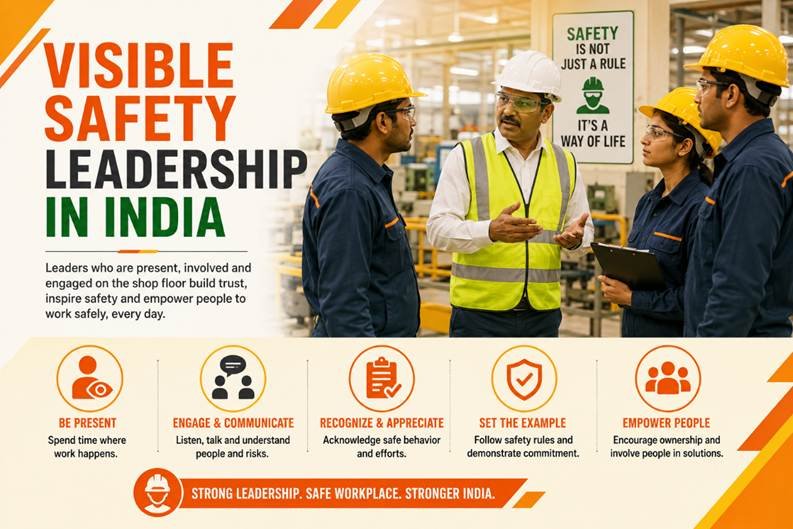
Visible leadership includes:
Spending time in the field: Senior managers should regularly visit production areas, maintenance workshops, warehouses and contractor work zones.
Asking meaningful questions: Instead of asking only whether work is progressing, leaders should ask what hazards are present, which controls are critical and what could cause a serious incident.
Responding to concerns: Workers are more likely to report hazards when management responds quickly and respectfully.
Rewarding safe decisions: Employees and supervisors should be recognized when they stop work, report near misses or improve risk controls.
Holding leaders accountable: Safety performance should be reviewed alongside production, quality, cost and delivery.
The objective is to build an environment where people are willing to identify weak signals before they become serious events.
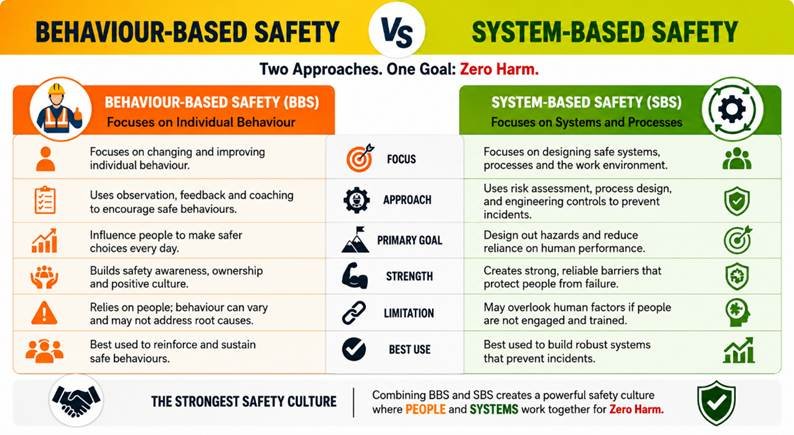
From Behaviour-Based Safety to System-Based Safety
Behaviour-based safety programmes have contributed to greater attention to frontline actions, unsafe acts and peer intervention. They can be useful when they encourage observation, coaching and worker participation.
A mature leadership model combines:
- Behavioural observation and coaching.
- Engineering controls and machine safeguarding.
- Effective maintenance and inspection.
- Human factors and ergonomic design.
- Competency assurance.
- Contractor management.
- Process safety and barrier management.
- Fair and thorough incident investigation.
The central question should be: “Why did the system allow this action or condition to exist?” rather than simply “Who made the mistake?”
Contractor Safety as A Leadership Test
Contractors form a significant part of India’s manufacturing workforce, particularly in maintenance, construction, logistics, shutdowns and specialist operations. Managing contractor safety is therefore one of the clearest tests of leadership maturity.
Weak contractor management often involves:
- Selecting contractors mainly on cost.
- Treating induction as a one-time formality.
- Failing to verify worker competence.
- Allowing different safety standards for permanent and contract workers.
- Assigning responsibility without providing adequate supervision.
- Measuring paperwork rather than field performance.
A stronger model begins before the contractor enters the site. “Safety requirements should be included in tender documents, prequalification, work scopes and performance reviews”. During execution, the principal employer must verify that critical controls are functioning and that supervisors have the authority to stop unsafe work.
Digital Tools and Predictive Leadership
Digital Technologies, applied in Indian Manufacturing Sector
- Internet of Things and connected sensors
- Artificial intelligence and predictive analytics
- Computer vision and video analytics
- Wearables and smart PPE
- Digital permits and isolation management
- Digital twins and virtual reality
These systems should be introduced carefully. A system that only generates violation alerts may encourage punishment rather than learning . The system must be designed around the actual work process. Digitizing a confusing or ineffective paper procedure will only create a faster way to manage a weak control.
Improving safety leadership and decision-making
Digitalization can strengthen safety leadership by giving managers timely and integrated information. Technology is also transforming safety leadership.
Manufacturing sectors in India are using digital platforms for incident reporting, permit management, inspections, action tracking, contractor monitoring and safety dashboards.
The value of digitalization is not the software itself. Its value lies in helping leaders see patterns that were previously hidden.
A recent transformation at a large Indian steel facility illustrates this direction. The programme combined executive governance, leadership development, engineering controls, contractor engagement and digital tools. The facility reported a reduction in LTIFR (Lost Time Injury Frequency Rate) from 0.49 to 0.05 in FY 2024–25, equivalent to a 97% reduction, while also increasing near-miss reporting and strengthening leadership visibility.
High-Reliability Manufacturing
The future of safety leadership in India’s manufacturing sector will be shaped by the ability to manage complexity. Modern plants are becoming more automated, interconnected and dependent on contractors, digital systems and global supply chains. The next generation of manufacturing leaders will not measure safety success only by the absence of reportable injuries. They will assess whether the organization identifies weak signals, protects workers through engineered controls, learns openly from failure and makes safe decisions even when production pressure is high.
Future-Focused Safety Leaders
These leaders will move beyond counting injuries and toward measuring the health of their critical controls. They will ask whether safeguards are available, effective, independent, understood by workers and maintained under changing operating conditions.
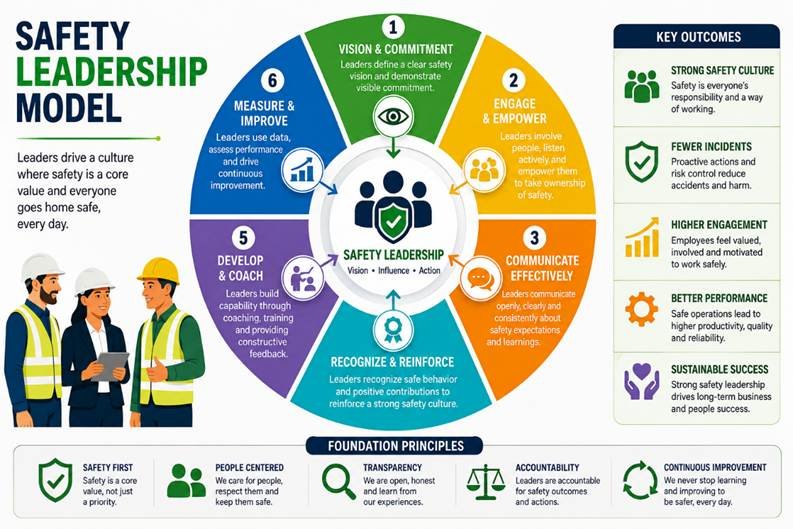
Building The Leadership Model
- Manufacturing organizations can strengthen safety leadership by adopting a practical framework:
- Make the plant head and operational managers visibly accountable for safety.
- Link safety objectives to business planning and capital allocation.
- Establish regular leadership field engagement.
- Track leading indicators without allowing them to become paperwork targets.
- Give workers reliable channels to report hazards and stop unsafe work.
- Integrate contractor safety into procurement and operational governance.
- Use incident investigations to identify system weaknesses.
- Invest in engineering controls before relying on administrative controls.
- Develop supervisors as the primary safety leaders at the point of work.
- Review occupational health, environmental risk and process safety alongside personal safety.
Conclusion
Safety leadership is not mere a slogan, a campaign or a monthly meeting, it is the daily demonstration that no production target, schedule or financial objective is more important than protecting people and maintaining control over risk.
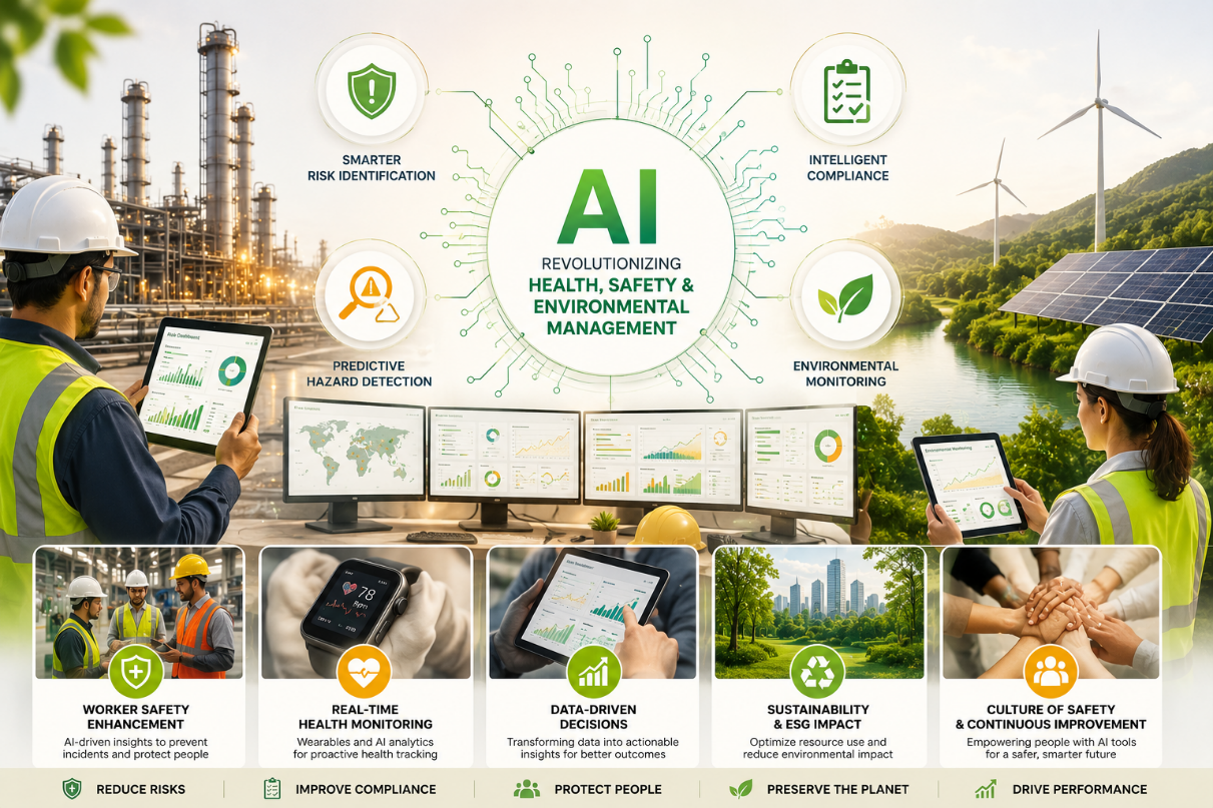
Recent industrial technology developments in India include AI-enabled monitoring, smart personal protective equipment, connected sensors and digital compliance systems designed to support earlier hazard detection.
The evolution of safety leadership in India’s manufacturing sector is a movement from inspection to ownership, from reaction to prevention and from isolated safety departments to integrated business leadership.
———————————————————————————————–
Continue Learning With KEN INSTITUTE, to create a world where every worker returns home safely at the end of each day. We aim to educate, inform, and inspire both employees and employers about the best practices in occupational health and safety. We believe that every workplace injury or illness is preventable, and through education and awareness, we can make a difference.
Join Ken Institute now to advance your career with Higher Certification in Environment & Sustainability Courses !
Connect now and take the next step toward professional excellence!
+91 7569034271
Let’s connect together on: Facebook, YouTube, LinkedIn, and Instagram.