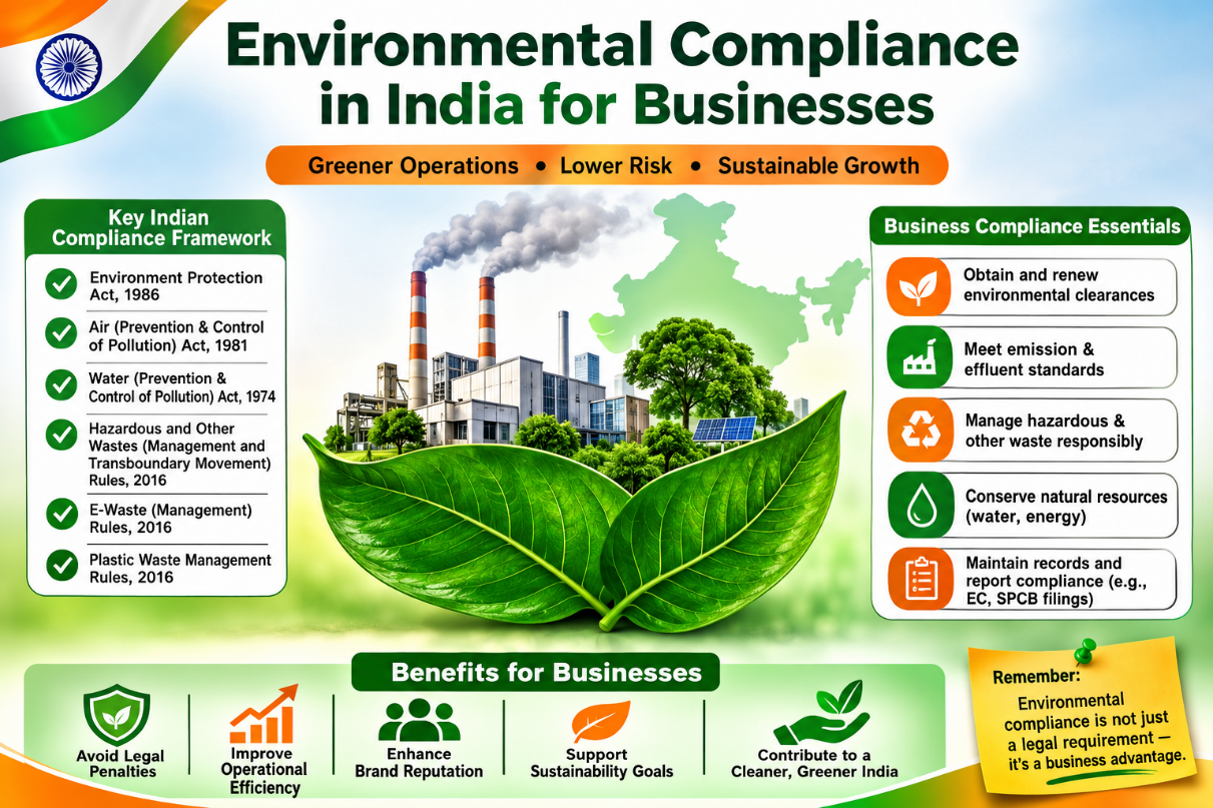
India’s environmental regulatory landscape is undergoing its most significant transformation in a decade, with new rules on audits, emissions, waste, and ESG disclosure coming into force between 2025 and 2026. Environmental compliance in India is no longer a back‑office, permit‑renewal exercise. It is a strategic capability that affects market access, cost of capital, and long‑term operational resilience. For manufacturers and industrial operators staying compliant now means moving from reactive permit management to proactive, data-driven environmental governance.
The Key Regulatory Shifts
The New Regulatory Baseline (2025–2026)
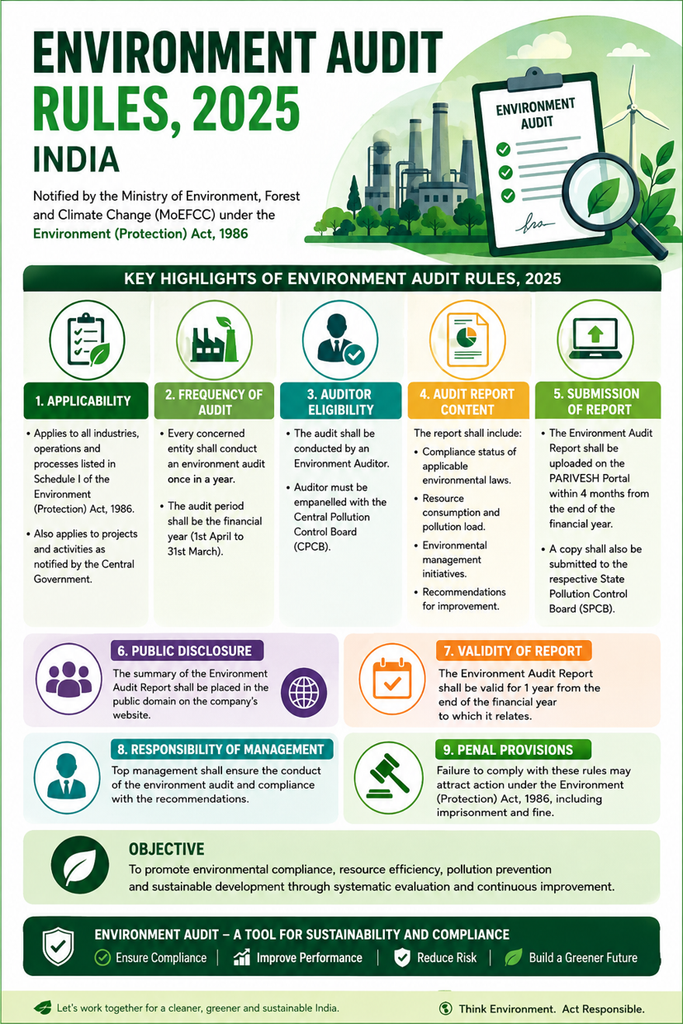
1. Environment Audit Rules, 2025: Mandatory Third‑Party Audits
In August 2025, Ministry of Environment, Forest and Climate Change (MoEFCC) notified the Environment Audit Rules, 2025, requiring specified high‑impact industries to undergo periodic environmental audits by accredited auditors. These audits cover air and water quality, waste management, energy/resource use, and mitigation measures, with reports submitted to MoEFCC and made public. Non‑compliance can attract penalties or licence suspension.
Compliance is no longer just about holding consents; it’s about demonstrable, auditable performance across multiple environmental parameters.
2. Sector‑Specific GHG Rules: Legally Binding Emission Intensity Targets
India’s Greenhouse Gases Emission Intensity Target Rules, 2025 set the first legally binding emission‑reduction obligations for carbon‑intensive sectors.
Facilities in these sectors must measure, verify, and reduce emission intensity or face obligations under the domestic carbon market and potential penalties.
3. Waste Rules Tighten: SWM 2026, Plastic Amendments, and Contaminated Sites
Solid Waste Management (SWM) Rules, 2026 came into force on 1 April 2026, updating processing and treatment standards.
Plastic Waste Management (Amendment) Rules, 2025/2026 further refine Extended Producer Responsibility (EPR) and reporting obligations.
Environment Protection (Management of Contaminated Sites) Rules, 2025 introduce a formal framework for assessment and remediation of polluted sites.
Waste generators, recyclers, and EPR obligors face stricter technical standards, documentation, and potential liability for legacy contamination.
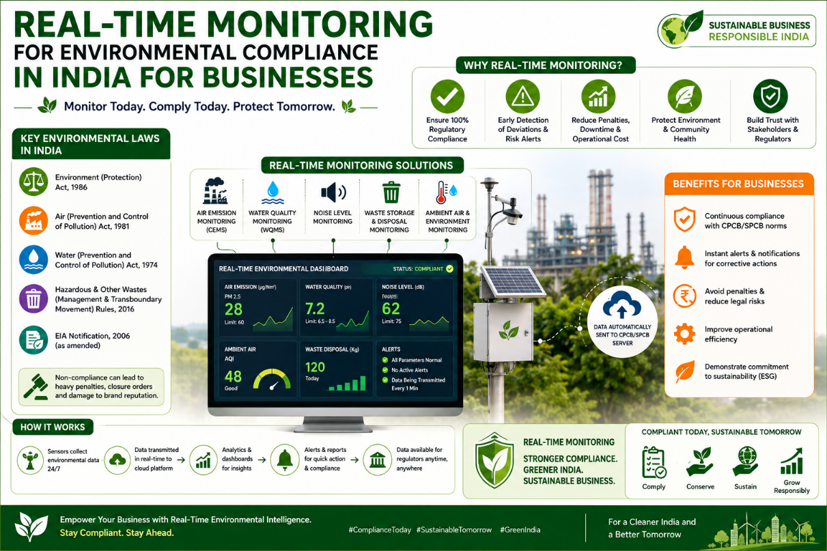
4. Real‑Time Monitoring Becomes Non‑Negotiable
Central Pollution Control Board (CPCB) has mandated Online Continuous Emission Monitoring Systems (OCEMS) certified by Council of Scientific and Industrial Research – National Physical Laboratory (CSIR‑NPL) for all air‑polluting industries in the National Capital Region (NCR), with similar state‑level pushes.
Manual or intermittent monitoring is increasingly insufficient; regulators expect tamper‑resistant, certified, online data streams.
5. ESG and Value‑Chain Disclosure: BRSR Core and SEBI’s Expanding Scope
SEBI’s (Securities and Exchange Board of India’s) BRSR (Business Responsibility and Sustainability Reporting) Core framework now requires:
Mandatory third‑party assurance for the top 1000 listed companies
by FY 2026–27.
Voluntary but strategically critical value‑chain ESG disclosure for key suppliers and customers. New leadership indicators, including disclosure of green credits generated or procured.
Environmental performance is now a board‑level, audited disclosure that influences capital access, lender due diligence, and customer contracts.
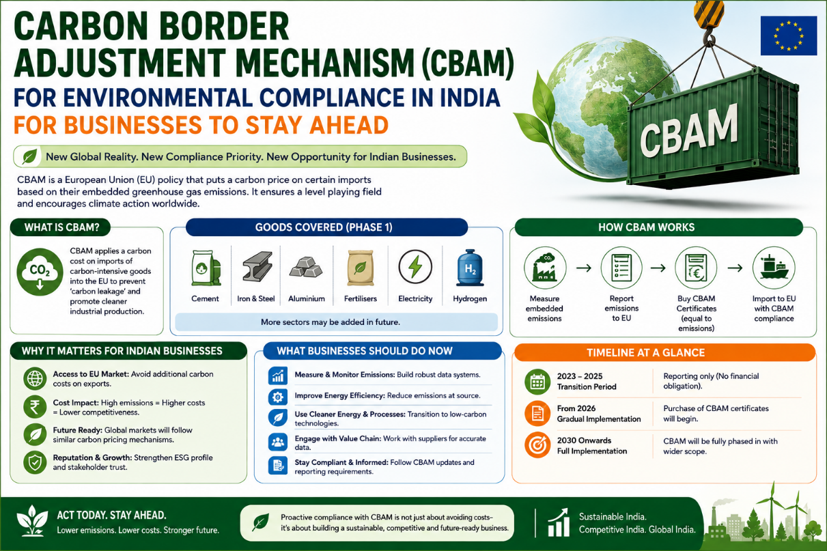
6. Cross‑Border Pressure: Carbon Border Adjustment Mechanism (CBAM) and EU Expectations
From 1 January 2026, the EU’s Carbon Border Adjustment Mechanism entered its definitive phase for steel, aluminium, cement, fertilisers, hydrogen, and electricity. Indian exporters must provide plant‑level, ISO 14065‑verified emissions data or face default emission values and carbon costs.
Even if domestic rules feel manageable, export markets can impose steep effective carbon prices on high‑emission products.
The Risks of Falling Behind
Financial penalties and operational disruption: State Pollution Control Boards can levy compensatory damages under the Water and Air Acts.
Consent and clearance delays: Non‑compliance histories complicate Consent to Operate (CTO) renewals, Environmental Clearance (EC) amendments, and project expansions.
Market access risk: Carbon Border Adjustment Mechanism (CBAM) non‑compliance or weak Environmental, Social, and Governance (ESG) data can cost EU contracts and raise financing costs.
Reputational and legal exposure: Public audit reports, the National Green Tribunal (NGT) litigation, and media scrutiny amplify the cost of violations.
How Businesses Can Stay Ahead
1. Map Your Regulatory Footprint by Unit and State
Create a live register for each facility covering:
Consents (CTO/CTE) and conditions
Environmental Clearances and Compliance Reports
Hazardous/Other Waste authorisations and Extended Producer Responsibility (EPR) obligations
Sector‑specific rules
State‑specific directives
Tip: Tag each requirement with renewal dates, reporting frequency, and responsible owner.
2. Build a “Compliance‑Ready” Data Foundation
Prioritise: greenhouse gas (GHG) inventory aligned with BRSR Core and CCTS (Carbon Credit Trading Scheme ) methodologies.
Resource and waste metrics: water intake, recycling rates, hazardous/non‑hazardous waste generation and disposal routes.
Emissions monitoring data: integrate CEMS/OCEMS (Continuous/online Continuous Emission Monitoring System) feeds with internal dashboards; ensure devices are CPCB/CSIR‑NPL compliant where required.
Incident and corrective action logs: EHS/ESG data – spills, exceedances, shutdowns, and root‑cause analyses.
3. Prepare for Mandatory Environmental Audits
For facilities falling under the Environment Audit Rules, 2025:
Conduct a pre‑audit gap assessment against applicable laws, consent conditions, and EC/ECR commitments.
Standardise monitoring protocols and ensure NABL (National Accreditation Board for Testing and Calibration Laboratories) ‑accredited labs are used where mandated.
Document mitigation measures with maintenance and calibration records.
Develop a corrective action plan (CAP) with timelines, owners, and budget for any non‑conformities identified internally before the formal audit.
4. Align with the Carbon Market and CBAM Early
If you’re in an obligated sector:
Establish a Measurement, Reporting, and Verification system for emission intensity by product/process.
Validate your baseline year data quality now; this underpins your Carbon Credit Trading Scheme position.
For exporters to the EU, engage an ISO 14065‑accredited verifier early to avoid last‑minute bottlenecks and default CBAM values.
Evaluate fuel switching, process optimisation, and waste‑heat recovery projects and generate surplus carbon credits.
5. Treat Value‑Chain ESG as a Capability‑Building Program
For BRSR‑obligated companies:
Identify top 10–20 value‑chain partners by transaction value and prioritise them for ESG data collection.
Provide templates and training aligned with BRSR Core.
Use supplier scorecards to integrate ESG performance into procurement decisions over time.
Even if value‑chain assurance is voluntary for now, banks and global customers will increasingly ask for this data.
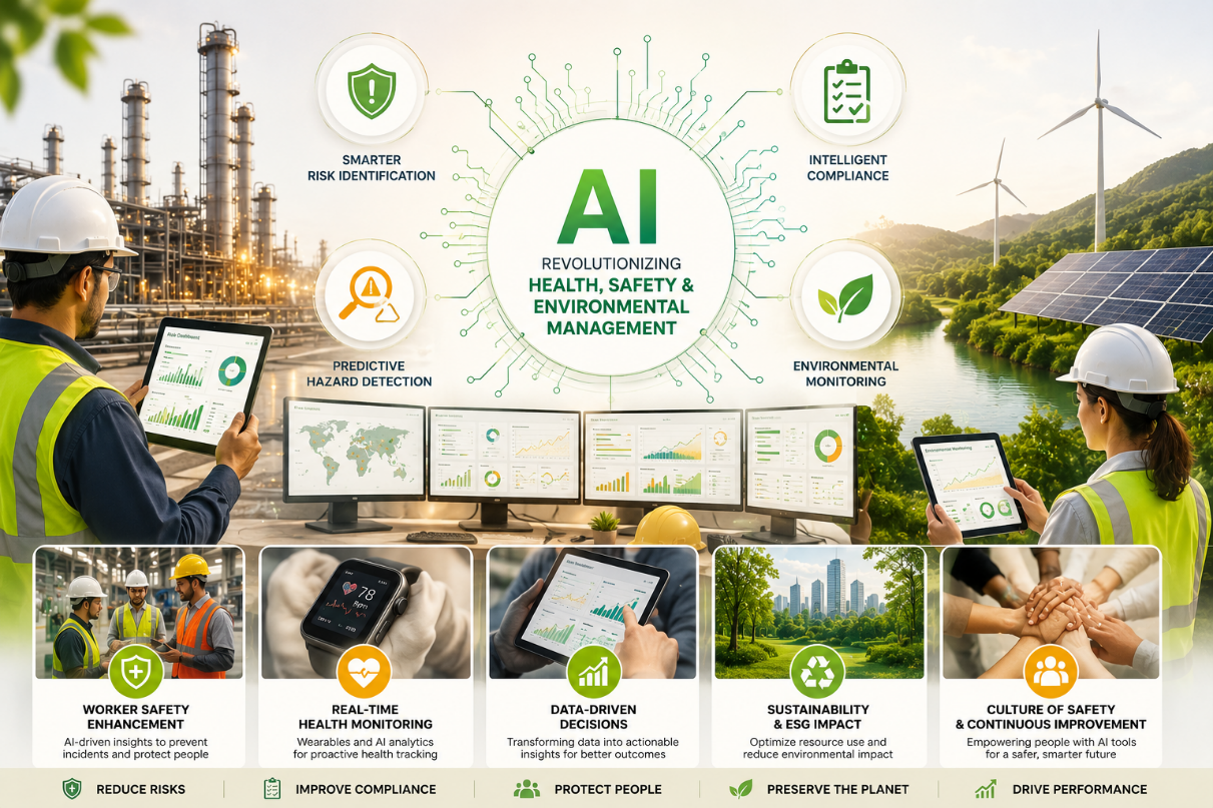
6. Leverage Digital and AI‑Enabled EHS Tools
Given your focus on digital EHS and AI, consider:
IoT‑enabled sensors for effluent flow, stack parameters, tank levels, and fugitive dust, integrated into a central EHS dashboard.
Automated regulatory tracking to monitor CPCB/MoEFCC/SPCB notifications and map them to your obligations by site.
Predictive maintenance integration (CMMS + EHS) to link equipment health with environmental risk.
These tools reduce manual reporting burden and improve the quality of data presented to auditors and regulators.
7. Institutionalise Governance: From CSR to Board‑Level Oversight
Form an ESG/EHS steering committee with representation from operations, finance, legal, and sustainability, reporting to the board quarterly.
Tie environmental KPIs to plant‑level performance reviews.
Conduct annual scenario reviews for climate‑related risks (physical and transition) to inform capital planning and insurance.
A Simple 90‑Day Action Plan for Indian Businesses to Stay Ahead
Days 1–30: Diagnostic
List all facilities, consents, ECs, and key environmental obligations.
Identify which units fall under the Environment Audit Rules, GHG intensity rules, or OCEMS mandates.
Run a quick gap assessment on data quality
Days 31–60: Build Foundations
Standardise monitoring protocols and data templates across sites.
Select and begin deploying an EHS/ESG data platform or upgrade existing CMMS/EHS tools.
Initiate pre‑audit preparations for high‑risk sites
Days 61–90: Strengthen and Scale
Finalise corrective action plans for identified gaps and assign budgets.
For CCTS/CBAM‑exposed units, engage verifiers and validate baseline data.
Launch a value‑chain pilot with 5–10 key suppliers on basic ESG metrics.
Environmental Audit Readiness Checklist (For Sites Under Environment Audit Rules, 2025)
1. Documentation & Clearances
2. Monitoring & Data Quality
3. Pollution Control Infrastructure
4. Management Systems & CAP
5. GHG, Energy, and Resource Use
Annual energy consumption data (fuel, electricity) compiled by source.
GHG inventory (Scope 1 & 2) prepared with documented methodology and emission factors.
Water balance showing intake, recycling, and discharge reconciled with meter readings and CTO allocations.
BRSR Core / ESG Data Checklist (For Sustainability & EHS Teams)
1. Governance & Scope
2. KPI‑to‑Source Data Mapping
3. Core Environmental Metrics
4. Evidence & Assurance Readiness
How to Use These Checklists for EC in India
For cluster‑based MSMEs: Start with the master compliance checklist. Use the 90‑day plan to build discipline before tackling audits or ESG.
For larger, listed units: Treat the BRSR Core and GHG checklists as core to your annual planning. Align internal audits with both environmental audit and BRSR assurance timelines.
For exporters to EU: Layer CBAM requirements on top of your GHG checklist; ensure intensity data is robust.
Closing Thought
Businesses that invest now in robust data systems, audit readiness, and carbon‑market alignment will not only avoid penalties—they will turn compliance into a competitive advantage in both domestic and global markets.
Staying compliant now means moving from reactive permit management to proactive, data-driven environmental governance.
Join KEN INSTITUTE,
We strive to prioritize preventative measures over-reactive solutions. We believe in equipping our students with the knowledge and tools to maintain a safe and healthy work environment, which can prevent accidents or health issues from occurring in the first place.
Join Ken Institute now to advance your career with Higher Certification in Environment & Sustainability Courses !
Connect now and take the next step toward professional excellence!
+91 7569034271
Let’s connect together on: Facebook, YouTube, LinkedIn, and Instagram.