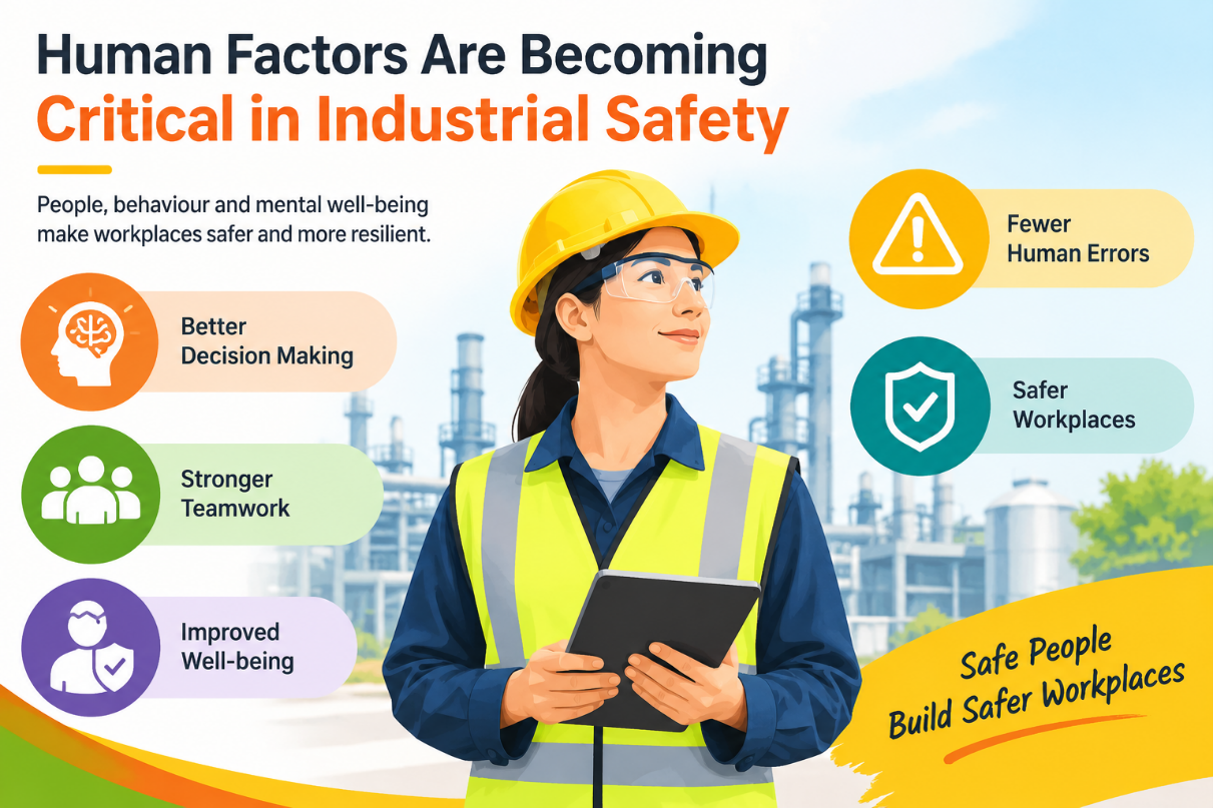
Industrial safety has improved dramatically through automation, engineering controls, PPE, and formal management systems yet, human factors are no longer a “soft” topic many serious incidents still involve human decisions, communication gaps, fatigue, workload pressure, or unclear procedures. This is why human factors are becoming central to modern industrial safety.
“Human factors” is the science of how people interact with equipment, procedures, work environments, teams, and organizational systems. Its goal is not to blame workers for errors, but to design conditions in which safe performance becomes easier and errors are less likely to become serious.
What Are Human Factors?
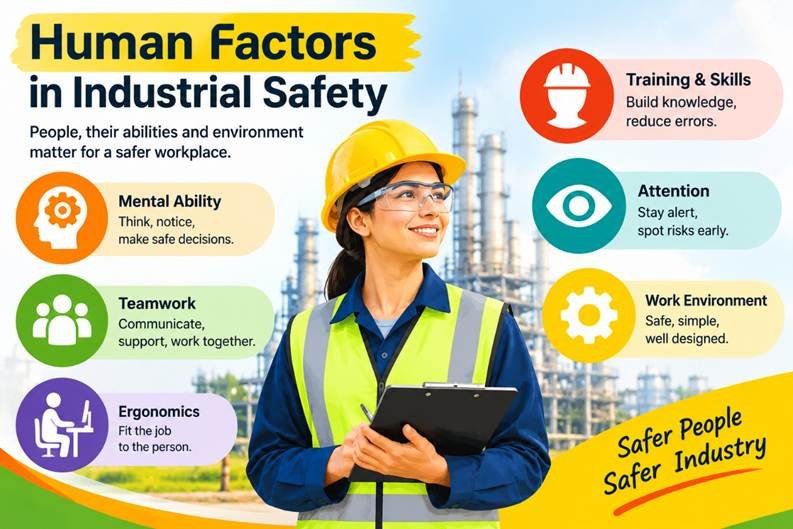
Human factors include the physical, cognitive, organizational, and environmental conditions that influence how people perform safety-critical work.
Key examples include:
Fatigue and shift pressure – reduced attention, slower reaction time, and poor judgment.
Workload and time pressure – shortcuts, skipped verification steps, and reduced situational awareness.
Poor interface design – confusing control panels, alarms, labels, or digital systems.
Communication failures – incomplete handovers, unclear instructions, and misunderstood permits.
Training and competency gaps – workers may know the rule but not how to apply it in abnormal conditions.
Safety culture – whether employees feel safe reporting near misses, concerns, and mistakes.
Procedure quality – lengthy, outdated, or impractical procedures encourage workarounds.
In complex facilities such as chemical plants, refineries, warehouses, and manufacturing units, safety depends on the interaction between technical systems, people, and organizational decisions, not on any one of these alone.
Why It Matters More Now?
Modern industrial operations are becoming more automated, data-driven, and interconnected. But automation does not remove the human role; it changes it. Operators, maintenance technicians, supervisors, and contractors must monitor systems, respond to abnormal conditions, make rapid decisions, and intervene when technology fails.
Human factors are especially important because many safety-critical tasks remain human-dependent in high-hazard operations. Managing these factors can significantly reduce risks to workers, communities, and the environment.
There is also a practical reliability issue: automated actions can be highly reliable, while manual actions under stress or abnormal conditions are more vulnerable to error. This makes error-tolerant system design, clear , good training, and strong supervision essential.
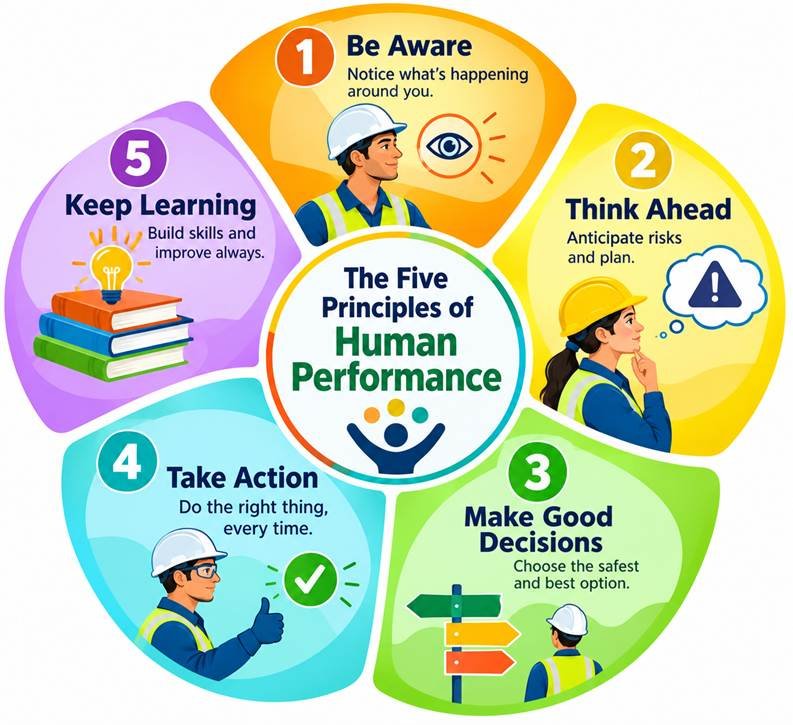
The Five Principles of Human Performance
- Variation in human performance is normal and to be expected given the strengths and constraints that come with being human. Human performance should not be capable of leading to a major event or incident on its own.
- Blaming human performance fixes nothing. Attributing the cause of a major incident to human performance is overly simplistic. Even the best, most experienced, most competent people will make mistakes.
- Organisational learning, driven by leadership commitment and continuous improvement is fundamental for preventing re-occurrence. Opportunities for organisational learning should be sought from all types of incidents.
- Context drives behaviour. Context involves people’s beliefs, perceptions, motivations and values which shape human behaviour. People perform in ways that make sense to them, they adapt to the demands of the situation, assess risks and make trade-offs with good intentions. Understanding the context, helps identify underlying weaknesses in the system and opportunities to improve the system.
- How leadership responds matters. Visible leadership commitment and modelling desired behaviours and attitudes is pivotal as workers take their cues from visible leadership commitment and the immediate work environment. A ‘just’, no-blame culture encourages reporting and improvement.
From “Human Error” to System Design
A common mistake in incident investigation is stopping at “operator error.”
A stronger investigation asks:
Why did the error make sense to the person at the time?
What pressures, distractions, or conflicting priorities were present?
Was the procedure usable in real working conditions?
Did the equipment, alarm, or interface support correct action?
Was there time, staffing, training, and authority to work safely?
Human factors shifts the focus from blaming individuals to improving the system around them. This includes better workplace layout, clearer procedures, realistic staffing, fatigue management, effective communication, and a reporting culture where concerns are raised early.
Human factors are particularly relevant where:
Contract and temporary workers perform high-risk tasks.
Production targets create pressure to bypass permits or inspections.
Multilingual teams rely on verbal communication and informal work practices.
Aging equipment, poor labeling, or complex control rooms increase cognitive load.
Maintenance is performed during shutdowns, when time pressure is high.
Near-miss reporting exists on paper but is not actively used for learning.
A facility may have strong written procedures and PPE compliance, yet still experience incidents if workers are fatigued, poorly briefed, or forced to choose between production and safety.
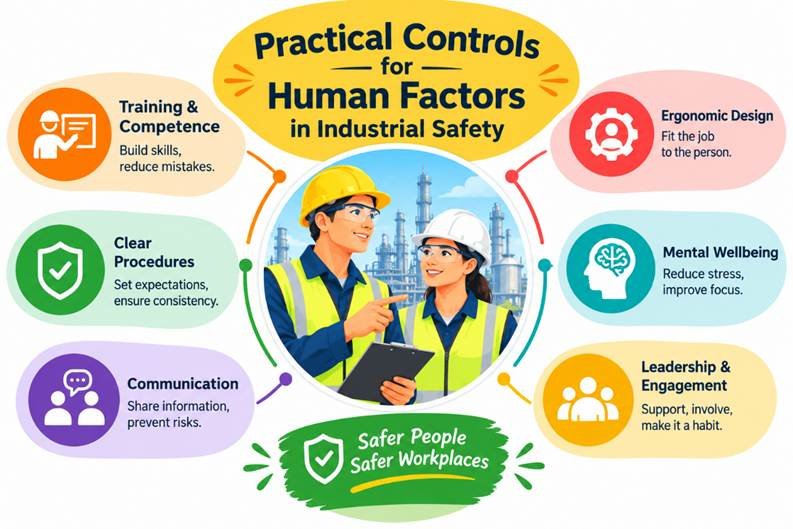
Practical Controls for EHS Teams
Organizations can strengthen human-factors management through practical, low-cost actions:
Following are the sections and what Practical Action should be taken:
Fatigue management- Limit excessive overtime, plan shift rotations, and monitor high-risk night work.
Procedures- Use short, visual, task-based procedures; validate them with frontline workers.
Training – Include abnormal situations, decision-making, and hands-on scenarios, not only classroom compliance.
Communication- Standardize shift handovers, toolbox talks, permit briefings, and isolation verification.
Control-room design- Improve alarm management, labeling, display clarity, and emergency-response guidance.
Incident learning- Investigate contributing conditions, not only individual behavior.
Reporting culture- Protect and encourage near-miss reporting; act visibly on worker concerns.
Workload- Review staffing, task sequencing, and production pressure during high-risk jobs.
A Simple Human-Factors Checklist
Before a high-risk task, supervisors and safety officers can ask:
Is the worker trained and authorized for this exact task?
Is fatigue, heat stress, or workload likely to affect performance?
Are the procedure, permit, and communication clear?
Are tools, labels, alarms, and equipment easy to understand?
Is there enough time to complete the job safely?
Can the worker stop the job without fear of blame?
What could distract, confuse, or pressure the worker?
What barrier will catch an error before it becomes an incident?
Human Factors for Major Hazard Facility, Petroleum, and Geothermal Energy Operations
Major hazard facility, petroleum and geothermal energy operations have major accident potential and many safety critical tasks to prevent and mitigate major accident events are human-dependent.
Ensuring human factors is properly managed in major hazard facility, thes operations can significantly lower operating risks and risks to safety for workers, the community and the environment.
In 2020, WorkSafe Petroleum Safety and Dangerous Goods (WorkSafe) commenced the Human Factors Capability Strategy. The four-year strategy is focused on building internal and external human factor capability through stakeholder engagement, education and guidance, industry forums, and an industry-wide project to establish a baseline to measure the industry’s progress in integrating human factors into safety management systems.
To integrate human factors into workplace’s work health & safety management system
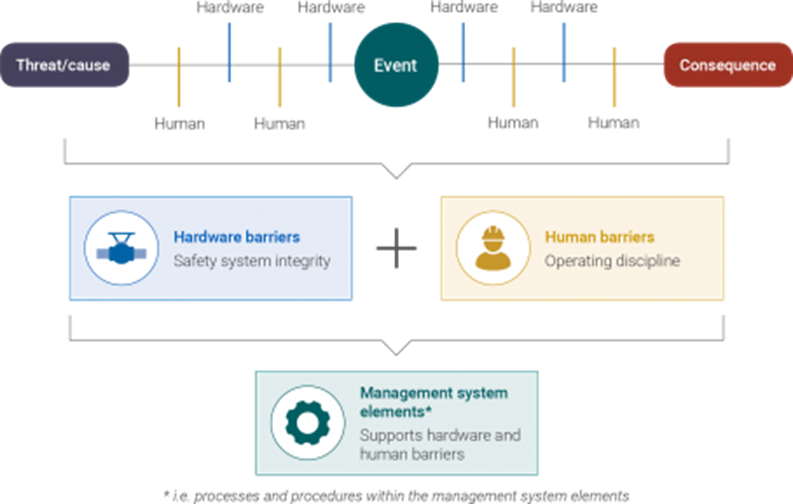
Human factors are critical because people are not merely a source of risk, they are also the most adaptable layer of defense in industrial operations. The objective is not perfect human behavior; it is designing work systems that anticipate human limitations, support good decisions, and prevent small errors from escalating into major incidents.
Organizations that integrate human factors into safety management systems move beyond compliance. They build resilient operations where technology, procedures, leadership, and frontline judgment work together to prevent accidents.
Join Ken Institute,
unlock a world of online courses in MBA in HSE, Occupational Health and Safety, Fire Safety, Mechanical Engineering, and Environment and Sustainability.
Internationally recognized courses and training programs designed to empower individuals and organizations.
Join Ken Institute now to advance your career with Higher Certification in Occupational Health & Safety
Connect now and take the next step toward professional excellence!
+91 7569034271
Let’s connect together on: Facebook, YouTube, LinkedIn, and Instagram.