
In 2025, Bahrain’s Renewable Energy Certification (REC) scheme serves as a central pillar for companies navigating the Kingdom’s increasingly stringent sustainability landscape. Managed by the Sustainable Energy Authority (SEA), the scheme allows businesses to claim environmental benefits from clean energy without necessarily installing onsite hardware.
Bahrain established a brand-new Renewable Energy Certificates (RECs) program, introduced by the Sustainable Energy Authority (SEA) around 2020 that plays a key role in corporate sustainability efforts. This ties into broader 2025 targets and regulations like the Bahrain Sustainability Disclosure Regulation (BSDR), which mandates ESG reporting for qualifying companies.
Core Impact on Corporate Compliance
Mandatory ESG Reporting Alignment: Starting from the 2024 financial year, the Central Bank of Bahrain (CBB) has mandated ESG disclosures for all listed companies, banks, and insurance firms. RECs provide the “proof of follow-through” required to validate carbon reduction claims in these mandatory annual reports.
Meeting National Targets: The scheme is a key tool for achieving Bahrain’s national target of 5% renewable electricity by 2025. Companies use RECs to demonstrate their contribution toward this sovereign goal, which is often a prerequisite for government tenders and “Green Factory” markings.
Carbon Neutrality Roadmap: As Bahrain moves toward its 2060 net-zero goal, the REC platform acts as the official verification mechanism for Scope 2 emissions (indirect emissions from purchased energy).
Renewable Energy CertificationScheme for Businesses
Issuance: One REC is issued for every 1 Megawatt-hour (MWh) of renewable energy produced by an eligible, registered system.
Trading: Companies that cannot install solar panels—due to space or shading constraints, can purchase RECs from producers on the national electronic platform.
Verification: The SEA’s electronic platform ensures that green claims are not “double-counted,” protecting companies from greenwashing risks now heavily scrutinized by the CBB.
Incentives: Using RECs and meeting green standards can unlock concessional financing from partners like BBK or subsidies for green building projects.
REC’s Strategic Value in 2025
For corporations, RECs are no longer just “nice-to-have” CSR assets; they are functional compliance tools. By purchasing orgenerating these certificates, firms can satisfy Bahrain Bourse listing requirements, lower their carbon footprint for international ESG ratings, and maintain eligibility for a growing pool of green investment capital.
REC Program Overview
RECs certify 1 MWh of electricity generated from renewables like solar, issued electronically via SEA with blockchain for transparency.
Companies unable to produce their own renewable energy can purchase RECs to offset usage, supporting Bahrain’s National Renewable Energy Action Plan (NREAP) goal of 5% renewables by 2025 (280 MW capacity).
The system registers producers’ output, aiding verification for investors and compliance claims.
2025 Sustainability Targets
Bahrain aims for 5% renewable electricity in 2025, rising to 10% by 2035, focused on solar, wind, and waste-to-energy. Energy efficiency hit 6% ahead of schedule in 2019 via the National Energy Efficiency Action Plan (NEEAP), now advancing with green building codes.
Image Courtesy: https://c4scourses.in/
Corporate Compliance Impacts
Under BSDR (effective January 2025), public companies and private LLCs over BHD 1 million turnover must file annual audited ESG reports by March 31 via Sijilat, covering energy use and renewables.
RECs help demonstrate renewable sourcing in these reports, alongside requirements for green office standards and waste management from the Supreme Council for Environment (SCE). This boosts credibility for EU/US exports and sustainability-linked financing, aligning with Vision 2030’s net-zero ambitions.
Impact of REC Scheme on Bahrain’s 280 MW Renewable Target by 2025
Bahrain’s 280 MW renewable capacity target for 2025, equivalent to 5% of electricity generation under the National Renewable Energy Action Plan (NREAP) was not fully met by year-end, with progress reaching about 141 MW from 372 projects by early 2026.
The Renewable Energy Certificates (REC) scheme supports this indirectly by incentivizing production through tradable credits for verified renewable output, though its direct impact on deployment appears limited amid ongoing project rollouts.
Progress Toward 280 MW
By February 2026, Bahrain commissioned 372 distributed renewable projects totaling 141 MW, mainly solar from residential, commercial, and industrial sources connected to the grid by the Electricity and Water
Authority (EWA). This falls short of the 280 MW goal, but includes earlier milestones like over 38 MW from 180+ systems pre-2023 and new utility-scale efforts such as a 100 MW Al Dur solar plant (under construction) and 123 MWp industrial/rooftop programs announced late 2025.
REC Scheme’s Role in Green Energy Compliance
RECs, managed by the Sustainable Energy Authority (SEA), certify renewable MWh production and enable off-takers to claim green energy compliance, fostering market demand for installations. While RECs track and monetize output, crucial for corporate reporting. They primarily aid post-installation verification rather than directly funding the capacity buildout needed for 280 MW. Simplified grid connections and incentives have boosted small-scale adoption, indirectly advancing NREAP via REC-eligible projects.
REC Scheme’s: Key Challenges and Outlook
High reliance on distributed solar (vs. utility-scale) and delays in mega-projects like the 150 MW Sakhir plant contributed to the shortfall, despite streamlined approvals.
RECs enhance transparency for investors, supporting momentum toward 710 MW by 2035 and net-zero by 2060, with job creation and energy security benefits.
Application of RECs to meet Green Building Standards in Bahrain Bay
Bahrain’s Renewable Energy Certificates (RECs) can help buildings in Bahrain Bay meet green standards by verifying renewable energy use, especially where on-site generation falls short. The Bahrain Green Building Code and NREAP mandate renewable integration for new constructions, with RECs providing off-site offsets via SEA’s platform.

Image Courtesy: https://constructive-voices.com/
Green Standards in Bahrain Bay Using RECs for Compliance
Bahrain Bay developments must comply with the mandatory Green Building Code under the Benayat permit system, emphasizing energy efficiency, renewables, and sustainability ratings like “Leadership in Energy and Environmental Design (LEED) or Pearl Rating System (PRS).”
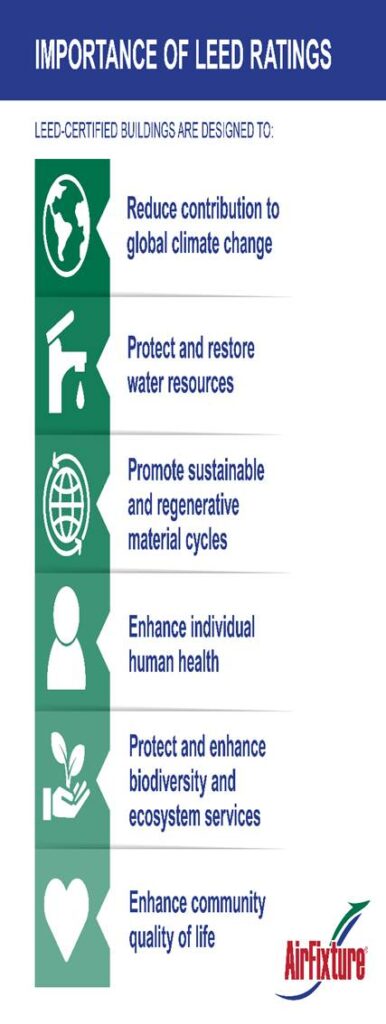
Image Courtesy: https://airfixture.com/
Requirements include solar integration scaled to building size and energy audits to reduce grid reliance by at least 10-30%.Buildings connect to EWA’s monitoring for REC eligibility; excess or purchased RECs (1 MWh per certificate) count toward renewable mandates, cutting bills and aiding certification.
In Bahrain Bay’s high-rises and offices, RECs offset shortfalls without full panels, qualifying for subsidies up to 50% on green costs and boosting ESG reports.
Image Courtesy: https://www.ecomena.org/
Practical Benefits
This approach lowers CO2 emissions, operational costs by 20-30%, and enhances property value amid 2025 environmental standards. For example, developers audit, install minimum renewables, and buy RECs for full compliance, aligning with net-zero goals.
Bahrain’s Renewable Energy Certificates (RECs) can help buildings in Bahrain Bay meet green standards by verifying renewable energy use, especially where on-site generation falls short. The Bahrain Green Building Code and NREAP mandate renewable integration for new constructions, with RECs providing off-site offsets via SEA’s platform.
Buildings connect to EWA’s monitoring for REC eligibility; excess or purchased RECs (1 MWh per certificate) count toward renewable mandates, cutting bills and aiding certification.
In Bahrain Bay’s high-rises and offices, RECs offset shortfalls without full panels, qualifying for subsidies up to 50% on green costs and boosting ESG reports.
Steps to Integrate On-Site Renewables Vs RECs for Compliance
On-site renewables like solar panels offer direct generation and REC eligibility in Bahrain’s Sustainability Compliance, while purchasing RECs provides a flexible offset for buildings unable to install sufficient systems. Both paths support NREAP targets and Benayat permits, with on-site preferred for maximum efficiency gains.
On-Site Renewables Steps
Conduct energy audit via Ministry of Works-approved consultant to determine solar sizing (e.g., 10-30% of needs).
Design integration (BIPV panels, HVAC optimization)- per Green Building Manual; submit for Benayat pre-approval.
Install via EWA-registered contractor; connect to grid for net metering and SEA REC issuance (1 MWh per certificate).
Monitor performance- with audits
Claim RECs for excess output- to verify compliance in certification (LEED/PRS).
Corporate Examples Adopting RECs for Net Zero Pledges in Bahrain
Bahrain Bourse (BHB) is a leading corporate example, using RECs to offset conventional electricity in its operations as part of its Net Zero Financial Service Providers Alliance (NZFSPA) pledge for net zero by 2050.
BHB joined NZFSPA in 2024, committing to science-based targets: 30% Scope 1 & 2 reduction by 2030 and 90% absolute cut across Scopes by 2050 (baseline 2024). It explicitly adopts RECs for Scope 2 offsets alongside energy efficiency, reporting emissions annually per GHG Protocol and mandating ESG disclosures for listed firms. This supports Bahrain’s 2060 net-zero via low-carbon finance channeling.
Specific other adopters are sparse in public records, regional parallels like Unilever in Dubai redeem I-RECs for 30% manufacturing/office energy, blending with on-site solar for parent net-zero by 2039 claims. ADNOC procures 100% nuclear/solar I-RECs to decarbonize power, maintaining low-intensity status; Emirates Global Aluminium uses them for “CelestiAL” green product exports.
End Note
RECs via SEA provide verifiable offsets for BSDR-mandated ESG reports, aiding net-zero pledges aligned with Bahrain Blueprint 2060. It encourages companies toward REC adoption for Scope 2 reductions.
Continue Learning With KEN
We believe in the importance of keeping abreast of the latest advancements in health & safety protocols, Environment & Sustainability and Mechanical Engineering. Regularly updating our knowledge helps us stay informed about new best practices, and regulations, enabling us to deliver the most relevant updates to our students.
Connect now and take the next step toward professional excellence!
+91 7569034271
Let’s connect together on: Facebook, YouTube, LinkedIn, and Instagram.