

Scaffolding is essential for construction, maintenance, and repair work at heights. However, if not properly erected, maintained, or used, scaffolding can lead to serious falls and injuries. 65% of construction workers use scaffolds regularly. Falls are the #1 cause of fatalities in construction. Adhering to The Best Practices for Scaffolding Safety significantly reduces the risk of falls and injuries. A proactive safety culture, proper training, and regular inspections are key to ensuring that all scaffold users return home safely each day.
Common Scaffold Violations
- Inadequate training
- Lack of fall protection
- Missing guardrails or planking
- Overloaded platforms
- Improper access
- Poorly erected scaffolds by unqualified persons
- Inadequate base/foundation
- No fall protection for high work
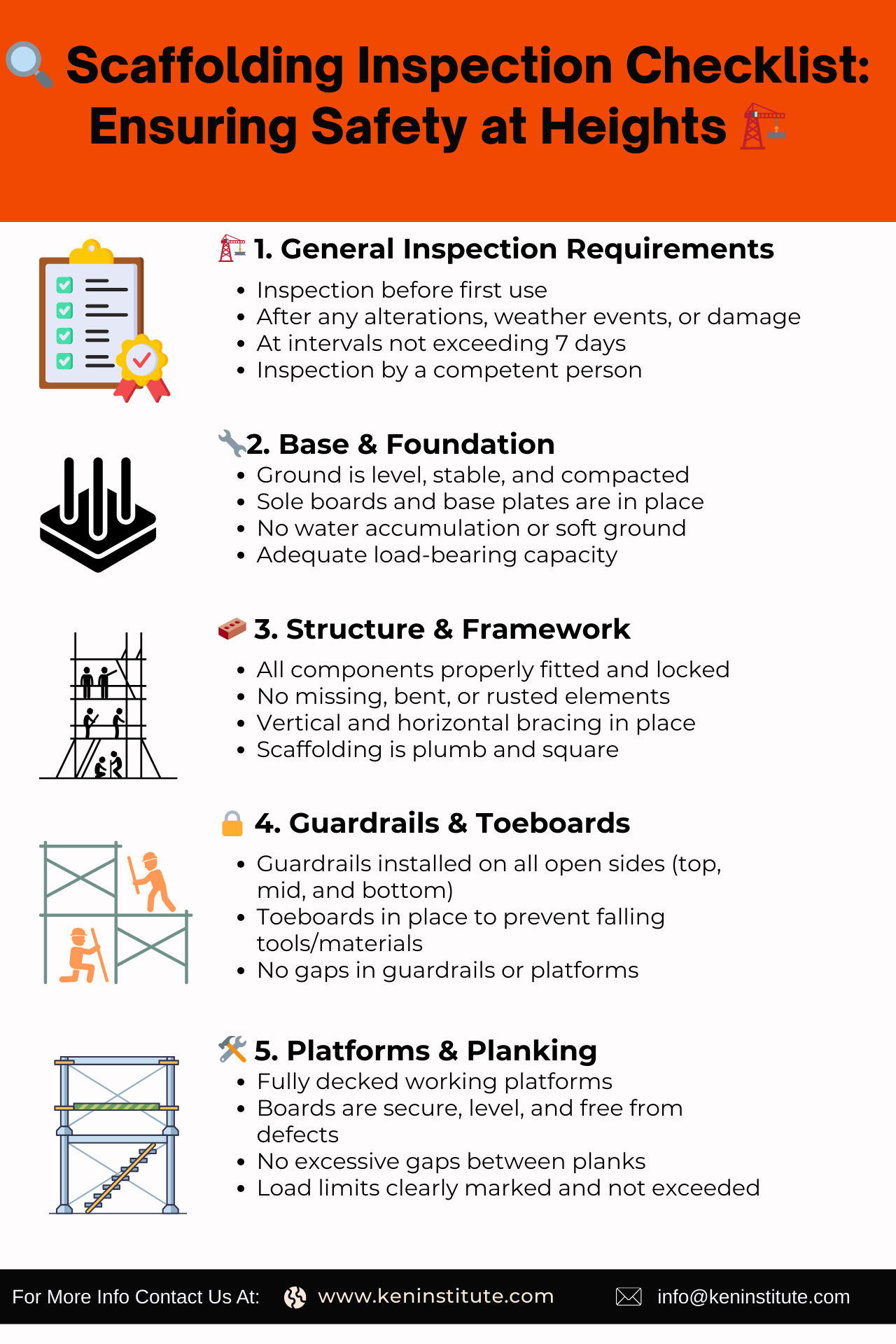
To enhance worker safety and comply with safety standards, here are The Best Practices for Scaffolding Safety:
-
Comprehensive Planning and Risk Assessment
Before any scaffold is erected, detailed planning and hazard identification must be conducted.
Site-Specific Risk Assessment:
- Evaluate: soil conditions: ground stability -Sandy or loose soil may require mud sills or base plates.
- Identify: overhead power lines, weather risks/ environmental conditions (e.g., monsoon or high winds), and overhead falling object hazards.
- Consider: accessibility and emergency evacuation routes.
Scaffold Design and Configuration:
- For non-standard scaffolds, professional engineering input is required.
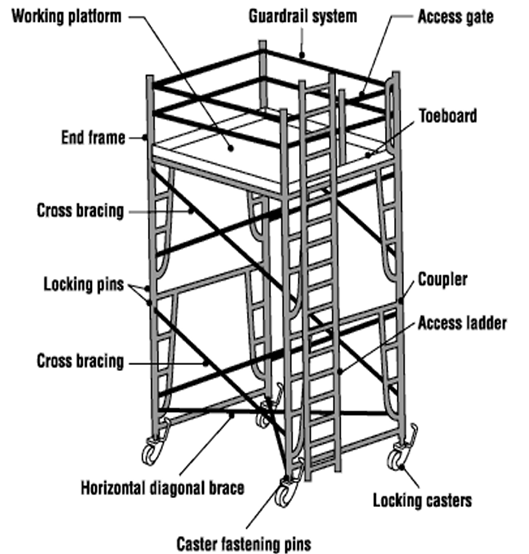
- Determine type: Tube & coupler, system scaffold, or suspended scaffold, based on the job.
- Plan for vertical and horizontal access, load zones, and tie-in points considering load-bearing requirements and worker tasks.
-
Erection, Modification, and Dismantling by Qualified Personnel
Improper assembly is a leading cause of scaffold-related incidents.
- Trained, Qualified Personnel Only: Scaffolds should be erected, altered, and dismantled under the supervision of a qualified person implementing The Best Practices for Scaffolding Safety.
- As per OSHA and international norms, a person who has the training and experience to identify existing and predictable hazards.
Safe Scaffold Assembly Practices:
- Use base plates and levelling jacks, not bricks or unstable materials.
- Plumb and level each frame.
- Secure all couplers, braces, and pins
- Install guardrails and midrails as soon as platforms are erected.
Dismantling Considerations:
- Do not remove structural components prematurely.
- Use proper sequencing to maintain scaffold balance.
- Use Manufacturer Instructions: Follow detailed guidelines to ensure safety and structural integrity.
-
Daily Inspections
Before Each Shift: A competent person should inspect the scaffold for:
- Check vertical and horizontal alignment.
- Stability: Check vertical and horizontal alignment.
- Loose components: Look for damaged planks, bent frames, corrosion, loose bolts.
- Signs of wear or damage
Inspection After Each Shift:
- Material strikes or vehicle impacts
- Alterations or load changes
Documentation:
The Best Practices for Scaffolding Safety is to Maintain inspection logs and corrective action reports.
-
Fall Protection Measures
Fall protection is non-negotiable.
Guardrails:
- Install top rails, midrails, and toe boards on all open sides (Top rail: 38–45 inches or as per local codes)
- Midrails and toe boards required at all open edges.
- Secure guardrails to withstand at least 90 kg (200 lbs) of force.
Personal Fall Arrest Systems (PFAS):
- Use when working at heights without guardrails or on suspended scaffolds.
- Anchor points must support at least 5,000 lbs (22.2 kN).
- The Best Practices for Scaffolding Safety is to use harnesses, shock-absorbing lanyards or self-retracting lifelines when required, especially on suspended scaffolds.
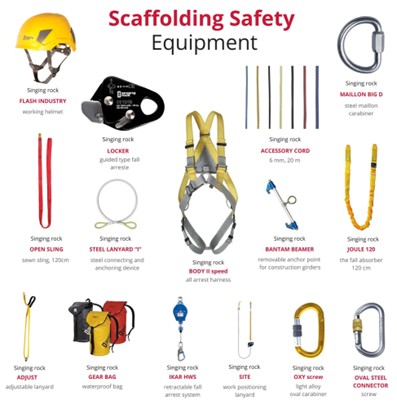
Image Source: verxaustralia.com
Safe Access:
- No climbing on braces or crossbars.
- Install fixed ladders, stair towers, portable ladders or ramps to climb.
-
Load Capacity and Material Handling
Know Your Load:
- Do not exceed the scaffold’s maximum intended load.
- Each scaffold has a design load capacity: Light duty (25 lbs/sq ft), Medium (50), Heavy (75+).
- Factor in:
- Workers
- Tools and equipment
- Material storage
Safe Loading:
- Avoid concentrated weight on one area to prevent collapse.
- Distribute loads evenly across the platform.
- Avoid stacking heavy materials.
- Do not store material near platform edges.
-
Structural Integrity and Ground Stability
Stable Foundation is the Top Most Practice for Scaffolding Safety:
- Ensure the scaffold is erected on firm, level ground.
- Use Base Plates and mud sills on soft ground to spread the load.
- Avoid placing scaffolds on uneven, frozen, or loose surfaces.
- Install diagonal bracing for lateral stability
Ties and Braces:
- Tie scaffolds to the structure at intervals:
- Secure the scaffold to the building at regular intervals to prevent tipping.
- Vertically: every 20–26 feet
- Horizontally: every 30 feet
-
Environmental and Weather Hazards
Wind and Rain:
- Avoid working on scaffolds during storms or high winds (above 40 km/h).
- Clear Ice and Snow: Remove any accumulation before use.
- Wet planks increase slipping risk; use anti-slip surfaces.
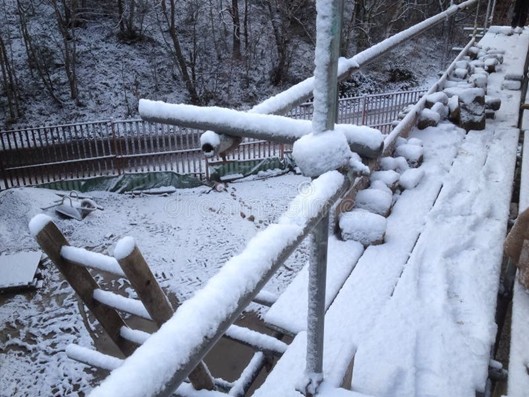
Image Source: https://www.dreamstime.com/
Sun and Heat:
- Heat exposure may cause dizziness, increasing fall risk.
- Use shade and hydration protocols.
Lightning:
- Metal scaffolds can conduct electricity. Stop work immediately during lightning alerts.
- Comprehensive Training Programs
Workers must be trained on:
Scaffold Components and Assembly:
- Frame types, bracing, locking mechanisms
- Recognizing defective parts
Comprehensive Training for Hazard Recognition:
Workers must understand:
- Hazards: Trip hazards, Electrical proximity, Overloading risks
- Proper use of fall protection
- Emergency procedures
Emergency Procedures:
- Fall arrest retrieval
- Scaffold collapse evacuation
- Fire or structural emergency actions
Ongoing Supervision: Regular monitoring ensures continued safe practices.
- Good Housekeeping and Maintenance
Platform Cleanliness:
- Remove debris, tools and unused material to avoid trips and slips.
- Use tool lanyards to prevent falling objects.
Debris Nets and Canopies:
- Install where there is risk to people below.
- Secure Loose Items: Prevent tools from falling and injuring people below.
- Use toeboards and edge protection to contain materials.
- Regulatory Compliance and Documentation
Following Legal Standards is one of The Best Practices for Scaffolding Safety:
- OSHA (29 CFR 1926.451) – U.S.
- HSE Work at Height Regulations – U.K.
- ISO 45001 & 18893 – Global
- OSHAD Code of Practice 34 – UAE
Document Safety Procedures and Inspections
Keep records of:
- Scaffold designs
- Inspection logs
- Worker training
- Incident reports
Scaffold Safety Inspection & Setup Checklist
| Item | Status (✔/✘) | Remarks |
| General | ||
| Site-specific risk assessment completed | ||
| Scaffold design approved by competent person | ||
| Weather and ground conditions checked | ||
| Erection | ||
| Scaffold erected by trained personnel | ||
| Base plates and mud sills used | ||
| Vertical and horizontal braces installed | ||
| Ties to structure at required intervals | ||
| Fall Protection | ||
| Guardrails, midrails, and toe boards installed | ||
| Fall Arrest System used if required | ||
| Proper access ladders/stairs provided | ||
| Inspection & Maintenance | ||
| Scaffold inspected daily by competent person | ||
| Inspection log maintained | ||
| Defective/damaged components replaced | ||
| Platform Safety | ||
| Load capacity clearly marked | ||
| No overloading; materials evenly distributed | ||
| Platforms free from debris/tools | ||
| Environmental Factors | ||
| Scaffold not used in high winds or storms | ||
| Ice/snow removed before use | ||
| Sun/heat protocols in place |
- Ask the crew for questions or recent unsafe observations.
- Document attendance.
- Emphasize that everyone is responsible for safety.
Final Thoughts
Scaffolding is a system, not just equipment.
The Best Practices for Scaffolding requires: A deep commitment to training and Strong leadership and safety culture.
When implemented effectively, these practices can reduce injuries, legal liabilities, and project delays.
Join us and unlock a world of online courses in Mechanical Engineering, Occupational Health and Safety, Fire Safety, and Environment and Sustainability. Propel your career to new heights.
Connect now and take the next step toward professional excellence!
+91 7569034271
Let’s connect together on: Facebook, YouTube, LinkedIn, and Instagram.