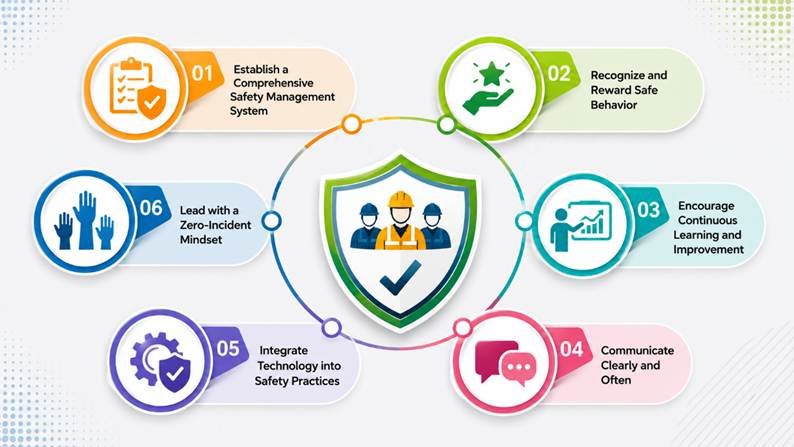
A safety-first culture is more than a collection of rules, procedures, and posters. It is a way of working in which leaders, supervisors, employees, contractors, and visitors consistently recognize hazards, make safe decisions, and feel responsible for protecting people, assets, and the environment.
Modern organizations build this culture by combining visible leadership, meaningful worker participation, effective risk controls, learning from incidents, and the intelligent use of digital technologies.
Building a true safety-first culture requires moving to treat safety as an active, foundational business strategy. When integrated into an organization’s core identity, robust safety ecosystems protect employees while driving productivity, operational excellence, and employee retention.
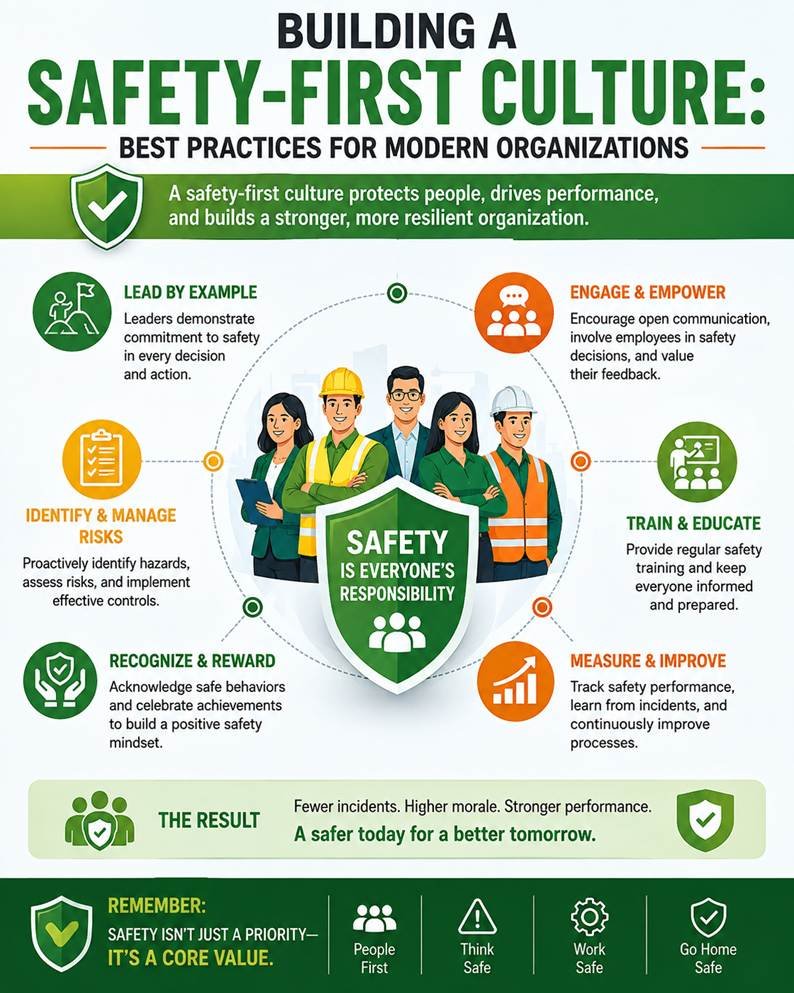
A Strong Safety Culture Incorporate with:
- Employees can report hazards and near misses without fear of blame.
- Managers consider safety before approving production, maintenance, or process changes.
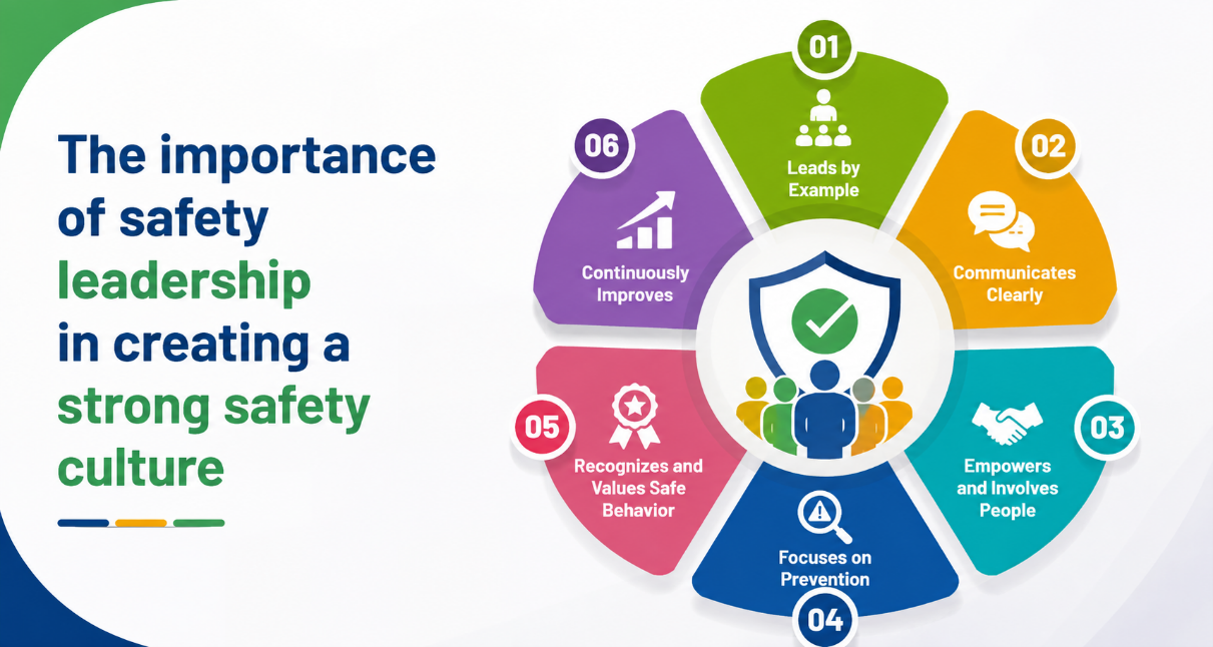
- Supervisors lead by example and correct unsafe conditions promptly.
- Workers participate in risk assessments and safety improvement activities.
- Contractors are held to the same safety standards as permanent employees.
- Lessons from incidents are shared across departments.
- Safety performance is measured through both leading and lagging indicators.
- ISO 45001 identifies leadership commitment, worker participation, hazard identification, risk assessment, operational controls, emergency preparedness, competence, performance evaluation.
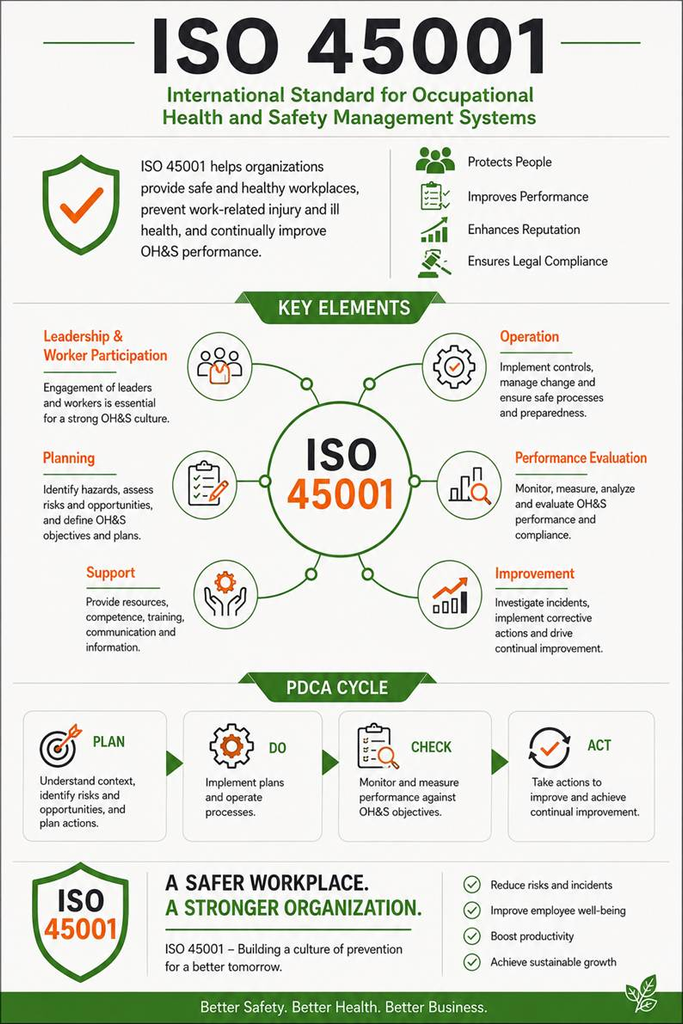
“A safety-first culture is therefore demonstrated by the quality of risk management and the organization’s ability to identify and control hazards before harm occurs.”
Organizational Values for Building a True Safety-First Culture
1. Visible, Active Leadership Commitment: Lead by Example and Resource Allocation
2. Psychological Safety and Blame-Free Reporting: Encourage Near-Miss Reporting and A Just Culture Model
3. Continuous and Interactive Learning: Micro-learning, Toolboxes and Scenario-Based Dynamic Training
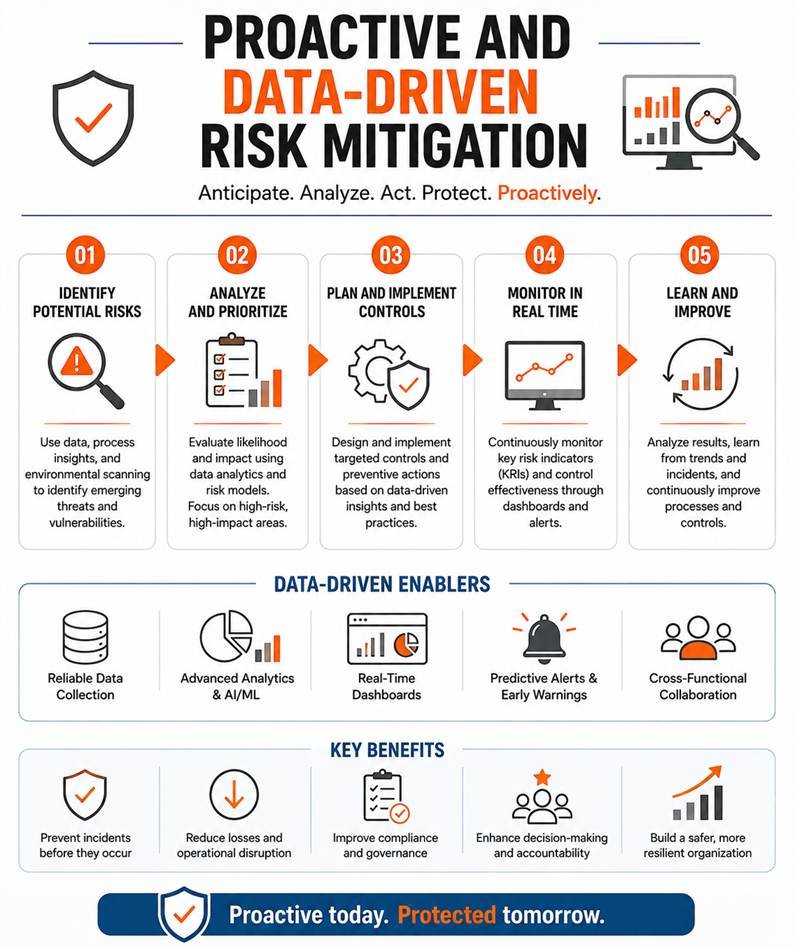
4. Proactive and Data-Driven Risk Mitigation: Routine Shared Audits and Digital Integration
5. Recognition and Collective Ownership: Empower Peer Safety Ambassadors and Positive Reinforcement
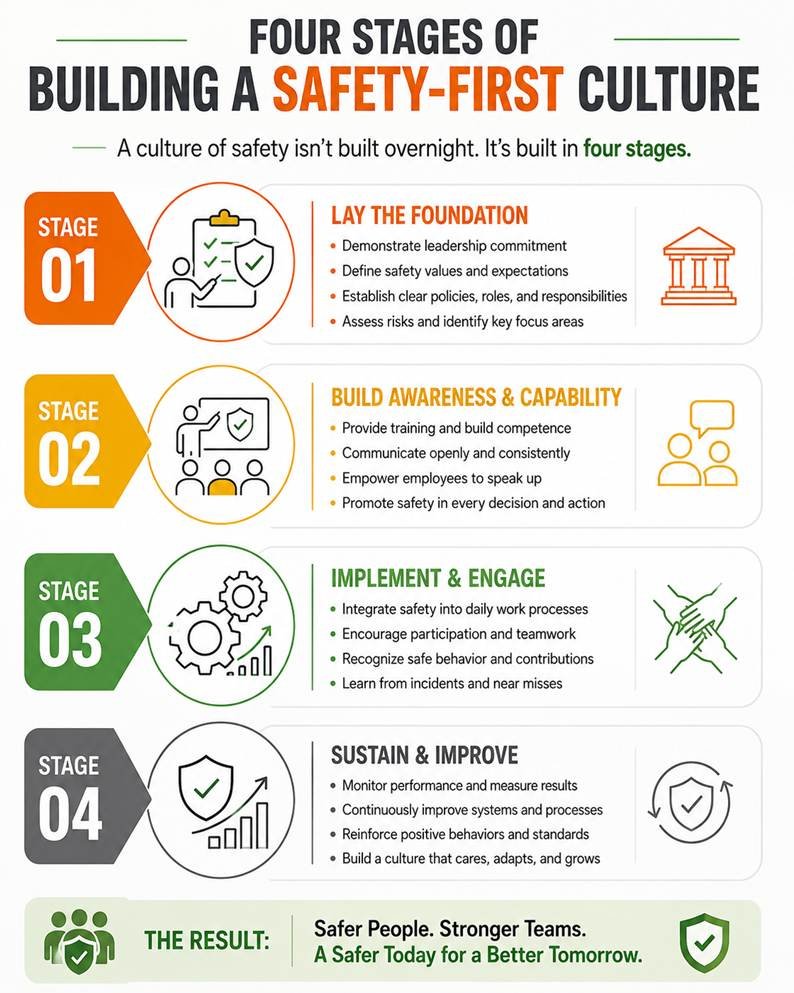
Organization’s Ability to Build Safety-First Culture
1. Demonstrate Visible Leadership
Employees closely observe what leaders do—not only what they say. Senior leaders should: Include safety in strategic and operational decisions, Conduct regular workplace safety visits, Ask employees about hazards and barriers to safe work, Allocate sufficient resources for engineering controls, training, maintenance, and emergency preparedness, Review significant risks during management meetings, Hold managers accountable for safety performance and Recognize employees who identify and control hazards.
“The EHS team may coordinate the safety management system, but operational leaders must own the risks associated with their activities”.
For example, a plant manager should not only review the monthly incident report. They should also ask:
Which high-risk tasks were performed this month?
What critical controls were verified?
Which near misses remain unresolved?
Were maintenance backlogs linked to safety risks?
Did workers participate in the investigation and corrective action process?
These questions shift safety from a reporting activity to a leadership responsibility.
2. Encourage Worker Participation
Workers often have the most practical understanding of how tasks are actually performed. The International Labour Organization describes worker participation as an essential element of an occupational safety and health management system.
Worker participation should be built into: Hazard identification. Job safety analysis and risk assessment. Permit-to-work reviews. Incident and near-miss investigations. Emergency drills. Procedure development. Training-needs assessments. Management-of-change processes. Audits and workplace inspections. Workers and their representatives should be consulted, informed and trained. Make reporting simple and A reporting system should be accessible to all workers.
Organizations should provide: Mobil hazard-reporting applications. QR codes placed near equipment. Short paper forms. Safety suggestion boxes. Supervisor reporting channels. Anonymous reporting options where appropriate.
“To create trust, employees must see that reports result in action. Every report should receive acknowledgement, risk-based prioritization, ownership, and closure feedback.”
3. Control Hazards at the Source
A safety-first organization first attempts to eliminate or reduce hazards through the hierarchy of controls.
Organizations should also integrate safety with preventive and predictive maintenance. Defective guards, leaking pipelines, damaged electrical systems, failed interlocks, and deteriorating lifting equipment can become serious incident precursors. CMMS (Computerized Maintenance Management System) alerts, condition-monitoring sensors, inspection findings, and safety observations should be connected so that critical defects are prioritized and tracked to closure.
4. Build a Just and Learning-Oriented Environment
A just safety culture distinguishes between:
Human error: Generally be addressed through better design, clearer procedures, improved training, or stronger supervision.
At-risk behavior: System weaknesses.
Reckless behavior / Deliberate violations: require disciplinary action, but investigations should first examine the broader conditions that influenced the behavior.
A useful investigation:
The purpose of an investigation should be to prevent recurrence, not simply to identify someone to blame. The questions should be asked:
- What happened?
- What conditions made the event possible?
- Were procedures realistic and available?
- Was the worker competent and adequately supervised?
- Were there production or time pressures?
- Was equipment maintained properly?
- Were previous warnings ignored?
- Did the organization’s systems fail to detect the risk?
5. Strengthen Supervisor Capability
Supervisors are the most important link between organizational policy and workplace behavior. They control daily priorities, assign work, monitor conditions, and influence whether employees feel comfortable raising concerns.
Supervisors should be trained in: Hazard recognition. Risk assessment. Safe work planning.
Effective toolbox talks
A toolbox talk should not become a routine signature exercise. It should focus on the actual risks of the day.
It should include: Contractor control. Incident response. Coaching and positive intervention. Emergency actions. Stop-work authority. Fatigue and workload management.
The best supervisors do not merely ask, “Are you wearing your PPE?” They ask, “What could go wrong with this task, and what controls are in place?”
6. Manage Contractors as Safety Partners
Contractor safety is a critical challenge in manufacturing, construction, logistics, and infrastructure operations.
An effective contractor-management process:
Before engagement
Prequalify contractors based on competence and safety performance.
Review licenses, training records, insurance, and statutory compliance.
Evaluate the contractor’s risk assessments and method statements.
Define responsibilities between the host organization and contractor.
During mobilization
Provide site-specific induction.
Explain emergency arrangements and restricted areas.
Verify worker competence and medical fitness where relevant.
Confirm tools, equipment, PPE, and permits.
During work
Conduct joint risk assessments.
Monitor high-risk activities.
Coordinate simultaneous operations.
Hold pre-job briefings.
Verify isolation, scaffolding, lifting, and confined-space controls.
Stop work when critical controls are absent.
After completion
Review contractor performance.
Record deviations and lessons learned.
Include safety results in future contractor selection.
Contractors should not be treated as outside the safety system. They are part of the organization’s operational risk profile.
7. Use Training to Build a Safety First Culture
Training should be practical, role-specific, and evaluated for effectiveness.
A robust approach includes: Induction for new employees and contractors. Task-specific training. Refresher training based on risk and performance. Practical demonstrations. Competency assessments. Training in local languages where necessary. Coaching at the workplace. Verification that workers can apply the learning.
Training should also be triggered by changes in equipment, processes, chemicals, legal requirements, incidents, or identified competency gaps.
8. Prepare for Emergencies
Emergency preparedness is a practical test of safety culture. Written plans are valuable, but workers must know what to do under pressure.
Organizations should identify credible scenarios such as:
Fire or explosion, Chemical release, Electrical accident, Confined-space emergency, Structural failure, Natural disaster, Medical emergency, Utility failure, Security threat and Environmental spill.
Emergency programs should include: Clear alarm and communication systems, defined emergency roles, Suitable firefighting and rescue equipment, Trained first-aiders, Evacuation routes and assembly points, Coordination with external emergency services and Periodic drills.
“Post-drill reviews and corrective actions should be designed to test the system, not to create a false impression of success. “
9. Measures That Matters
Incident rates are important, but they are reactive. A modern safety dashboard should combine lagging and leading indicators.
Lagging indicators: Fatalities, Lost-time injuries, Recordable injuries, Occupational illnesses, Property damage, Environmental releases and
Workers’ compensation claims.
Leading indicators
Corrective actions closed on time, Critical-control verification, Near-miss quality and reporting trends, Safety observations, High-risk permits audited, Preventive maintenance completion, Safety training effectiveness, Emergency drill performance, Worker participation levels, Contractor audit scores and Repeat findings from inspections.
10. Apply Digital Tools Responsibly
Digital transformation can make safety management faster, more visible, and more data-driven. Useful applications include:
Mobile inspections and audits, Digital permit-to-work systems, Real-time monitoring of gas, noise, temperature, and location, AI-assisted hazard classification, Predictive maintenance alerts, Automated compliance calendars, Contractor training records, Incident trend analysis, Dashboards for critical controls and Digital emergency communication.
Digital tools- used in building a safety first culture
Technology is most valuable when it helps people act earlier and make better decisions. Digital tools should support, not replace professional judgment and worker engagement.
Organizations should address: Data quality, Cybersecurity, Privacy, Algorithmic bias, Accessibility for workers without personal devices, False alarms, Human review of AI-generated recommendations.
A Practical Roadmap to Build a Safety First Culture
Organizations can begin with a structured five-stage approach:
- Assess the current culture: Use interviews, observations, surveys, incident data, audit results, and worker feedback.
- Identify critical risks: Focus on hazards with the greatest potential for fatality, serious injury, occupational illness, or major environmental impact.
- Define leadership commitments: Establish measurable responsibilities, resources, and review mechanisms.
- Engage the workforce: Create effective channels for consultation, reporting, problem-solving, and feedback.
- Review and improve: Monitor performance, verify critical controls, learn from events, and update the system.
The process should include both employees and contractors. It should also reflect the organization’s legal obligations, operational risks, workforce profile, and local conditions.
Conclusion
Building a safety-first culture requires more than policies, audits, or compliance campaigns. It requires consistent leadership behavior, active worker participation, strong engineering controls, competent supervision, fair investigations, reliable maintenance, and continuous learning.
The most successful organizations understand that protecting people improves operational reliability, equipment availability, employee trust, regulatory confidence, and long-term business performance.
==================================================
Join Ken Institute,
unlock a world of online courses in MBA in HSE, Occupational Health and Safety, Fire Safety, Mechanical Engineering, and Environment and Sustainability.
Internationally recognized courses and training programs designed to empower individuals and organizations.
Join Ken Institute now to advance your career with Higher Certification in Environment & Sustainability Courses !
Connect now and take the next step toward professional excellence!
+91 7569034271
Let’s connect together on: Facebook, YouTube, LinkedIn, and Instagram.