Renewable Energy Projects
South Africa’s “Renewable Energy Independent Power Producer Procurement Programme (REIPPPP)”, launched in 2011. Environmental Compliance is central to South Africa’s renewable energy expansion, primarily enforced through the “National Environmental Management Act (NEMA)”. REIPPPP drives growth by procuring power from independent producers (IPPs) in wind, solar, small hydro, and biomass, targeting socioeconomic and environmentally sustainable development while reducing carbon emissions.
Regulatory Frameworks of Environmental Compliance
The Department of Forestry, Fisheries and the Environment (DFFE) issues specific EIA Guidelines for Renewable Energy Projects, outlining legal requirements under NEMA and related acts like the National Environmental Management: Biodiversity Act, Air Quality Act, Waste Act, and National Water Act.
Renewable Energy Independent Power Producer Procurement Programme (REIPPPP): This competitive tender process specifically requires bidders to prove they have secured the necessary environmental permits, making compliance a prerequisite for project viability.
National Environmental Management Act (NEMA) 107 of 1998: This is the primary legislation governing environmental management. It mandates that any “listed activity”, including most large-scale wind and solar farms obtains Environmental Authorisation before construction begins.
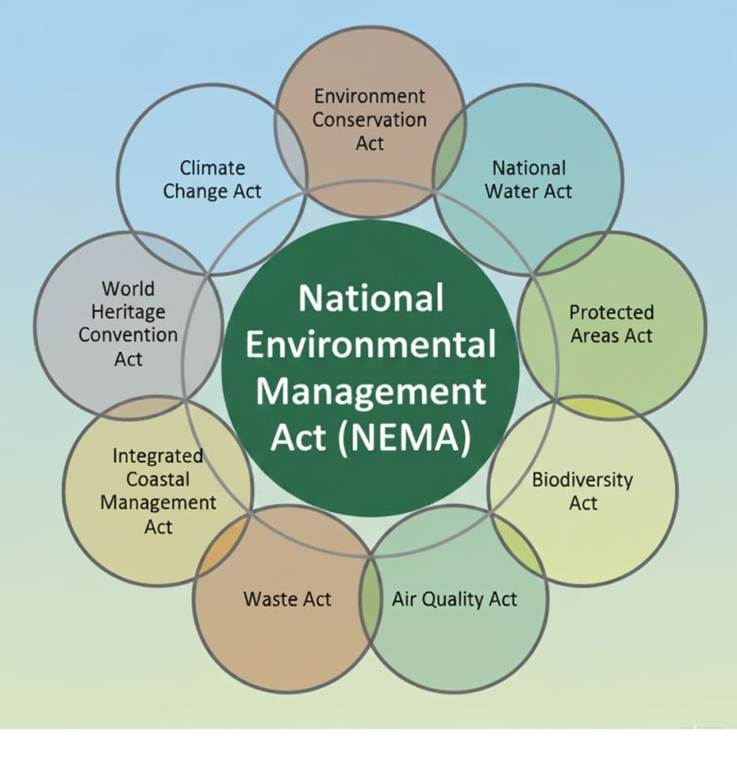
Image Source: linkedin
Electricity Regulation Act (ERA): Developers must provide evidence of environmental compliance as part of the licensing process with the National Energy Regulator of South Africa.
Environmental Impact Assessments (EIAs): EIAs involve Basic Assessment for lower-impact activities or Scoping and Environmental Impact Reporting for complex ones, including preparation of an Environmental Management Programme (EMPr) with project-specific mitigations informed by industry best practices.
Specific Listing Notices for Different Types of Renewable Energy Projects
In South Africa, the EIA Regulations, as amended, categorize activities into three “Listing Notices” based on their potential environmental impact.
Notice1: Basic Assessment (BA)
This notice applies to smaller-scale projects or activities with impacts that are generally well-understood and manageable. It triggers a Basic Assessment, which is typically faster than a full EIA.
- Generation of electricity where the output is more than 10 megawatts (MW) but less than 20 MW.
- Development of facilities for the transmission and distribution of electricity with a capacity of more than 33 kilovolts but less than 275 kV outside urban areas.
- Development within 32 metres of a watercourse or within a watercourse itself, provided the footprint exceeds 100 square metres.
- The decommissioning of existing electricity generation facilities with a capacity of more than 10 MW.
Notice 2: Scoping and Environmental Impact Reporting
This notice applies to large-scale projects likely to have a significant environmental footprint. It triggers a more comprehensive full EIA process.
- The development of facilities or infrastructure for the generation of electricity from a renewable resource where the electricity output is 20 megawatts or more.
- The development of facilities for the transmission and distribution of electricity with a capacity of 275 kilovolts or more.
Notice 3: Targeted Sensitive Areas
This notice triggers a Basic Assessment regardless of capacity if the project is located in geographically sensitive areas identified by each province (e.g., critical biodiversity areas, protected area buffers, or certain estuaries).
Strategic Exemptions and Streamlining
To accelerate the energy transition, DFFE has introduced mechanisms to bypass the full S&EIR process:
REDZ Advantage: Projects with a capacity of 20 MW or more that would normally require a full EIA can follow the shorter Basic Assessment process if they are located within a Renewable Energy Development Zone (REDZ).
Solar PV Exclusion: Recent reforms aim to exclude solar PV installations from the requirement to obtain environmental authorization altogether if they are developed in areas of “low” or “medium” environmental sensitivity.
Role of Environmental Compliance in Project Expansion
Compliance ensures sustainable rollout amid ambitious targets, like 17.8 GW from renewables by 2030 under the Integrated Resource Plan by addressing:
Biodiversity and Habitat: Avian/bat collisions (wind), habitat fragmentation (solar/wind farms), and impacts on protected areas.
Water and Waste: Abstraction for hydropower/CSP, effluent from biomass processing.
Air and Visual: Emissions from combustion, noise/visual pollution.
Land Use: Avoiding sensitive agricultural/heritage sites via pre-construction surveys and minimized footprints.
Mitigations: include site selection outside migratory routes, dust/erosion controls, spill plans, buried cabling, and post-construction monitoring, embedded in EMPrs by independent practitioners. Public participation integrates stakeholder input throughout.
Challenges in Expanding Renewable Energy Projects
Delaying EIA Approvals for REIPPPP Projects
Several challenges have historically delayed Environmental Impact Assessment approvals for REIPPPP projects in South Africa, though reforms have reduced timelines significantly by 2025.
Primary Delays in EIA Processes
Lengthy Timelines and Resource Strain: Full EIAs traditionallydelays from permitting have been eased by “one environmental system” agreements synchronizing NEMA, water, and waste timelines, supporting REIPPPP’s success in attracting private investment.
Public and Stakeholder Objections: Extensive public participation phases often led to objections, requiring revisions and appeals, extending processes beyond 18 months for high-impact sites.
Interlinked Permits: EIA approvals depend on concurrent water use licenses, biodiversity compliance, and grid connections, creating bottlenecks as projects couldn’t advance without full regulatory alignment.
High Detail and Cost at Bidding: REIPPPP required advanced EIA data (R2-6 million cost) pre-bid, risking incomplete submissions or rushed assessments that later needed fixes.
Capacity and Administrative Overload: Limited qualified experts, law firms, and DoE/DFFE resources caused backlogs, especially in early bid windows.
Recent Improvements (2024-2026)
Streamlining via Renewable Energy Development Zones and “one environmental system” cut REDZ/SIP approvals to 57 days. 99% efficiency June 2024-March 2025, up from 83%, excluding windfarms due to avifauna risks; new norms eased low-sensitivity solar/hydro projects. Despite this, grid constraints and non-EIA hurdles persist, limiting full deployment.
These factors slowed financial close, but targeted reforms have boosted REIPPPP efficiency amid 2025 growth.
Recent legislative amendments from Strategic Environmental Assessments (SEAs) for renewable permitting
Key Amendments
Two major SEAs, one finalized in 2015 and another in 2019, identified low-sensitivity REDZs and Strategic Transmission Corridors for wind, solar PV, and grid infrastructure, enabling faster Environmental Authorisations (EAs).
2021 Gazettes (GN 44191): Published procedures for EA applications in REDZs, shortening processes via pre-assessed sensitivity, exempting full Scoping & EIA for qualifying projects.
Generic EMPs and Exemptions: Introduced post-SEAs for grid/substations and solar facilities bypassing certain listed activities under NEMA Listing Notices.
SIP 57-Day Rule: Strategic Infrastructure Projects (SIPs) in REDZs processed in 57 days per Infrastructure Development Act, achieving 99% efficiency.
2024-2025 Updates: Climate Change Act 22 of 2024 and Electricity Regulation Amendment Act 38 of 2024 support renewables indirectly; REDZ expansions and “one environmental system” integrate EIA with water/waste permits, reducing delays from 300+ to ~57 days.
These changes prioritize solar/wind in REDZs while mandating EAs, boosting REIPPPP and private procurement. Wind projects remain more scrutinized due to biodiversity risks.
Common Environmental Risks and Mitigations in Solar Farms
Risks like grid integration, land competition, and weather extremes persist, but compliance fosters resilience and ESG alignment, vital for South Africa’s energy transition. Mitigations embedded in EIAs as per NEMA guidelines minimize the risks.
Habitat Loss and Biodiversity: Land clearing fragments habitats, affecting terrestrial species and soil biota.
Mitigation: Pre-construction ecological surveys, site selection in low-sensitivity areas vegetation offsets, and rehabilitation plans with native planting post-decommissioning.
Soil Erosion and Dust: Grading exposes soil, increasing erosion and dust emissions that harm vegetation photosynthesis and air quality.
Mitigation: Erosion controls (silt fences, revegetation), dust suppression (water spraying), and minimal disturbance footprints.
Water Use: CSP cooling requires significant water (up to 3,000 L/MWh), straining arid regions; PV cleaning adds minor demand.
Mitigation: Dry cooling tech, rainwater harvesting, and low-water cleaning (e.g., robotic systems).
Hazardous Materials: PV manufacturing uses cadmium/lead; CSP involves heat transfer fluids/molten salts prone to leaks.
Mitigation: Spill containment, proper recycling, and end-of-life handling per NEMWA.
Visual/Heat Island: Large arrays alter landscapes; CSP towers create “lake effect” scorching wildlife.
Mitigation: Anti-reflective coatings, setback distances, and avian radar monitoring.
Common Environmental Risks and Mitigations in Wind Farms
Wind farms mainly impact biodiversity and noise, with South African EIAs requiring 12-month pre-construction bat/bird monitoring due to high avifauna risks.
Avian and Bat Collisions: Turbines cause fatalities, fragmenting migratory corridors.
Mitigation: Curtailment, radar/painting blades black, site avoidance near Important Bird Areas, and post-construction monitoring.
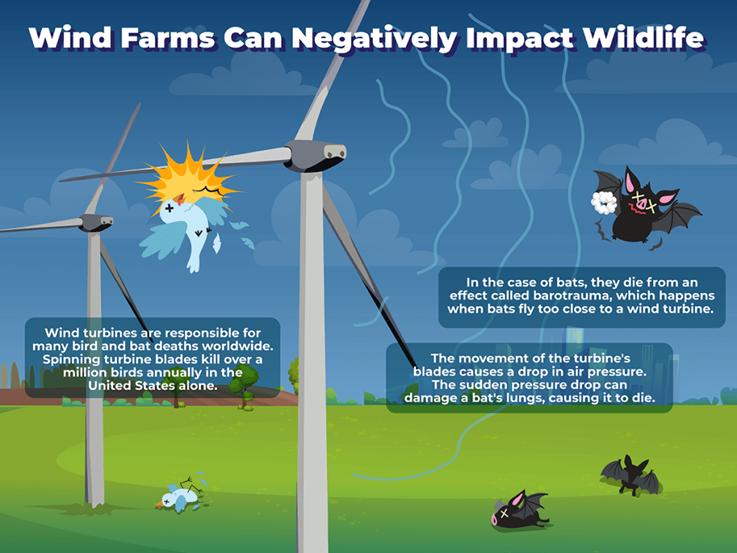
Image Source: lindyenergy
Noise and Shadow Flicker: Audible infrasound/low-frequency noise affects residents; flickering shadows cause disorientation.
Mitigation: Setback distances (500-1,000m from homes), low-noise blades, and flicker modeling under 30 hrs/year.
Habitat Fragmentation: Access roads/towers disrupt wildlife movement.
Mitigation: Underground cabling, narrow corridors, and biodiversity offsets.
Soil/Water Impacts: Foundation pouring and crane pads cause erosion/runoff.
Mitigation: Silt traps, phased construction, and hydrological assessments per NWA.
Waste/Visual: Blade disposal challenges; landscape intrusion.
Mitigation: Recycling R&D, turbine height limits, and decommissioning bonds.
These mitigations are addressed via project-specific Environmental Management Programmes , public participation, and SEA-informed REDZs, balancing REIPPPP expansion with sustainability.
Role of Independent Power Producers in Environmental Compliance
Independent Power Producers (IPPs) play a pivotal role in environmental compliance for South Africa’s REIPPPP projects.
Key Responsibilities in Compliance
EIA Leadership: IPPs commission and fund full EIAs assessment, specialist studies , and Environmental Management Programmes via independent Environmental Assessment Practitioners. They submit applications to DFFE, addressing risks like biodiversity loss and erosion identified in SEAs/REDZs.
Pre-Bid Compliance: REIPPPP mandates advanced environmental due diligence in bid submissions, costing R2-6 million, to demonstrate bankability and low-impact sites.
Mitigation Implementation: IPPs execute EMPrs during construction/operation, including erosion controls, bird radars, water recycling, and monitoring/reporting. They integrate “one environmental system” permits.
Public Participation and Appeals: IPPs manage stakeholder engagement, addressing objections to avoid delays, and handle appeals or conditions post-authorization.
Sustainability Beyond Compliance: Many IPPs pursue ESG standards, RECs, biodiversity offsets, and decommissioning funds, enhancing REIPPPP socioeconomic criteria (e.g., local content, job creation).
Summary
Environmental Compliance is a mandatory legal foundation rather than a voluntary practice for renewable energy projects, which guarantees the right to an environment that is not harmful to health and well-being, the regulatory framework ensures that the transition to green energy balances economic development with ecological protection.
“Though the projects face delays/costs from rigorous compliance but benefit from REDZ fast-tracking and private investment appeal, non-compliance risks, financial close failure or contract termination. Their role has driven 6+ GW renewables by 2025, balancing expansion with protection.”
========================================
Ken Institute provides a platform that facilitates conversations among employers, employees, and Safety Professionals, encouraging mutual learning and collective action. Our aim is to improve work environments and foster a culture of safety.
Join Ken Institute now to advance your career with Higher Certification in HSE!
Internationally recognized courses and training programs designed to empower individuals and organizations. Our commitment is “academic excellence, quality standards, and robust training processes”.
Connect now and take the next step toward professional excellence!
+91 7569034271
Let’s connect together on: Facebook, YouTube, LinkedIn, and Instagram.
Let’s connect together on: Facebook, YouTube, LinkedIn, and Instagram.