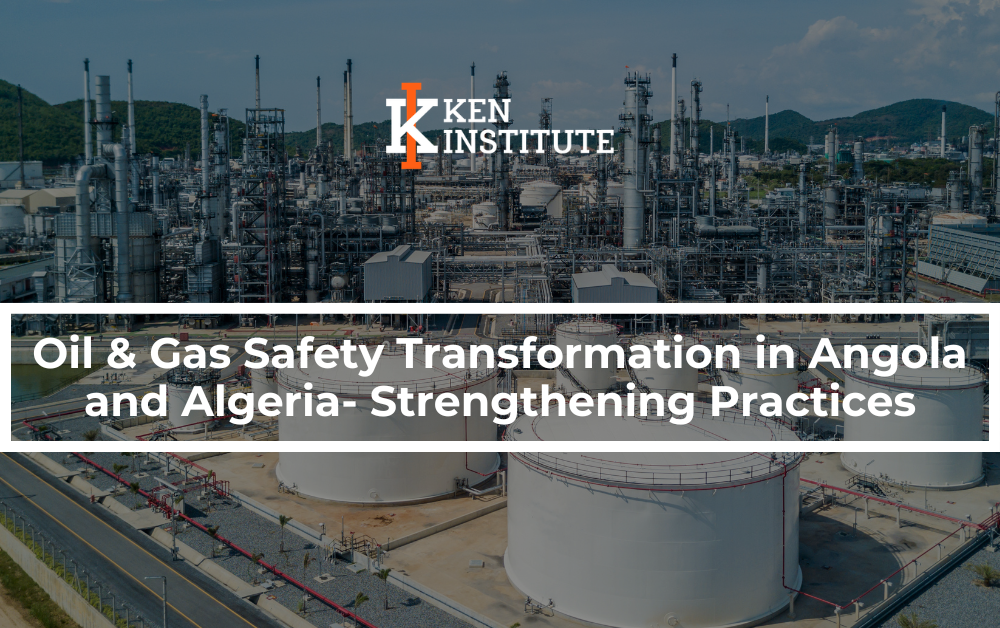
As production grows Angola and Algeria both are getting urgent opportunities to modernize oil & gas safety systems, such as aligning workforce development, regulatory enforcement, asset integrity and digital tools. HSE leaders and policymakers can adopt now to accelerate safety transformation across both countries. These will reduce risk and improve operational resilience.
Angola needs regulatory modernization and enforcement strengthening, while Algeria needs tougher operational discipline and a stronger safety culture that survives production pressure. For an HSE leader, the winning strategy is to tailor the management system to the country’s real regulatory weakness rather than importing a generic model.
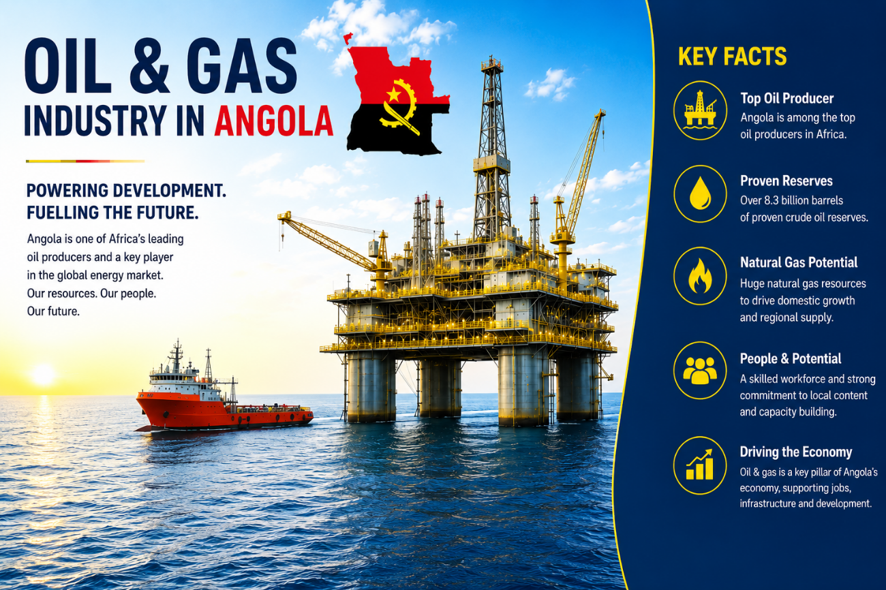
Why Transformation Matters in Angola & Algeria!
Angola is escalating activities, investing in workforce development and technology transfer at national oil events and through institutional capacity-building programs. The industry is discussing AI, decommissioning, and about next-generation workforce challenges that affect safety outcomes.
Algeria has major upstream investment plans and public commitments to reduce environmental hazards, which connect directly to process safety and emissions control effort. These national priorities create a policy window to strengthen safety systems.
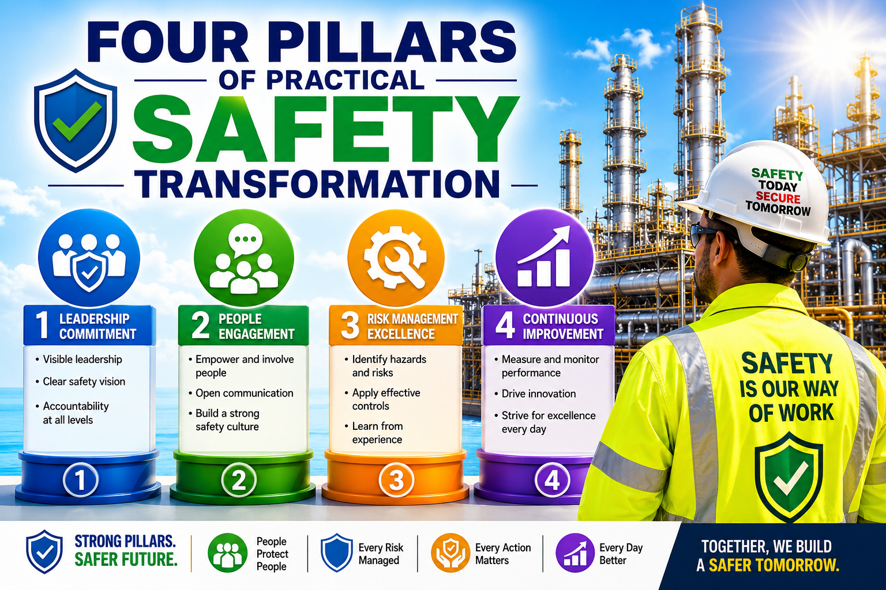
Four Pillars of Practical Safety Transformation
Regulatory and Institutional Strengthening: Modernize inspection capacity, mandate transparent incident reporting, and alignment with national hydrocarbons law updates to drive compliance and investor confidence.
Asset Integrity and Engineering Controls: Implement risk-based inspection (RBI), non‑destructive testing (NDT), and systematic integrity management for ageing fixed and rotating equipment to prevent leaks, failures, and catastrophic events.
Workforce Skills and Safety Culture: Invest in localized competency programs (vocational pipelines, university partnerships, apprenticeship models) and expand industry training institutes to fill skills gaps and hazard recognition, permit-to-work and emergency response behaviours.
Digital Transformation and Operational Monitoring: Implement IoT sensors, predictive maintenance, and AI-driven analytics for early detection of corrosion, vibration anomalies, and process inspection paired with cybersecurity protections for critical safety systems.
Steps for Regulatory Actions
Strengthen Inspection Regimes: Increase the number and capability of independent inspectors. Provide digital inspection tools and standardized checklists, and publish anonymized national safety performance metrics to build accountability.
Update Legal Frameworks: Revise hydrocarbons and occupational safety laws to require incident reporting timelines, third-party audits, and stronger penalties for noncompliance while offering regulatory incentives for demonstrable safety performance improvements.
Enable Data Sharing and Learning: Create centralized incident databases and lessons-learned platforms so operators can learn from near-misses and accidents across the region.
Strict Steps for Operators and NOCs
Adopt A Risk-Based Inspection Program: Prioritize inspections using RBI and NDT to focus resources where the probability and consequence of failure are highest, and integrate RBI outputs with maintenance planning.
Strengthen Contractor Management: Standardize contractor prequalification, require uniform HSE programmes, and mandate shared KPIs for process safety across operator and contractor boundaries.
Reduce Flaring and Manage Hydrocarbons: Invest in gas capture, reuse, and flare-reduction projects—these lower emissions and remove routine process-safety hazards associated with venting and flaring operations.
Technology and Monitoring Practices that Deliver Measurable Gains in Angola & Algeria
Condition-Based and Predictive Maintenance: Use sensors and analytics to shift from calendar-based to condition-based interventions, reducing unplanned failures and supporting efficient spare-parts management.
Remote Monitoring and Centralized Control: Central Operations Centres with real-time dashboards help detect excursions early and coordinate responses across offshore and onshore assets.
Protect Critical Systems: Integrate cybersecurity into safety systems design to prevent malicious or accidental control-system disruptions.
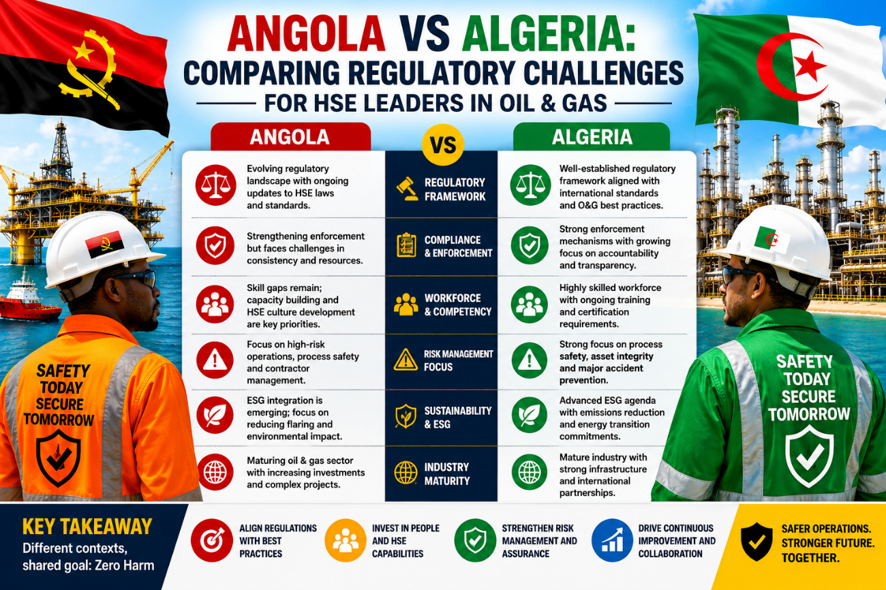
Angola Vs Algeria: Comparing Regulatory Challenges for HSE Leaders in Oil & Gas
Angola and Algeria are both strategic oil and gas producers, but the regulatory realities facing HSE leaders in each country are quite different. The comparison matters because regulatory weakness creates different HSE risks in each country. Angola requires leaders to be system builders, helping create clarity where the legal environment is still evolving. Algeria requires leaders to be system enforcers, making sure a more complete legal framework produces real behavior change on site. In both cases, the strongest HSE programs are the ones that go beyond minimum legal compliance and build reliable operational control.
Angola
HSE leaders in Angola often need to spend significant effort on building internal systems that compensate for regulatory uncertainty. Angola’s OHS framework has been described as fragmented, inconsistent, and still shaped by pre-independence legal structures. These conditions create gaps between international standards and actual enforcement. This makes compliance harder to interpret and implement, managing multiple contractors and high-risk activities.
Enforcement and Compliance
In Angola, the regulatory challenge is closely tied to enforcement weakness. The available legal analysis points to discontinuities in the framework and deficiencies in enforcement mechanisms, which means compliance can be uneven and difficult to verify. That creates a strong*– need for internal assurance, routine audits, and clear documentation of corrective actions.
Workforce and Operational Capability
Angola’s challenge is amplified by the need for stronger institutional and workforce capacity. If laws are fragmented and enforcement is uneven, then supervisors, contractors, and workers must be trained to apply more rigorous internal standards than the minimum legal baseline. This makes competency-building a core part of regulatory compliance.
Priority Management
For Angola, the immediate priorities are legal mapping, internal compliance systems, and stronger contractor control. Because the framework is still seen as incomplete and in need of revision, HSE leaders should not wait for perfect regulation before building robust controls. Internal audits, risk registers, and structured incident learning are especially important in this environment.
Algeria
Algeria has a more defined hydrocarbons law, including provisions on safety, health, environmental protection, and flaring controls. The problem is not the absence of regulation, but the difficulty of translating legal requirements into reliable field performance across a complex sector. As a result, HSE leaders in Algeria are more likely to deal with execution gaps, discipline issues, and performance variation rather than basic legal ambiguity.
Enforcement and Compliance
In Algeria, enforcement tends to be more structured, but HSE leaders still face the risk of “paper compliance,” where systems exist on paper but are not consistently followed in the field. This is especially important in hazardous areas such as hydrocarbon processing, storage, flaring, and abandonment activities, where best-practice controls are essential. The leadership challenge is to make sure procedures are not just approved, but actually lived at the site level.
Workforce and Operational Capability
Algeria’s issue is less about creating the baseline and more about maintaining consistency. The country’s hydrocarbons law explicitly requires safety, health, environmental protection, and the rational use of resources, which places a premium on competent implementation and process discipline. HSE leaders must therefore focus on barrier management, contractor oversight, and leadership accountability to keep performance steady across assets.
Priority Management
For Algeria, the priority is operational rigor. The legal framework already covers core safety, environmental, and flaring-related obligations, so the key question is how effectively those obligations are enforced in practice. HSE leaders should focus on field verification, management of change, permit-to-work discipline, and ensuring that environmental and safety obligations are integrated rather than treated separately.
Global Compliance
Angola
Regulatory Independence: Angola is aggressively overhauling its energy framework to reverse declining production while aligning itself with international maritime and industrial safety standards.
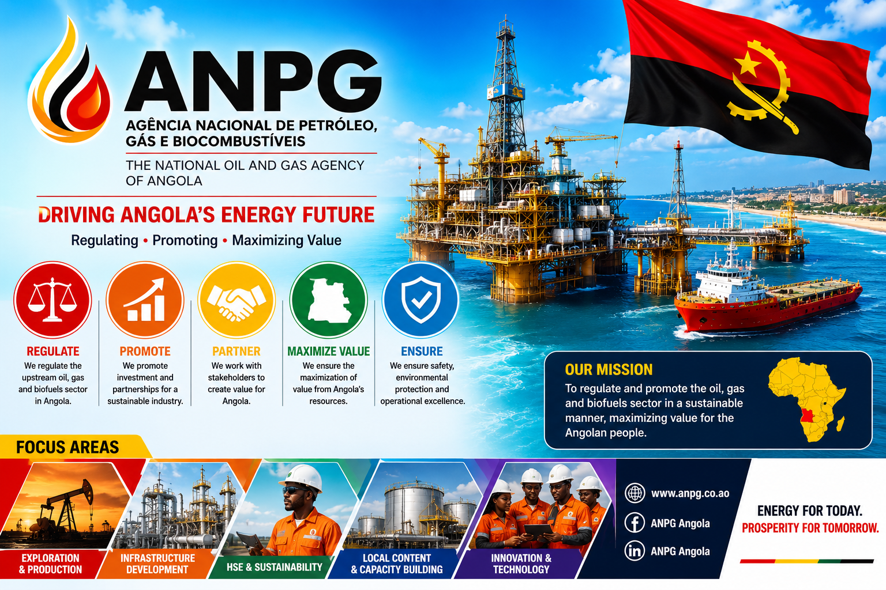
Institutional Separation of Powers: The National Oil and Gas Agency (ANPG) manages all upstream regulatory oversight, separating safety and licensing governance from the operations of state-owned Sonangol.
Adherence to International Maritime Safety (IMO): Angola acceded to the LOAD LINES enforce strict legal limits on ship loading, vessel integrity, and offshore facility crew protection.
Decarbonisation as a Safety Vector: Backed by its commitment to the World Bank’s Zero Routine Flaring by 2030 initiative, Angola tracks infrastructure safety by taxing fugitive methane emissions and routine gas flaring, which historically destabilised mature offshore wells.
Rigorous Licensing & Audit Frameworks: The ANPG enforces a “Prudent Operations” clause (Article 7 under updated petroleum laws), mandating annual technical safety reviews for public and private concessions. 1966 and SOLAS 1974 (Safety of Life at Sea) conventions. These
Algeria
Infrastructure Integrity and Cultural Modernisation: As the top natural gas exporter to Southern Europe, Algeria is modernising its massive onshore pipeline networks and evolving the workplace safety culture of its state major.
Massive Pipeline Safety Audits: Sonatrach initiated a massive safety sweep inspecting over 3,500 kilometres of its critical gas pipeline network under specialised engineering contracts. This program targets technical wear, failures, and pressure vulnerabilities across major corridors like Transmed and Medgaz.
Evolving Process Safety Management (PSM): Moving past legacy Environment, Health, and Safety (EHS) models, Sonatrach facilities are implementing deep operational integrity metrics, updating structural documentation, and closing gaps in legal compliance.
Climate-Adapted Incident Prevention: Comprehensive workplace accident studies have rewritten field protocols to mitigate severe desert hazards. New safety standards mandate the suspension of outside drilling and transport operations during intense sandstorms and extreme heat thresholds in peak summer months.
The Hydrocarbon Law (Law 19-13): This regulatory foundation establishes severe legal penalties for unauthorized flaring or inadequate downstream safety infrastructure, pressuring state operators to upgrade gas-capture technologies.
Strategic Convergence and Knowledge Sharing
The transformation in both countries is no longer happening in silos. Energy security agreements have established direct lines of technical and vocational training between Algiers and Luanda.
This shared expertise helps both countries standardise risk assessment matrices, ensure joint operational coordination during upstream exploration, and build technical sovereignty across Africa’s energy value chain.
Closing Perspective
For HSE leaders, Angola and Algeria demand two different strategies. In Angola, success comes from building structure, consistency, and internal assurance around a less mature regulatory system. In Algeria, success comes from turning a more established legal framework into disciplined field execution, contractor accountability, and measurable safety performance.
Understanding these difference is essential for designing compliance systems, training programs, and assurance routines that actually work.
———————————————————————————————-
Join KEN INSTITUTE to acquire more skills in the latest advancements in health & safety protocols, Environment & Sustainability and Mechanical Engineering. Regularly updating our knowledge helps us stay informed about new best practices, and regulations, enabling us to deliver the most relevant updates to our students.
Join Ken Institute now to advance your career with Higher Certification in Health & Safety Courses !
Internationally recognized courses and training programs designed to empower individuals and organizations. Our commitment is “academic excellence, quality standards, and robust training processes”.
Connect now and take the next step toward professional excellence!
+91 7569034271
Let’s connect together on: Facebook, YouTube, LinkedIn, and Instagram.