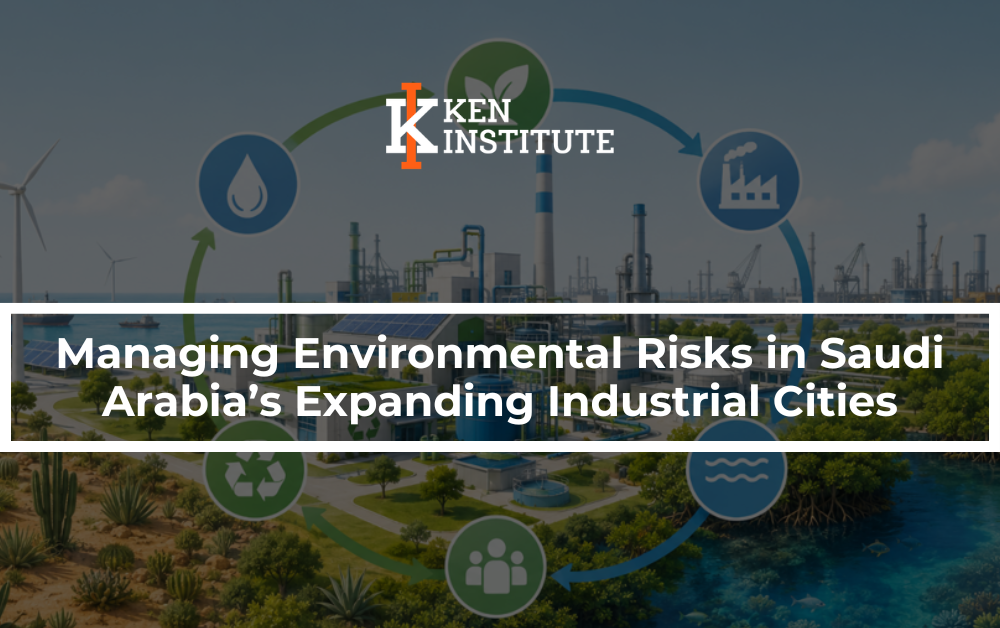
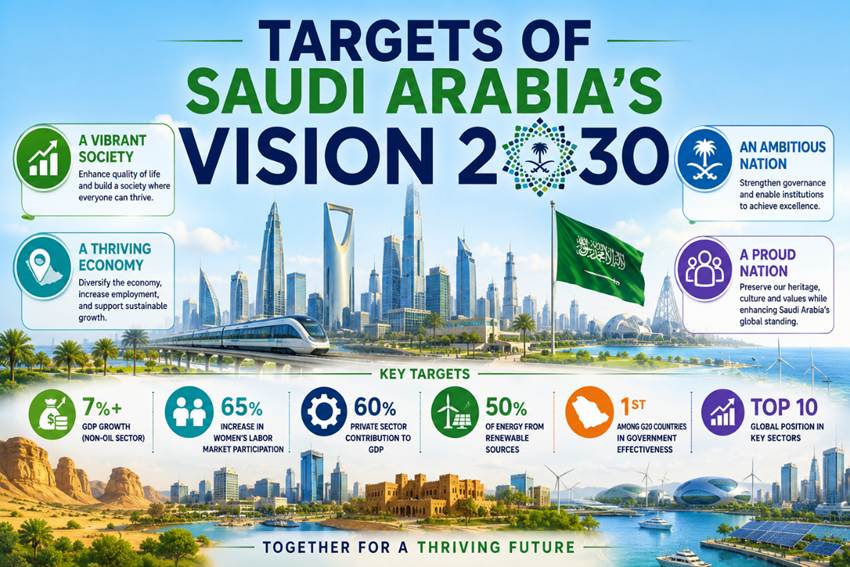
Saudi Arabia’s rapid industrial expansion under Vision 2030 is the Kingdom into a global manufacturing hub, but this growth brings significant environmental challenges. For HSE professionals working in African mining and industrial sectors, Saudi Arabia’s experience offers valuable lessons in regulatory evolution, industrial symbiosis, and technology-enabled compliance that can inform comparative HSE management practices across developing economies.
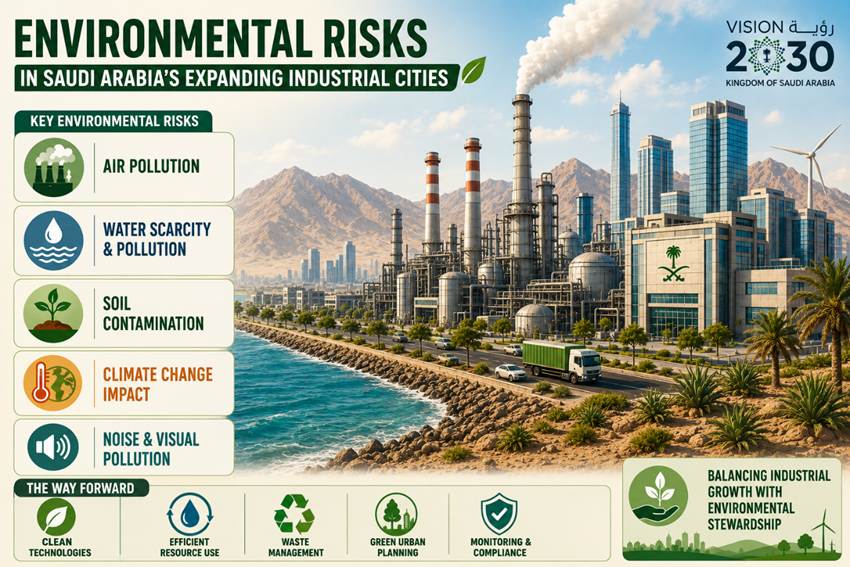
With industrial cities like Jubail (the world’s largest single industrial development at 1,016 km²), Yanbu, Ras Al Khair, and Jazan driving economic diversification, managing environmental risks has become critical to balancing development with sustainability.
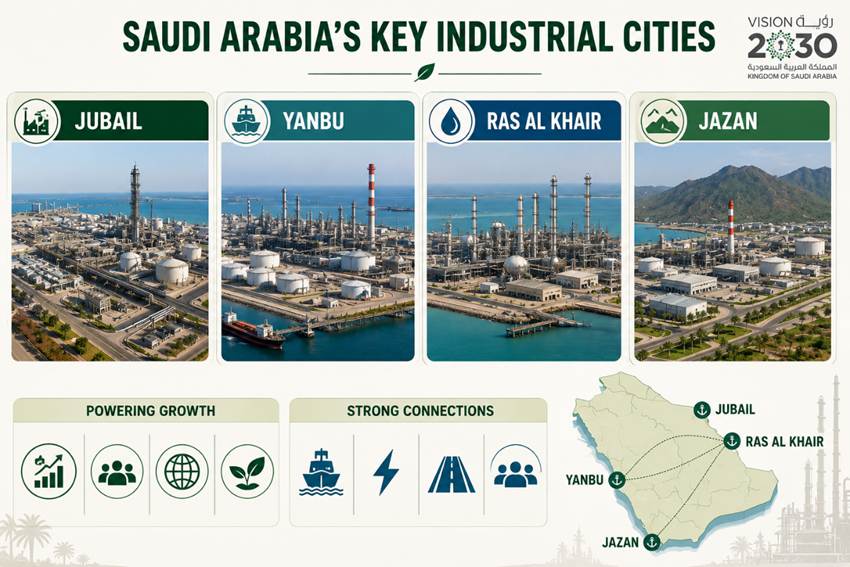
Prominent Environmental Risks in Industrial Cities
1. Air Quality and Emissions
Industrial activities generate substantial air pollutants, including:
Sulfur dioxide (SO₂) – source: petrochemical plants, cement facilities.
Nitrogen dioxide (NO₂) – source: Industrial combustion, vehicles.
Carbon emissions – source: Fossil fuel-powered industries
2. Water Resource De contamination & Scarcity
Saudi Arabia’s arid environment makes water management critical:
Contaminated well water remains a significant challenge
Industrial wastewater from petrochemical operations requires advanced treatment
Groundwater monitoring is essential for cooling channels and treated water
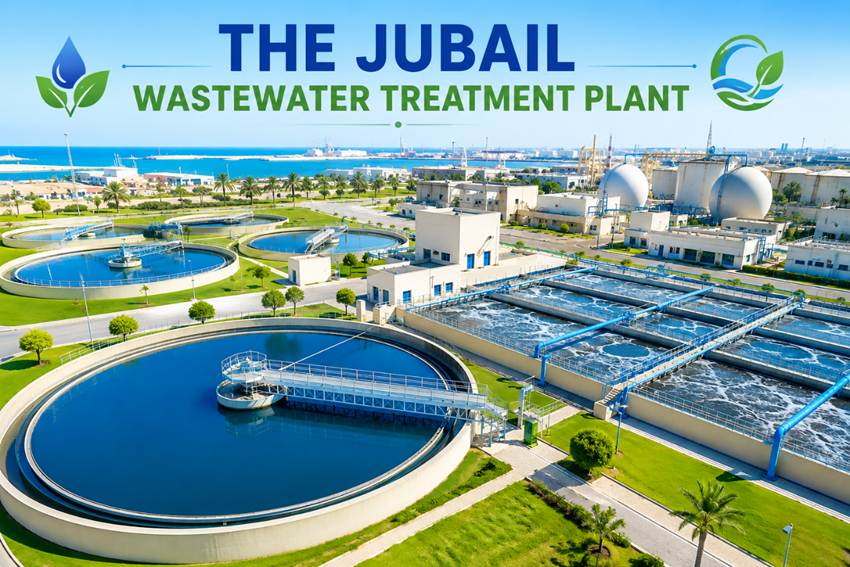
The Jubail wastewater treatment plant expansion to 120 MLD (with scalability to 200 MLD) addresses growing municipal and industrial demands using advanced activated sludge treatment and tertiary disinfection.
3. Industrial Waste Management
Saudi Arabia’s industrial waste management market valued at USD 2.9 Bn, projected to reach USD 4 Bn by 2030
Jubail achieves 67.08% industrial waste recycling with 23 specialized waste disposal companies
E-waste management faces policy challenges requiring urgent reform
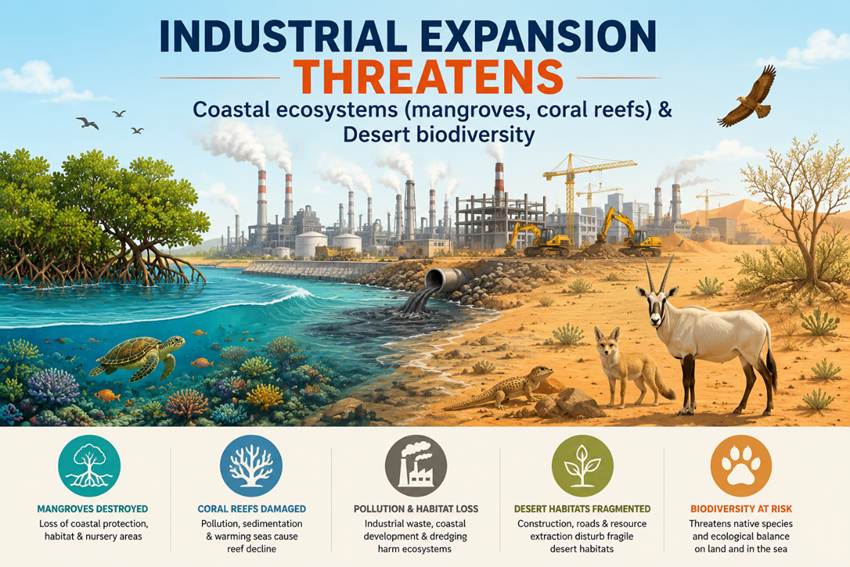
4. Biodiversity Loss & Habitat Degradation
Industrial expansion threatens:
Coastal ecosystems (mangroves, coral reefs)
Desert biodiversity
Marine pollution from port facilities
The Royal Commission has planted 11.2 million seedlings and 11 million mangrove trees in Jubail-Yanbu to counter biodiversity loss.
Regulatory Framework & Compliance
Dual Regulatory System
Saudi Arabia operates a two-authority permitting system:
- NCEC (National Centre for Environmental Compliance)
Jurisdiction: Projects outside industrial cities
Key Requirements: Project categorization (1-3), EIAs for high-impact, IoT sensor monitoring
- RCJY (Royal Commission for Jubail & Yanbu)
Jurisdiction: Jubail, Yanbu, Jizan, Ras Al Khair
Key Requirements: RCER-2025 regulations, third-party EIAs, MARPOL compliance
Environmental Impact Assessment (EIA)
Strategic Risk Management Approaches
1. Saudi Green Initiative Alignment
| Target | Goal | Industrial City Impact |
| Emissions reduction | 278 mtpa by 2030 | Carbon-intensive industries must adopt clean technologies |
| Afforestation | 10 billion trees | Green spaces around industrial zones (11M+ seedlings planted) |
| Land/sea protection | 30% protected | Coastal industrial projects require marine impact studies |
2. Industrial Symbiosis
The “Green and Blue” initiative fosters industrial symbiosis among businesses, enabling waste-to-resource exchanges and shared environmental infrastructure.
3. Technology Integration
IoT-certified sensors for real-time air/water monitoring SCADA automation in wastewater facilities.
GIS & remote sensing for baseline environmental studies
Digital permitting reduces processing time by 30%
4. Jubail’s Climate Action Model
Jubail faces particular challenges from extreme heat intensified by climate change, compounds industrial emissions.
Jubail Industrial City demonstrates best practices:
- 24/7 air quality monitoring via fixed/mobile stations
- Quarterly environmental bulletins through social media
- Environmental art/essay competitions in schools
- Industrial company collaborations for public exhibitions
- Internship programs for environmental management training
5. Waste Management & Circular Economy
Vision 2030 introduces ambitious targets:
Reduce waste and limit landfill dependency
New Industrial Licensing Guide for Environmental Industries launched (2026) covering waste treatment, recycling, pollution control
SAR 6 billion projected investment in environmental compliance by 2030
Challenges in Environmental Risk Management
1. Institutional Capacity Gaps – Fragmented coordination between ministries and sectoral agencies.
2. Limited Public Participation – Public consultation not legally mandated for all high-impact projects. EIA documents not always publicly available
3. Baseline Data Deficiencies – 60% of EIA rejections due to insufficient air/water quality metrics
4. Enforcement Weaknesses – Penalties may be insufficient to deter violations
5. Megaproject Tensions
NEOM’s “The Line” illustrates risks:
- Undisclosed EIA studies undermine transparency
- Potential climate modeling gaps for massive mirrored structures
- Greenwashing allegations highlight need for rigorous safeguards
Five-Phase EIA Reform Model
A structured pathway to evolve Saudi Arabia’s EIA system for Vision 2030:
Phase 1. ( 2025–2026) Regulatory overhaul – Amend EIA regulations for public participation, introduce Strategic Environmental Assessment
Phase 2. ( 2026–2027) Digital transformation – GIS/remote sensing, upgrade NCEC platform, IoT/AI automation
Phase 3. ( 2027–2028) Capacity building – National training programs, certification schemes, regional resource centers
Phase 4. ( 2028–2029) Enforcement – Independent audit bodies, stricter penalties, third-party verification
Phase 5. ( 2025–2030) Global alignment – Align with SGI, IFC/World Bank/UNEP practices, climate treaties
Best Practices
Red Sea Project: Successful EIA Integration
| Success Factor | Outcome |
| 1,400+ baseline survey sites | Accurate impact prediction, spatial zoning avoiding sensitive areas |
| Stakeholder collaboration | Transparent reporting, third-party verification |
| Environmental Management Plan | Continuous monitoring, annual compliance publication |
| GRESB score: 84/100 | Excellence in environmental governance |
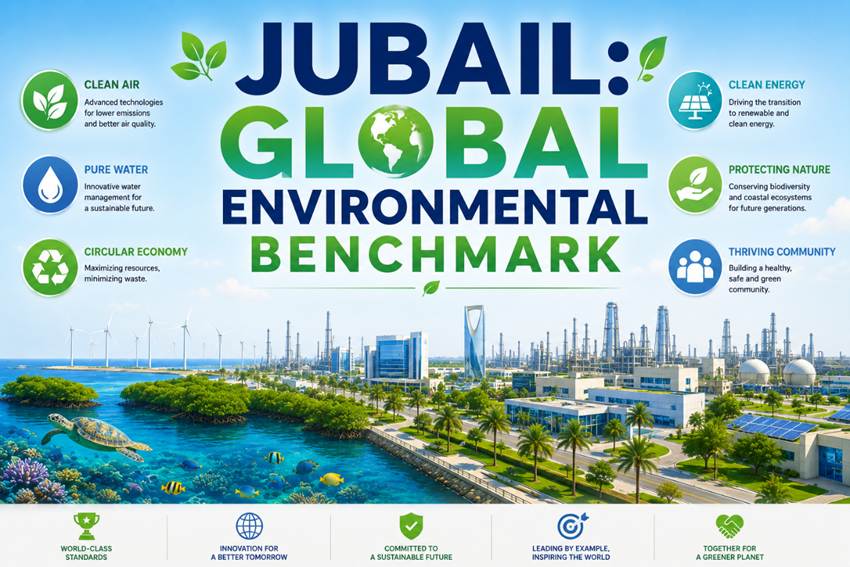
Jubail: Global Environmental Benchmark
- US certification for air quality standards
- ISO 9001 certification for air monitoring operations
- 74 environmental awareness programs implemented
- 201 environmental permits issued for industries
Common Catches to Avoid
| Pitfall | Consequence | Solution |
| Incomplete baseline data | EIA rejection (60% of cases) | Use government databases, RCJY groundwater guidelines |
| Misaligned documentation | Processing delays | Verify authority (NCEC vs RCJY), use correct templates |
| Slow query response | Cancellation (10-day window) | Monitor portal daily, respond within 3–5 days |
| Overlooked stakeholders | Fines up to 20,000 SAR/day | Pre-consultation meetings, document interactions |
Most Advanced Wastewater Treatment Technologies
Municipal Wastewater Treatment
A multi-stage treatment process with cutting-edge technologies.
Optimized Activated Sludge Process: carbon/nitrogen removal exceeding Royal Commission Environmental Regulations.
Low-Energy Aeration: reduces power consumption while maintaining effluent quality.
SCADA Automation: Enabling predictive maintenance and streamlined plant performance.
Future-Ready Design: Scalability from 120 MLD to 200 MLD.
Industrial Wastewater Treatment
SATORP Jubail Industrial Wastewater Treatment Plant (IWWTP) is World’s Largest Petrochemical Reuse Plant with Annual Capacity 8.8 million m³ (~24,000 m³/day).
Sanitary Wastewater Treatment
Yanbu’s sanitary wastewater treatment infrastructure includes:
Power Desalination and Seawater Cooling Plant inside industrial zone.
24/7 effluent quality monitoring by Royal Commission Environmental Control Department (RC-ECD).
Industries must pre-treat effluent before discharging to central biological treatment plant.
Reclaimed water must comply with direct discharge standards before release in open channels or to sea.
Environmental Impact & Sustainability Outcomes
Water Conservation
- 43,800 million liters fresh water saved annually
- 8.8 million m³ industrial wastewater reused annually
- Treated effluent for irrigation reduces groundwater extraction
Green Initiative
- Water reuse reduces energy for desalination, lowering carbon emissions
- Industrial wastewater → resource recovery → closed-loop reuse
- 43.8B liters/year saved supports water-stressed region
Pollution Control
- 67.08% industrial waste recycling achieved in Jubail
- 24/7 air/water quality monitoring via fixed/mobile stations
- Zero liquid discharge (ZLD) principles applied for toxic petrochemical waste streams
Technology Trends & Impact
- Advanced Membranes- Higher water recovery, lower energy consumption. Direct air capture (DAC) for CO₂ removal.
- AI/SCADA Integration – Predictive maintenance, real-time optimization
- Resource Recovery – Water, energy, and materials from wastewater streams
- Industrial Symbiosis – Waste-to-resource exchanges between facilities
Summary
Saudi Arabia’s industrial cities are at the forefront of the Kingdom’s Vision 2030 transformation, but managing their environmental risks requires robust regulatory compliance, technology integration, and stakeholder engagement.
The dual NCEC-RCJY permitting system, RCER-2025 regulations, and Saudi Green Initiative targets provide a framework for sustainable industrial growth.
Saudi Arabia invests SAR 705 billion across 86 green initiatives and targets 278 mtpa emissions reduction by 2030, industrial cities must balance economic ambitions with environmental stewardship to achieve true sustainable development.
For HSE professionals and industrial companies, success depends on:
- Early engagement with regulators
- Comprehensive environmental baseline studies
- Digital compliance automation (IoT sensors, GIS)
- Transparent stakeholder communication
- Alignment with international standards (ISO 14001, World Bank, IFC)
As Saudi Arabia invests SAR 705 billion across 86 green initiatives and targets 278 mtpa emissions reduction by 2030, industrial cities must balance economic ambitions with environmental stewardship to achieve true sustainable development.
=======================================================
Join KEN INSTITUTE and take the next step toward professional excellence!
Our aim to keep abreast of the latest advancements in health & safety protocols, Environment & Sustainability and Mechanical Engineering. Regularly updating advance knowledge helps us stay informed about new best practices, and regulations, enabling us to deliver the most relevant updates to our students.
Join Ken Institute now to advance your career with Higher Certification in Environment & Sustainability !
Internationally recognized courses and training programs designed to empower individuals and organizations. Our commitment is “academic excellence, quality standards, and robust training processes”.
Connect now and take the next step toward professional excellence!
+91 7569034271
Let’s connect together on: Facebook, YouTube, LinkedIn, and Instagram.